What Does It Actually Cost to Live in Allen, Texas in 2026?
Allen homes trade around $500K in 2026, below Frisco's median. The real cost breakdown, how Allen compares to Plano and Frisco, and what's next downtown.
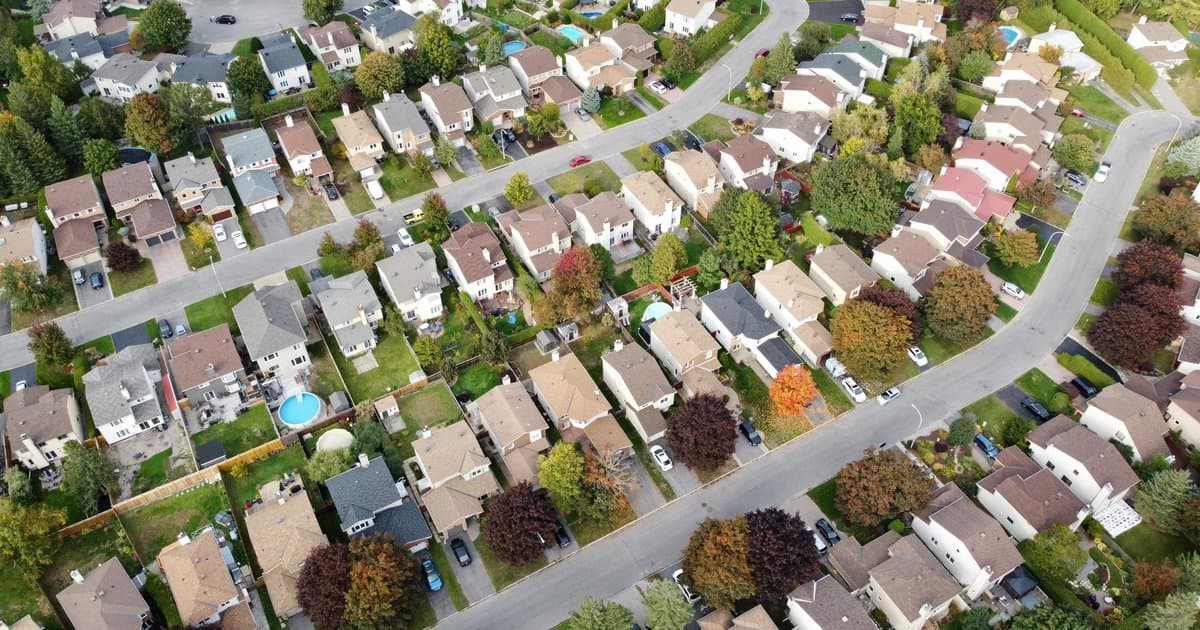
What does it actually cost to live in Allen, Texas in 2026?
The median sale price in Allen is running close to $499,000 as of a recent three-month window, down slightly from a year earlier, according to Redfin's Allen housing market page, with homes typically selling in around a month. Zillow's broader home value index puts the typical Allen home closer to $517,494, per Zillow's Allen home values page, the two figures diverge because they measure different slices of the housing stock, but both land below Frisco and roughly in line with Plano. That's the short answer. The longer answer is what an unassuming 1953 farm town turned into a city of more than 113,000 people, per recent Census-based estimates, what its neighborhoods actually look like, and how the numbers stack up against the two suburbs it gets cross-shopped with most.
By Paul Blair | August 2, 2026
Allen at a glance, 2026
| Metric | Figure |
|---|---|
| Median sale price (recent window) | ~$499,000 |
| Typical home value (ZHVI) | ~$517,494 |
| Typical days on market | ~34 |
| Population | ~113,746 (2024 est.) |
| Allen ISD campuses / enrollment | 24 schools / ~21,000 students |
| Walk Score | 35 (car-dependent, with a walkable exception) |
Figures per Redfin, Zillow, Texas Tribune's Allen ISD profile, and Walk Score. Individual streets and subdivisions vary from the citywide median.
From a Main Street depot town to a Collin County anchor
Allen incorporated in 1953 around a rail depot on what's now Main Street, and growth stayed gradual for decades before accelerating sharply from the 1980s onward as Collin County's northward build-out reached it. That history is still visible: Allen has an actual historic downtown core rather than a retrofitted strip center, and the city is investing in it directly. In March 2026, the Allen City Council advanced the first phase of a $17 million Downtown Catalyst Project near McDermott Drive and Allen Drive, bringing roughly 18,000 to 20,000 square feet of restaurant and retail space around a public gathering area while preserving two historic structures, the city's original fire station and the "Blue House," an early library building, per Community Impact's reporting and the City of Allen's project page. Construction starts by the end of 2026, with the district opening in 2028.
The other anchor to Allen's identity sits a couple of miles north: Watters Creek at Montgomery Farm, a 52-acre mixed-use creekside district built around outdoor shopping, dining, public art, and residential lofts. It's also where the city's most notable corporate win landed, MD7, a mobile infrastructure consultancy, relocated its national headquarters here from San Diego, a move state officials credited with roughly 218 new jobs and more than $6.8 million in capital investment, per Governor Abbott's official announcement. Neither project tells you what it costs to live here, but both explain why Allen keeps showing up on relocation shortlists alongside its larger neighbors.
Streets, subdivisions, and what's actually for sale
Allen isn't one housing market any more than its neighbors are, the residential stock spans roughly seven decades of Collin County home-building, and where a listing sits on that timeline matters as much as its square footage. Twin Creeks, on the city's east side, is built around an 18-hole course designed by Arnold Palmer, with older sections carrying mature landscaping and larger lots and the newer Twin Creeks Watters pocket bringing in townhome product from builders like Normandy Homes near the Watters Creek district. Closer to the original town center, the streets around historic downtown carry Allen's oldest housing stock, smaller lots and older bones, trading at a discount to the city's newer subdivisions because they predate the master-planned era. Farther toward the city's edges, buyers find the standard 2000s-and-newer single-family product that makes up most of current inventory: brick-veneer traditionals on 1970s-to-2010s lots, HOA-managed, built around community pools and greenbelt trails rather than a country-club amenity package. That range means a $500,000 Allen listing could be a renovated 1990s home two blocks from Main Street or a newer build backing a greenbelt on the eastern edge, different ownership experiences landing at a similar price point.
Considering a move to Allen? Schedule a private consultation and we'll walk through which part of the city actually fits your budget and timeline, from the streets around historic downtown to newer construction on the eastern edge. You can also browse current DFW inventory through our property search.
Allen vs. Plano vs. Frisco: what actually separates them
Allen sits in the middle of this three-way comparison on price, and the gap to Frisco is the more dramatic one. Frisco's median sale price runs around $625,000 over a comparable window, roughly $126,000 above Allen, per Redfin's Frisco housing market page, while Plano's median sale price sits closer to $520,000, per Redfin's Plano housing market page, only modestly above Allen's figure. Zillow's home value index tells a similar story: $517,494 in Allen against $518,080 in Plano and $673,986 in Frisco, per Zillow's Allen, Plano, and Frisco home values pages.
The vintage split explains most of the spread. Plano and Allen both built out primarily from the 1970s through the 2000s, giving both more established tree canopy and resale-era inventory than Frisco, whose residential base is newer and leans harder on HOA-managed amenity centers. Where Allen separates from Plano is scale, Plano is roughly triple Allen's population and largely built out, while Allen still has room to grow along its eastern edge, putting it closer to a mid-cycle suburb than a mature market like Plano or a still-expanding one like Frisco.
| Allen | Plano | Frisco | |
|---|---|---|---|
| Median sale price | ~$499,000 | ~$520,000 | ~$625,000 |
| Typical home value (ZHVI) | ~$517,494 | ~$518,080 | ~$673,986 |
| Housing stock era | Mostly 1980s–2010s | Mostly 1970s–2000s | Mostly 2000s–2020s |
| Walk Score | 35 | Varies by neighborhood | 25 |
Price data per Redfin Allen, Redfin Plano, Redfin Frisco, Zillow Allen, Zillow Plano, and Zillow Frisco.
The cost specifics: taxes, utilities, and the walkability trade-off
Allen's property tax bill, like every Texas city's, is a stack of separately set rates, city, Collin County, Allen ISD, and any special districts, combined into one annual bill, per the Collin Central Appraisal District's tax rates page. The City of Allen applies a 5% homestead exemption to approved homestead properties, deducted before the city's portion is calculated, per the city's tax page, and the City Council approved a modest rate decrease for the current fiscal year. Effective combined rates run in the neighborhood of 1.25%, though the exact figure shifts by ZIP code depending on which special districts and school-levy boundaries an address falls into, per Ownwell's Allen property tax data, worth confirming for a specific street before finalizing a budget.
Beyond taxes, budget $350 to $450 a month for combined electricity, gas, water, sewer, and trash on a standard single-family home, similar to most of Collin County. And plan around a car for daily errands: Allen's citywide Walk Score sits at 35, categorized as car-dependent, per Walk Score's Allen data. The exception is Watters Creek, whose creekside promenade of shops and restaurants gives Allen something most suburbs in its price range don't have, a genuine walkable gathering place, even if it doesn't move the citywide average much.
What's coming next
Two things are worth tracking if you're weighing a purchase in Allen right now. The Downtown Catalyst Project, covered above, breaks ground by the end of 2026 with a 2028 opening, expect construction activity and retail turnover in the immediate downtown blocks over that window. And on the residential side, the newer Twin Creeks Watters section keeps bringing townhome inventory online near Watters Creek, a different product than the single-family stock that dominates most of the city, worth a look for buyers who want proximity to the district's restaurants without a large-lot single-family price tag.
Frequently Asked Questions
How does Allen compare to Plano and Frisco on price? Allen runs close to Plano on both median sale price and typical home value, within about $20,000 either direction, while Frisco sits roughly $125,000 to $150,000 higher on both measures, per Redfin's Allen, Plano, and Frisco housing market pages.
What's the property tax situation in Allen? Effective combined rates run around 1.25% of assessed value, varying by ZIP code and special-district boundary, per Ownwell's Allen tax data. The city applies a 5% homestead exemption to approved homesteads, per the City of Allen's tax page.
Is Allen a walkable city? Mostly no, Allen carries a citywide Walk Score of 35, categorized as car-dependent, according to Walk Score. Watters Creek is the notable exception, a walkable shopping and dining district built around a creekside promenade.
What development should I watch if I'm buying in Allen right now? The $17 million Downtown Catalyst Project, which breaks ground by the end of 2026 and is projected to open in 2028, bringing new restaurant and retail space to the blocks around McDermott Drive and Allen Drive while preserving two historic structures, per Community Impact.
Should I use a local agent to buy or sell in Allen? What actually matters is finding someone who tracks Allen's individual pockets rather than treating the city as one uniform market, since the streets around historic downtown, the Twin Creeks golf corridor, and newer construction on Allen's eastern edge carry meaningfully different price points and resale patterns despite sharing a city limit. I've covered Allen alongside Plano, Frisco, Richardson, and McKinney while tracking the broader Collin County corridor for Grey Square clients. That comparative view is what tells you whether a given Allen listing is actually priced in line with its pocket of the city. If useful, start a conversation about where your budget and timeline land in Allen specifically.
Thinking about selling a home in Allen? Request a confidential valuation to see where your property lands against this year's Collin County price bands before deciding on timing.
I've tracked Allen as the steadier middle option in a comparison usually framed as Plano-versus-Frisco, old enough to have a real Main Street, young enough to still be finishing its eastern edge. That in-between position is why the pocket-by-pocket comparison is worth doing before you commit to an offer, and it's the first conversation I have with anyone looking here.
Paul Blair is the founder and broker of Grey Square, a virtual real estate brokerage representing buyers and sellers across Dallas and Los Angeles. With 22 years in the business and more than $200 million in closed transactions, Paul works the full range of the market, from luxury homes in the Park Cities and Preston Hollow to estates in the Hollywood Hills and across the Westside. Connect with Paul and the Grey Square team at greysq.com. TX TREC #9011505 · CA DRE #01792671.