What Does It Cost to Buy in Angelino Heights, Echo Park's Victorian District?
Angelino Heights homes sold for a $1.05 million median this year, up 37% in the three-block district that became LA's first historic zone in 1983.
What Does It Cost to Buy in Angelino Heights?
Angelino Heights, the small district of Victorian houses just east of Echo Park Lake, had a median sale price of $1,050,000 over the last three months, up 37.3 percent from the same period a year ago, according to Redfin's neighborhood housing data. Homes are taking longer to sell than they used to, a median of 79 days, and only three houses closed in that window. That is a thin sample for a neighborhood with roughly a few hundred parcels total, and it is the first thing to understand about this market: Angelino Heights does not trade often, and when it does, the number moves fast in either direction.
By Paul Blair | September 24, 2026
LA's Second-Oldest Neighborhood, and Its First Protected One
William W. Stilson and Everett E. Hall subdivided this hillside tract in 1886 during Southern California's first big land boom, and Wikipedia's history of the district credits it as the second-oldest developed neighborhood outside downtown Los Angeles, behind only Bunker Hill. The timing was rough. A banking recession stalled construction within a few years of the subdivision, and the district sat half-built until a second wave of Craftsman bungalows filled in the remaining lots between 1900 and 1915, many of them along Kensington Road, according to Historic Echo Park's account of the neighborhood.
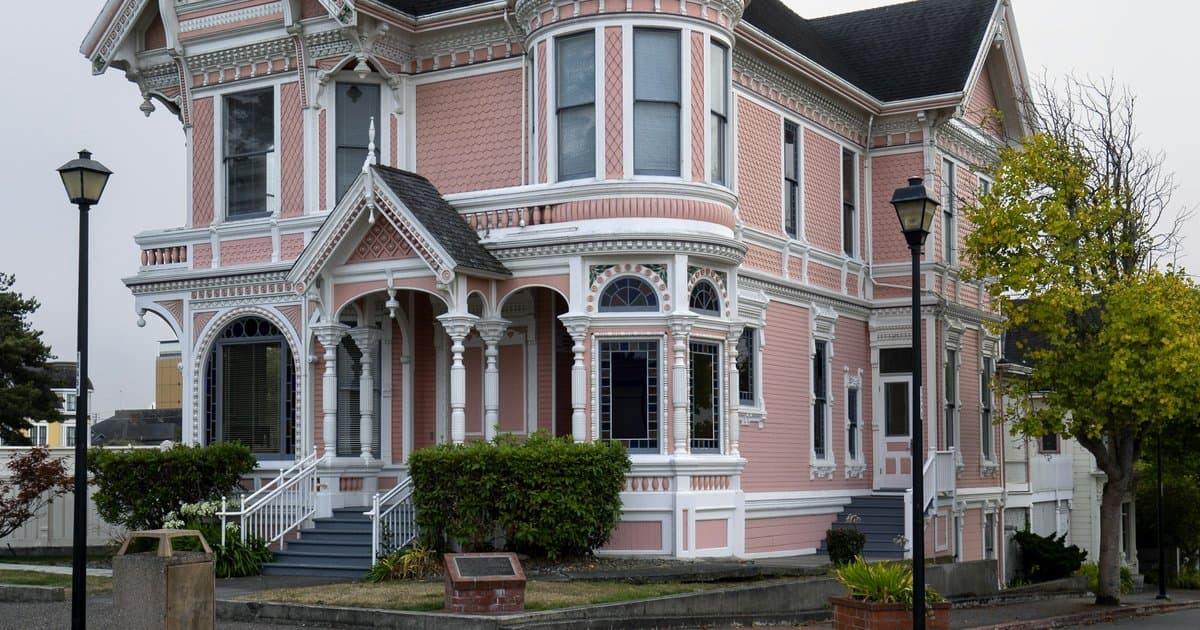
What survived from that first boom is the reason people know the name. The 1300 block of Carroll Avenue, between Edgeware and Douglas streets, holds what the City of Los Angeles Planning Department calls the highest concentration of 19th-century Victorian homes in Los Angeles, and the block is listed on the National Register of Historic Places. In September 1983, Angelino Heights became the city's first Historic Preservation Overlay Zone, a designation the LA Conservancy confirms predates every one of the 35 HPOZs Los Angeles has designated since, from San Pedro to San Fernando.
Individual houses on Carroll Avenue carry their own city landmark status. The Foy House at 1335 Carroll, built for Mary E. Foy, who became the city's first woman librarian in 1880, is Historic-Cultural Monument No. 8. The 1887 Eastlake residence at 1330 Carroll was designed by architect Joseph Cather Newsom for original owner Charles Sessions, and the 1887 house at 1355 Carroll was built for a local businessman named Harry L. Pinney, per the Wikipedia list of Los Angeles Historic-Cultural Monuments covering the district. A handful of these houses have found a second life on screen: 1345 Carroll appeared in Michael Jackson's Thriller video, and 1329 Carroll was used as a residence on the television series Charmed.
What the HPOZ Actually Means for an Owner
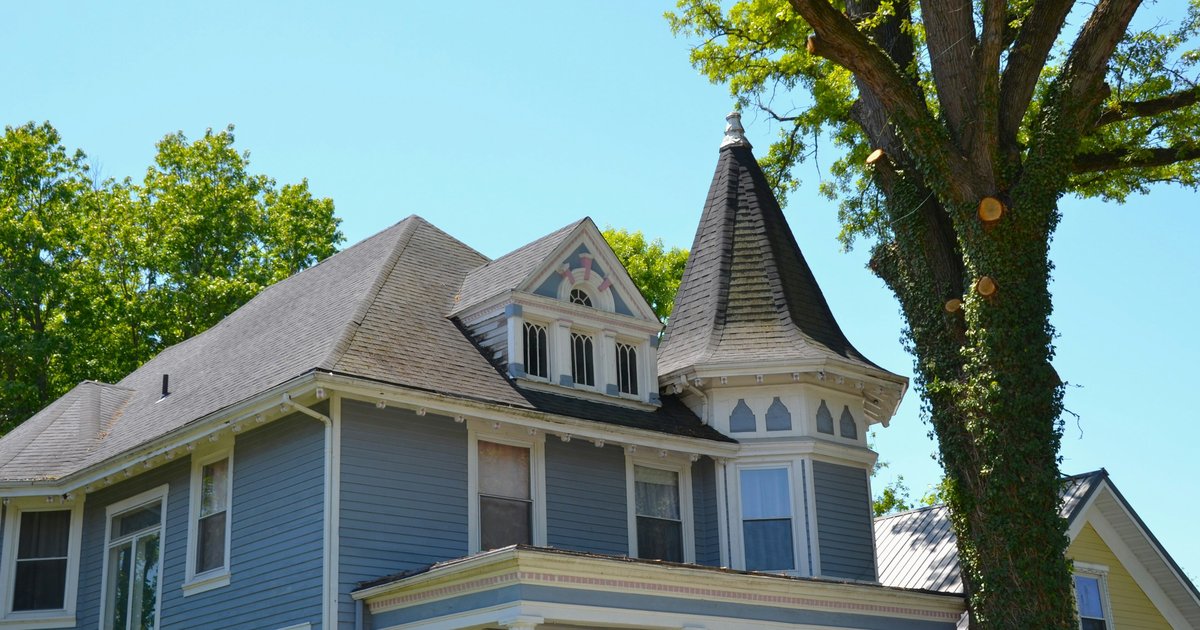
An HPOZ is a zoning overlay, not a museum rule that freezes a house in place. It means a five-member HPOZ board reviews exterior changes to a contributing structure before a permit is issued, covering windows, doors, porches, roofs, additions, and secondary buildings, per the LA Conservancy's summary of how the zones work. In exchange, owners inside the boundary can apply for the Mills Act, a state program that reduces property tax in return for maintaining and restoring a qualifying historic home, the same Conservancy page notes. That trade, slower renovation approvals against a real tax incentive and a neighborhood that cannot be redeveloped out from under you, is the whole story of who ends up buying here and who does not.
It also explains the neighborhood's property mix. A number of the Victorians on Carroll Avenue were built or later converted as multi-unit income property rather than single-family homes. 1354 Carroll Avenue sold on May 8, 2026 for $1,244,000, a 4,369-square-foot 1912 Victorian renovated in 1925 into four one-bedroom units. That is a different buyer profile than a family looking for a single restored house, and it is common enough in Angelino Heights that anyone shopping the district should ask upfront whether a given address is zoned and configured as a single-family residence or a small apartment building before assuming the comps line up.
How the District Prices Against the Rest of Echo Park
Pull back to the neighborhood Angelino Heights sits inside and the comparison gets more useful. Redfin's Echo Park housing data puts the broader area's median sale price at $1,211,415 over the same three months, actually down 8.2 percent year over year, with 35 homes sold in August against 55 a year earlier. Angelino Heights, in other words, is currently the smaller and more volatile of the two markets: a handful of Victorian and multi-unit sales moving the median sharply while the surrounding neighborhood cools. Long-term ownership tells a steadier story. A five-bedroom 1895 Queen Anne at 1407 Carroll Avenue sold for $1,690,000 in March 2019; Redfin's current automated estimate puts that same house near $2,210,753 today, which is the kind of hold-and-appreciate pattern that draws long-term owners to a fixed, non-expanding supply of historic houses more than it draws flippers.
We covered the broader Echo Park market in detail here, including the neighborhood's condo and multi-family mix that pulls its median down relative to Angelino Heights's mostly single-family and small-multi Victorian stock. If you want to see what else is currently listed nearby, browse current Los Angeles inventory.
Who Actually Buys Here
The buyer who does well in Angelino Heights wants a specific, narrow thing: a Victorian or turn-of-the-century house inside walking distance of Echo Park Lake, with the resale protection that comes from a district where a neighbor cannot tear down and build a five-story podium building next door. That buyer accepts a slower renovation timeline in exchange for it. A buyer who wants to gut a house to the studs and build something contemporary, or who needs speed on permits, is shopping the wrong three blocks. Income-property buyers are also a real part of this market, given how many Carroll Avenue Victorians were built or converted into small multi-unit buildings rather than single-family homes, and that buyer is underwriting rent rolls and unit configuration as much as architectural character.
Proximity matters here in a way it does not everywhere in Los Angeles. The district sits at roughly 502 feet of elevation between the Hollywood Freeway to the south and Echo Park Lake to the west, close enough to downtown that Wikipedia notes the original 1880s residents commuted in on the Temple Street Cable Railway, a mile and a half away. A buyer today gets the same short commute in a car instead of a cable car, plus a lake, a hillside, and a Historic Preservation Overlay Zone the rest of the neighborhood does not have. Schedule a private consultation about buying inside the Angelino Heights boundary and we can go through which addresses carry HPOZ contributing status before you write an offer, since that status changes what you can and cannot do to the house.
Where Measure ULA Does Not Reach
At a $1,050,000 median, Angelino Heights sits nowhere near the price levels where Measure ULA, the City of Los Angeles's added transfer tax, becomes part of the conversation. The Los Angeles Office of Finance confirms the tax applies at 4 percent above $5,400,000 and 5.5 percent above $10,900,000, on top of the base transfer tax. Even the district's largest multi-unit sales this year have closed well under that threshold, which puts an Angelino Heights transaction in the same ordinary-transfer-tax category as most of the surrounding east side rather than the Bel Air and Bird Streets deals where ULA reshapes pricing strategy outright.
If you already own here and have watched this year's price swing from the sidelines, or you are weighing whether now is the right window to list a Carroll Avenue property into a thin, appreciating market, request a confidential valuation and we can walk through what the last few closed sales actually mean for your specific address. For a broader look at buying anywhere on the east side, our buyer resources cover financing and offer strategy beyond this one district.
Frequently Asked Questions
Where exactly is Angelino Heights?
Angelino Heights sits roughly two miles northwest of downtown Los Angeles, bounded by the Hollywood Freeway to the south, Sunset Boulevard to the north and east, and Echo Park Lake to the west. It is its own small Historic Preservation Overlay Zone tucked inside the larger Echo Park area, centered on the 1300 block of Carroll Avenue.
How much does a home in Angelino Heights cost?
The median sale price was $1,050,000 over the last three months, up 37.3 percent year over year, though only three homes sold in that window, a small enough sample that any single closing can swing the number. The broader Echo Park neighborhood's median sits higher, at $1,211,415, but is down 8.2 percent over the same period.
What is an HPOZ and how does it affect buying or renovating here?
An HPOZ, or Historic Preservation Overlay Zone, is a Los Angeles zoning tool that protects a district's architecture by routing exterior changes to contributing structures through a review board before a permit is issued. Angelino Heights became the city's first HPOZ in September 1983. Owners inside the boundary can also apply for Mills Act property tax relief. Buyers who want to preserve or restore a historic house fit well here; buyers who want unrestricted remodel flexibility should look elsewhere.
Does Measure ULA apply to an Angelino Heights sale?
Not at today's price levels. The City of Los Angeles applies its added transfer tax at 4 percent above $5,400,000 and 5.5 percent above $10,900,000. Angelino Heights sales, including the district's multi-unit properties, have closed well under that first threshold this year, so sellers here pay the ordinary base transfer tax rather than the ULA surcharge.
Who's the best real estate agent to work with in a historic district like Angelino Heights?
What actually matters in a market this small is knowing which specific addresses carry HPOZ contributing status, which houses are configured as income property rather than single-family, and how the review board's process affects a renovation timeline before a buyer commits to a purchase. I have represented buyers and sellers across the Los Angeles market for 22 years and can walk you through exactly what a given Carroll Avenue or Kensington Road address will and will not allow before you write an offer. If you are weighing a purchase or a sale inside Angelino Heights, reach out and we can go through it together.
I have walked prospective buyers down Carroll Avenue more than once just to see the block before they ever looked at a listing, because the character of that street is most of what a buyer is actually paying for here, and a house one block outside the HPOZ boundary trades in an entirely different market than one inside it.
About Paul Blair
Paul Blair is the founder and broker of Grey Square, a virtual real estate brokerage representing buyers and sellers across Dallas and Los Angeles. With 22 years in the business and more than $200 million in closed transactions, Paul works the full range of the market, from luxury homes in the Park Cities and Preston Hollow to estates in the Hollywood Hills and across the Westside. Connect with Paul and the Grey Square team at greysq.com. TX TREC #9011505 · CA DRE #01792671.