Deep Ellum in 2026: The Median Is $548,000, but Only One Home Sold Last Month
What it actually costs to buy in Deep Ellum in 2026, the $548K median, the extra PID tax line, PD-269 zoning, and why the for-sale market is this thin.
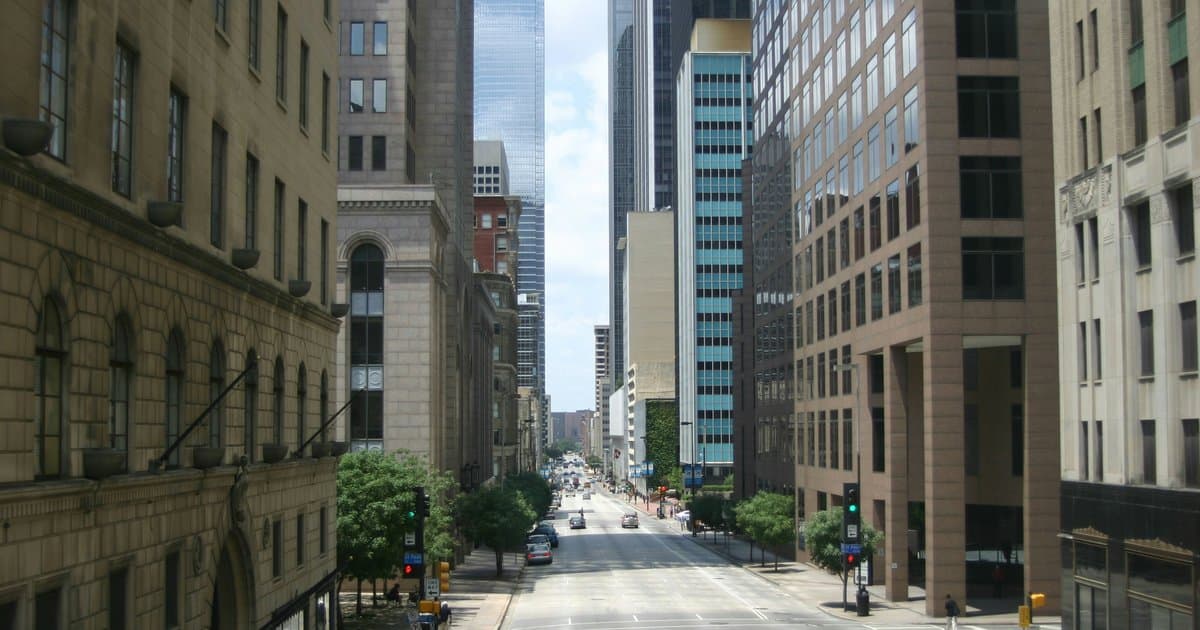
What does it actually cost to buy a home in Deep Ellum in 2026? The median sale price is $548,000, up 6.9% year over year, but that number is built on a sample so small it barely qualifies as a market. In the most recent single month Redfin tracked, exactly one home sold in Deep Ellum. The honest answer to "what does Deep Ellum cost" is that the district has a rental market with thousands of units and a for-sale market with a handful of transactions a year, and buying here means competing for something that almost never comes up.
That is the whole story of Deep Ellum real estate, and it explains almost everything else about buying and selling in the district.
The numbers, and why they wobble
Per Redfin's Deep Ellum market data, the median sale price over the trailing three months was $548,000, up 6.9% compared with the same period a year earlier. Drill into the single-month readings and the picture gets noisier: a $412,000 median at $214 per square foot, 130 days on market, homes closing 1.7% under list, and a total of one home sold.
Zoom out one level to the 75226 ZIP code and the volume problem persists: $536,000 sale price, $253 per square foot, 0.6% under list, 114 days on market, one home sold. Recent closings in the ZIP include a 1,924 square foot residence at 335 S Hall Street that last listed at $419,000 and took 43 days, and a 3,489 square foot home at 4606 E Side Avenue last listed at $725,000 that took 98 days.
Two things follow from that. First, any percentage change you read about Deep Ellum prices is a comparison between a handful of homes this year and a handful last year, and it can swing 30 points on the strength of one closing. Second, 114 to 130 days on market is not a sign of weak demand so much as a sign of a thin buyer pool for a specific and unusual product type. Lofts, converted commercial space, and mid-rise condos do not appeal to the same buyer as a Lakewood Tudor, and there are fewer of those buyers looking at any given moment.
For perspective, Apartments.com currently lists more than 1,300 rentals in Deep Ellum. The imbalance between the rental stock and the for-sale stock is the defining structural fact of this market.
The tax line most Deep Ellum buyers miss
Here is the number that does not show up on a listing sheet. Property inside Deep Ellum carries the standard combined Dallas rate plus a Public Improvement District assessment on top of it.
The City of Dallas publishes the combined local rate at $2.226885 per $100 of valuation, made up of the city at $0.698800, Dallas ISD at $0.993835, Dallas County at $0.215500, Parkland Hospital at $0.212000, and Dallas College at $0.106575.
On top of that, the Deep Ellum Public Improvement District assesses $0.12 per $100 of appraised value. The PID was established in 1999, has been renewed repeatedly, most recently in 2025, covers roughly 700 properties, and runs under its current term through December 31, 2035. The assessment funds public safety, graffiti abatement, landscaping, trash pickup, lighting and signage, and district marketing.
What that means in dollars, at the $548,000 median:
| Line | Rate per $100 | Annual on $548,000 |
|---|---|---|
| Combined Dallas local rate | $2.226885 | $12,203 |
| Deep Ellum PID assessment | $0.120000 | $658 |
| Total | $2.346885 | $12,861 |
That is roughly $55 a month in additional carrying cost, before any HOA or condo assessment. It is not a deal-breaker, but a buyer who budgeted off a generic Dallas tax estimate will be short. Ask for the actual assessed tax bill on the specific parcel, and confirm whether the property sits inside the PID boundary, before you write the offer. This is exactly the kind of line item worth pinning down during the option period, and it belongs on the same checklist as the survey and the title commitment in our Dallas buyer guide.
What the district is, physically
Deep Ellum sits immediately east of downtown, bounded roughly by the DART rail corridor and Elm Street on the north, South Hall Street on the south, North Central Expressway on the west, and R.L. Thornton Freeway on the east.
The zoning is its own animal. Deep Ellum falls under Planned Development District 269, roughly 273.64 acres divided into Tracts A, A-1, and B, with development standards written for the district rather than borrowed from citywide residential categories. If you are buying a building, converting a space, or planning any exterior work, PD-269 is the document that governs what is permitted, and it does not read like standard single-family zoning.
Layered on top of that, the Deep Ellum Historic District was listed in the National Register of Historic Places on June 30, 2023, covering 213 buildings across just over 110 acres under reference number 100009082, cited for its associations with Dallas commerce and for its social history. National Register listing is largely honorific for a private owner making a cash-funded change, but it matters for federal historic tax credit eligibility on rehabilitation projects, and it signals how the district's building stock is likely to be treated going forward.
The development pipeline
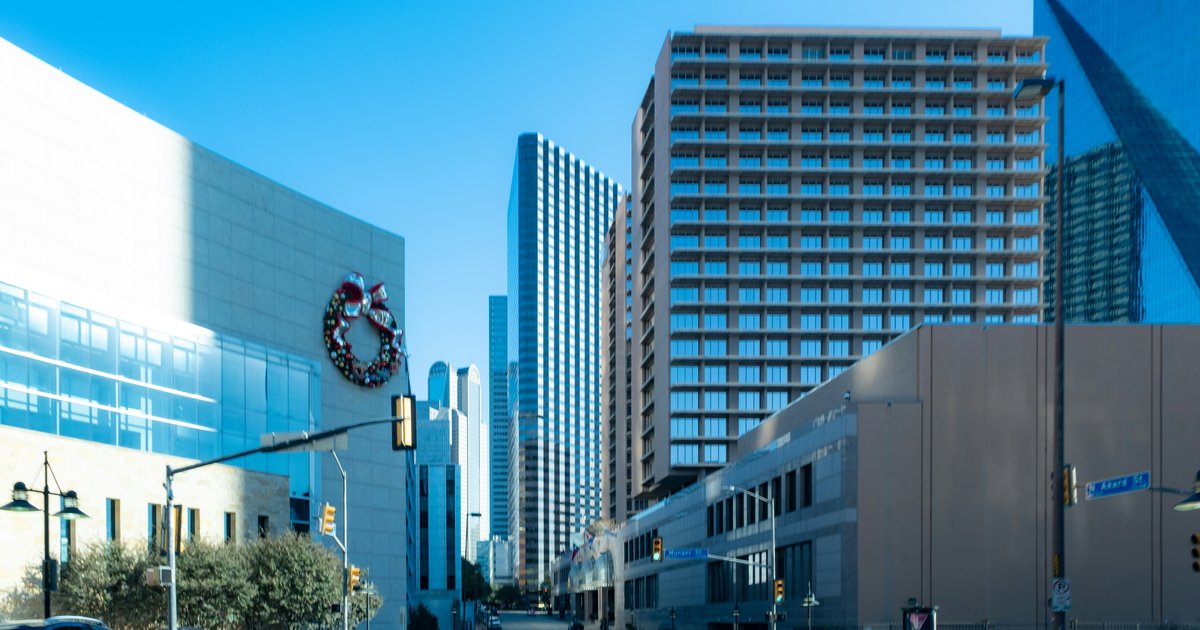
Deep Ellum has been under a redevelopment program for two decades. The City of Dallas created the Deep Ellum Tax Increment Financing District on June 22, 2005, covering 210 acres, with an expiration date of December 31, 2027. The stated mission is public infrastructure funding to support transit-oriented, pedestrian-scaled mixed use, and the city specifically cites the district's adjacency to three DART light rail stations and its proximity to downtown, the Arts District, the Farmers Market, Baylor, and Fair Park.
The private capital has followed. Westdale's Epic is an eight-acre mixed-use assemblage on the district's western edge combining office, multifamily, retail, and a boutique hotel. The Stack Deep Ellum, developed by Hines with Westdale and Ivanhoé Cambridge, is a 16-story building with roughly 200,000 square feet of office and 14,000 square feet of street-level retail. Westdale also completed the Good E Block redevelopment, a 30,000 square foot, five-building rehabilitation along Elm, Good Latimer, and Main.
Note that the TIF expires at the end of 2027. Whether the city renews or extends it is a live question for anyone underwriting a Deep Ellum project on a multi-year horizon.
Walkability and transit
This is where Deep Ellum genuinely separates from most of Dallas. Redfin reports a Walk Score of 76, a Transit Score of 76, and a Bike Score of 80 for the neighborhood, with the ZIP scoring 77 on walkability. For context, most of the Dallas-area submarkets we cover score in the 20s and 30s on transit. Three DART light rail stations within or adjacent to the district, plus a genuinely continuous street grid of storefronts, is a combination that does not exist in Frisco or Southlake at any price.
That transit and walkability profile is the actual product being sold here. It is not a price play, and it is not a square-footage play.
How Deep Ellum compares to its neighbors
| Submarket | Median sale price | Change YoY | As of |
|---|---|---|---|
| Deep Ellum | $548,000 | +6.9% | 3 mo. ending Jan 2026 |
| Uptown | $599,798 | +6.9% | May 2026 |
| Knox-Henderson | $599,777 | -15.2% | Apr 2026 |
| East Dallas | $810,223 | -3.5% | Jun 2026 |
Source: Redfin neighborhood market data. Reporting periods differ by submarket, so treat this as directional rather than a like-for-like snapshot.
The read: Deep Ellum prices below Uptown and Knox-Henderson and well below the broader East Dallas market, which ran $810,223 at $364 per square foot with 28 days on market and 335 closings in June. That last figure is the one to sit with. East Dallas closed 335 homes in a month. Deep Ellum closed one. You are not comparing two versions of the same market.
Who actually buys here
Based on what transacts, Deep Ellum for-sale buyers fall into three groups. Owner-occupants who want a loft or condo inside a walkable, transit-served grid and are willing to trade square footage and yard for that. Investors underwriting rental units against the district's deep tenant demand. And commercial and adaptive-reuse buyers working inside PD-269, where the building itself is the asset.
If you are in the first group, the practical advice is to get set up on alerts well before you plan to buy, because the inventory that fits is measured in single digits at any given time. If you are in the second or third, the tax stack, the PID boundary, and the PD-269 standards should be diligence items before you go under contract, not after. You can start watching current inventory on our Dallas search.
Thinking about buying in Deep Ellum? The window on the right unit here is short and infrequent. Schedule a private consultation and we will set up alerts on the specific building types you want and walk the tax and zoning diligence with you before you write.
Frequently Asked Questions
Why is Deep Ellum's median sale price so volatile?
Because the sample is tiny. Redfin recorded one home sold in the most recent single month in both the Deep Ellum neighborhood and the 75226 ZIP. When a median is built on one to three closings, a single high or low sale moves the headline number by double digits. Look at the individual comparable sales rather than the neighborhood median when you are pricing a Deep Ellum property.
Do Deep Ellum property owners pay extra taxes?
Yes, if the property is inside the Public Improvement District. The Deep Ellum PID assesses $0.12 per $100 of appraised value on top of the combined Dallas local rate of $2.226885, bringing the total to $2.346885 per $100. On a $548,000 property that is about $658 a year, or roughly $55 a month, in addition to the standard bill. Confirm the parcel's PID status with the City of Dallas before you rely on any tax estimate.
Why do Deep Ellum homes sit on the market so long?
Days on market ran 114 to 130 in the most recent readings. The main driver is a narrow buyer pool for an unusual product type rather than a pricing problem across the board. Lofts and converted commercial spaces attract a specific buyer, and fewer of them are shopping at any given moment than in a conventional single-family submarket.
What is PD-269 and does it affect me as a residential buyer?
PD-269 is the planned development district covering roughly 273.64 acres of Deep Ellum and the Near East Side, with its own permitted uses and development standards divided across three tracts. For a condo or loft buyer inside an existing building, it mostly matters if you plan exterior alterations or a change of use. For anyone buying a building or doing an adaptive reuse, it is the controlling document and should be reviewed with counsel before closing.
Should I use a local agent to buy in a market this small?
In a submarket that closes one or two homes a month, general Dallas market knowledge is not enough. What matters is knowing the individual buildings, having a read on which units are likely to come available before they list, and knowing which line items in the tax stack and zoning code apply to the specific parcel. Ask any agent you interview how many Deep Ellum and near-downtown transactions they have actually closed, and how they would source inventory in a district with almost none on the open market. Paul Blair has spent 22 years in the Dallas market and more than $200 million in closed transactions across Dallas-proper submarkets, from the Park Cities and Preston Hollow to the East Dallas and near-downtown districts, including the loft and condo product that defines Deep Ellum. If you want a candid read on whether Deep Ellum fits what you are trying to do, start a conversation.
Own a loft or building in Deep Ellum? Pricing in a market this thin is a comp-by-comp exercise, not a median exercise. Request a confidential valuation and we will build the pricing opinion off the actual closed comparables in your building and the surrounding blocks.
I have worked the near-downtown and East Dallas submarkets since well before Deep Ellum's redevelopment cycle began, and the district has always been a place where the deal comes down to the specific building rather than the neighborhood average.
Paul Blair is the founder and broker of Grey Square, a virtual real estate brokerage representing buyers and sellers across Dallas and Los Angeles. With 22 years in the business and more than $200 million in closed transactions, Paul works the full range of the market, from luxury homes in the Park Cities and Preston Hollow to estates in the Hollywood Hills and across the Westside. Connect with Paul and the Grey Square team at greysq.com. TX TREC #9011505 · CA DRE #01792671.