What Does It Actually Cost to Live in El Porto, Manhattan Beach's Surf Neighborhood?
El Porto runs $1,650 a square foot, above the Manhattan Beach citywide average. Here is what that buys in the city's surf neighborhood in 2026.

What does it actually cost to live in El Porto, Manhattan Beach's surf neighborhood?
Over the last three months of data Redfin tracks for El Porto, also listed as Manhattan Beach's North End, the median sale price ran $3,096,500, at $1,650 a square foot. That price per foot is actually higher than Manhattan Beach as a whole, where the citywide median across the same general period sat at $3,492,689, or $1,380 a square foot, according to Redfin. A smaller, denser neighborhood at the north edge of the city is pricing above the city average on a per-foot basis. That is the number worth sitting with before anything else here.
Here is what explains it, what the streets are actually like, and what a buyer or seller needs to know that a listing photo will not tell you.
A neighborhood the county carved out, then the city absorbed
El Porto sits on roughly 34 acres between 45th Street on the north and 38th Street on the south, bounded by Crest Drive to the east and the Pacific Ocean to the west, according to a summary of the area's development history on Wikipedia. Developer George H. Peck subdivided the land in 1911 into business and residential lots on sandy terrain, advertising sidewalks, curbs, and artesian water as selling points on a stretch of coast where none of that was a given yet.
For more than sixty years, El Porto stayed its own unincorporated county pocket, sitting inside the El Segundo school district while the rest of Manhattan Beach ran its own affairs, until the city annexed it in 1980. That history is part of why El Porto still reads as a distinct place inside Manhattan Beach: a different name, a different commercial spine on Highland Avenue, which becomes Vista Del Mar Boulevard past 45th Street, and a different scale of house than what came before annexation. Residents here are zoned to Grandview Elementary School.
The market right now, and why the numbers run backward
The comparison table below lines up El Porto against the city as a whole, using the most recent figures each area's Redfin page reports.
| Area | Median sale price | Median $/sq ft | YoY change in $/sq ft |
|---|---|---|---|
| El Porto / North End | $3,096,500 | $1,650 | +28.7% |
| Manhattan Beach citywide | $3,492,689 | $1,380 | -3.5% |
Read the two rows together and the neighborhood tells you something about itself. El Porto's total price sits well under the city median, but its price per square foot sits well above it, and it moved up nearly 29 percent year over year while the city's per-foot figure slipped. That is what you would expect from a neighborhood of small, tightly platted lots carrying more duplexes and triplexes than single larger footprints: the total check is smaller because the house is smaller, but the land underneath it, one block from sand, is pricing at a premium. Homes here are also selling in about 46 days with sales volume up sharply year over year, even as the sale-to-list ratio eased, a market getting more activity at a slightly less aggressive premium rather than a cooling one.
Why the waves, and the character, are different here
El Porto Beach carries a reputation among South Bay surfers that the rest of Manhattan Beach's coastline does not. An underwater canyon offshore produces larger, more consistent breaks than the beaches on either side, holding rideable waves even when El Segundo Beach and the rest of Manhattan Beach are flat, per Wikipedia's entry on El Porto Beach. That is not incidental to the real estate. It is why the neighborhood's identity runs toward a surfboard racked on the side of a bungalow rather than the polish further south along the Strand, and why buyers here tend to be people who bought specifically to be a five-minute walk from a beach access point rather than a five-minute drive from a downtown restaurant row.

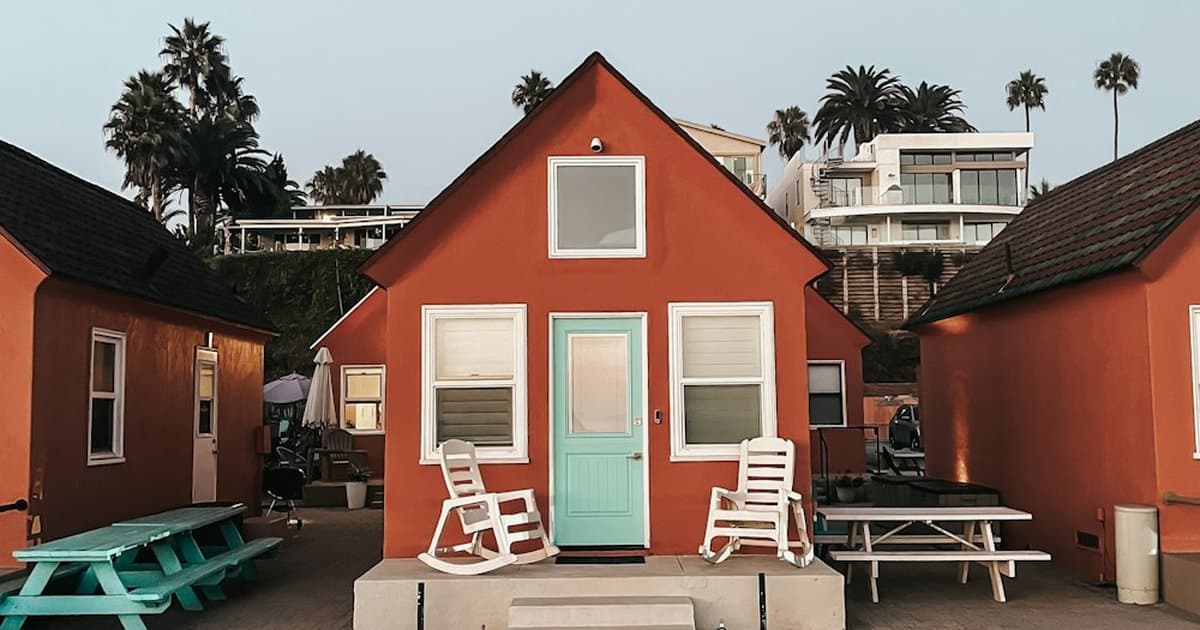
That contrast, older, modest bungalows sitting next to newer, larger rebuilds, is visible on nearly every block. It is a neighborhood in the middle of turning over its housing stock one lot at a time, which is part of what is pushing the per-square-foot number as high as it is.
The practical questions a listing photo will not answer
No city transfer tax, unlike Los Angeles. Manhattan Beach does not impose its own documentary transfer tax on top of the county rate, according to the Los Angeles County Registrar-Recorder's documentary transfer tax bulletin. That is a meaningful difference from the City of Los Angeles, which layers its own transfer tax, commonly known as Measure ULA, on top of the county rate for higher-value sales. A seller here pays the standard Los Angeles County documentary transfer tax and nothing further at the city level.
Flood zone status is real, and it is documented. A 2023 California Coastal Commission staff report on Manhattan Beach's coastal hazards states plainly that the entire sandy beach coastline, El Porto included, sits within the 1 percent annual chance flood zone, with modeled flood elevations of 16 to 20 feet in a 100-year storm event. The same report notes that El Porto Beach's public restroom and food stand building is already vulnerable to wave runup in a 100-year storm, and projects the beach narrowing from 370 feet in 2020 to roughly 200 feet by 2100 absent adaptation work, assuming continued sea level rise. None of that means a home here is uninsurable. It does mean flood insurance is a real line item to price into your budget rather than an afterthought, and it is worth asking your lender and insurance broker about NFIP requirements before you are deep into a purchase contract.
Coastal Commission jurisdiction can apply. Not all of Manhattan Beach sits within the California Coastal Zone, but beachfront blocks like much of El Porto often do, and the City of Manhattan Beach's own coastal permit page confirms the city maintains a separate coastal development permit process for property that falls inside it. If you are buying with plans to remodel or rebuild, confirm your parcel's status on the city's interactive zoning map before you finalize a renovation budget or timeline.
LAX traffic is a live local issue, not settled history. The City of Manhattan Beach's own airport noise page acknowledges that the city fields regular resident complaints about flight noise, points residents to the LAX Noise Portal for neighborhood-specific flight activity, and maintains a City Council airport liaison to field concerns. It is worth checking the noise portal for a specific address before you assume this stretch of coast is quiet, since patterns shift with runway use and time of day.
How El Porto compares to the rest of Manhattan Beach
The Strand and the Sand Section closer to downtown carry the city's highest total price points, large custom homes built to maximize ocean frontage. The Hill Section and Tree Section, further inland, run to bigger lots and a quieter feel with proximity rather than direct beach access as the draw. El Porto sits apart from both: smaller lots, a housing stock actively turning over, and a beach with its own draw for anyone who surfs rather than just wants a view of the water. It shares a border, and historically a school district, with El Segundo, and buyers priced out of El Segundo's thin inventory frequently look one exit north.
If a full comparison across the city's sections is useful before you commit to one, our Los Angeles listings search is a reasonable starting point for current inventory, and our earlier look at a Strand contract in the Sand Section covers the other end of the city's price spectrum in detail.
Schedule a private consultation about El Porto. If you are weighing a purchase or a sale on this stretch of coast, get in touch and we will walk the flood zone, coastal permit, and pricing questions against the specific property you have in mind.
Frequently Asked Questions
Is El Porto the same thing as the Sand Section?
No. Both sit near the beach, but El Porto is its own distinct area at the north end of Manhattan Beach, roughly between 45th and 38th Streets, while the Sand Section refers to the blocks closer to downtown and the Strand. El Porto has its own commercial corridor on Highland Avenue, its own beach access and surf break, and, on a per-square-foot basis, its own pricing pattern that currently runs above the city average.
Does the Los Angeles mansion tax, Measure ULA, apply to a home sale in El Porto?
No. Measure ULA is a City of Los Angeles transfer tax that applies only to property sales within Los Angeles city limits. Manhattan Beach is its own incorporated city and does not impose an additional city-level transfer tax on top of the standard Los Angeles County documentary transfer tax, according to the county's own transfer tax bulletin.
Is flood insurance actually required to buy in El Porto?
It depends on your lender and your parcel's flood zone designation, which underwriting will pull. What the public record shows is that the sandy beach coastline here, El Porto included, sits within the 1 percent annual chance flood zone per a California Coastal Commission staff report on the city's coastal hazards. Whether that means a mandatory NFIP policy on your loan depends on your exact flood map panel, so confirm it early rather than during your contingency period.
Why does El Porto price higher per square foot than the rest of Manhattan Beach?
The most likely driver is lot size and housing stock. El Porto's original 1911 subdivision platted small residential lots, which today support a higher share of duplexes and triplexes and smaller individual footprints than the larger single-family lots common in the Hill and Tree Sections. A smaller structure on beach-adjacent land, with steady buyer demand from people drawn specifically to the surf and beach access, can produce a higher price per square foot even as the total sale price runs below the city median.
Should I use a local agent who knows El Porto specifically, or is any Manhattan Beach agent fine?
The things worth getting right here are specific to it: whether a parcel falls inside the Coastal Zone and needs a coastal development permit, what a lender will require given the flood zone designation, and how a small-lot duplex or triplex should price against a single-family comp a few blocks away. Those are not generic Manhattan Beach questions. I am Paul Blair, founder and broker at Grey Square, and I work buyers and sellers across the Westside and the South Bay, including this stretch of coast. If you want a second opinion on a specific El Porto property, a conversation costs nothing and tends to surface the practical issues before they become a problem in escrow.
About the author
Paul Blair is the founder and broker of Grey Square, a virtual real estate brokerage representing buyers and sellers across Dallas, Los Angeles and Houston. With 22 years in the business and more than $140 million in closed transactions, Paul works the full range of the market, from luxury homes in the Park Cities and Preston Hollow to estates in the Hollywood Hills and across the Westside. Connect with Paul and the Grey Square team at greysq.com. TX TREC #9011505 · CA DRE #01792671.
Looking at homes in Los Angeles?
We check the zone, the taxes and the comps before you tour, so the house you buy is the one you decided on.