What Does It Actually Cost to Live in Flower Mound, Texas in 2026?
The typical Flower Mound home is valued at $610,100 in 2026, with a median sale price of $635,000. Here's what buyers and sellers pay across the town's neighborhoods, plus taxes, SMARTGrowth, and the three developments reshaping Denton County's lakeside suburb.
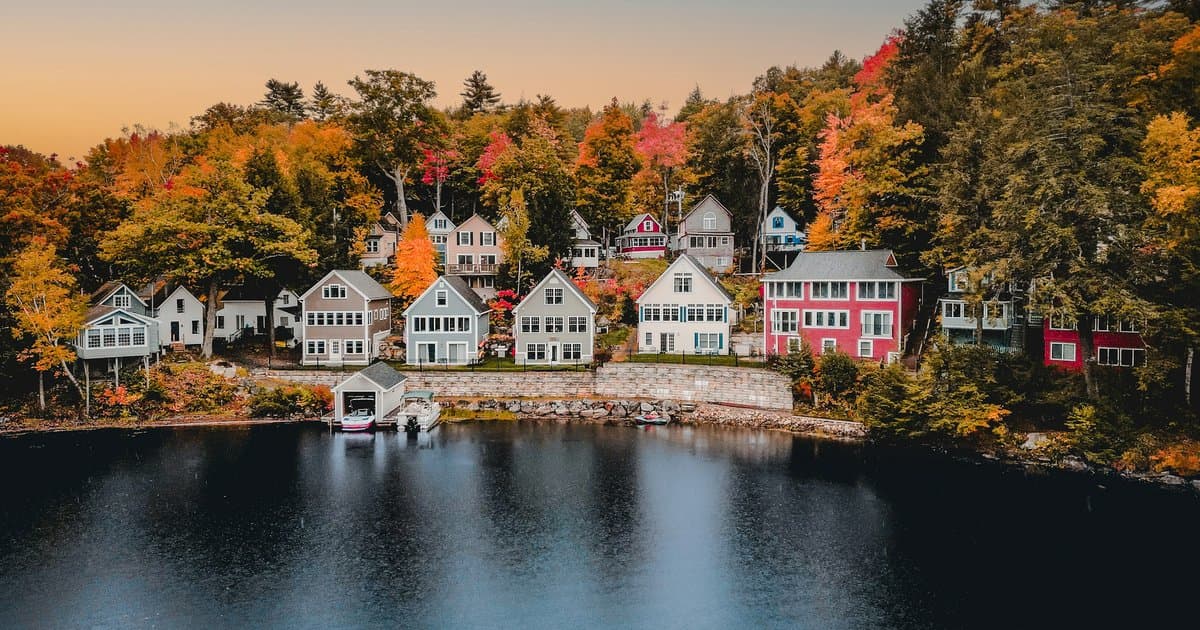
What does it actually cost to live in Flower Mound, Texas in 2026?
By Paul Blair | August 16, 2026
The typical Flower Mound home is valued at $610,100, down 0.8% over the past year, and the median sale price in June was $635,000, according to Zillow's Home Value Index. On top of that, the town's own property tax rate sits at 38.7277 cents per $100 of assessed value, with Lewisville ISD and Denton County levies stacked above it. But the citywide number hides the real story here, because Flower Mound is not one market. It runs from roughly $386,000 in its oldest pockets to nearly $915,000 in its newest, and the gap between them is widening.
I have worked Denton County long enough to watch this town change character twice. Here is what a buyer or seller actually needs to know about it in 2026.
A town that was almost something else entirely
Flower Mound takes its name from a fifty-foot mound covered in Indian paintbrush, named by the Peters Colony after Sam Houston settled a regional dispute in 1844, according to the Texas State Historical Association. For a century it was farmland, cotton, corn, wheat, cattle. What changed it was water. The Corps of Engineers completed Grapevine Lake on July 2, 1953, and people who worked in Dallas started deciding they would rather live next to a lake than next to downtown. The town incorporated on February 27, 1961, with a few hundred residents.
Then came the part most people do not know. In 1968, Flower Mound was selected as one of thirteen federally backed "new towns" under the New Communities Act. Raymond Nasher and Edward Marcus of Neiman-Marcus drew up four village centers across 6,156 acres on the north shore of Grapevine Lake, backed by $18 million in federal loan guarantees. It failed. Recession, slow land sales, and shifting federal policy left the project stalled, and HUD foreclosed in September 1976 with roughly 100 homes built. The land was later renamed Timber Creek and sold off to conventional builders.
The population math tells you what happened next: 1,685 in 1970, 15,527 in 1990, 50,702 in 2000, and 77,243 by 2021. Flower Mound became a large suburb the ordinary way, one subdivision at a time, on land that had been planned for something much stranger.
What the price bands actually look like
The citywide ZHVI is a blunt instrument. Zillow's own neighborhood-level values show a market that spans more than half a million dollars end to end:
| Area | Typical home value |
|---|---|
| Wichita Chase | $914,950 |
| Bridlewood | $847,706 |
| Stafford Estates | $740,300 |
| Wellington | $671,293 |
| Villages of Northshore | $661,006 |
| Glenwick Estates | $606,124 |
| Pecan Acres | $547,818 |
| Lake Forest | $479,740 |
| Westchester | $386,477 |
Source: Zillow, July 2026
Broadly, the western and northern sections carry larger lots and newer construction, while the eastern side toward Lewisville holds the town's earliest 1980s and 1990s inventory at the lowest entry points in the market. The custom and estate segment, a lot of it clustered around Bridlewood's golf frontage and the wooded acreage tracts off Shiloh and Chinn Chapel, trades well above the citywide number.
Pace is the other thing worth watching. Homes are going to pending in about 13 days, with 338 properties for sale as of July 31 and a median sale-to-list ratio of 0.997. Thirty percent of sales closed above list price and 50.5% closed below. That is a market where correctly priced homes move quickly and mispriced ones sit, which is a very different problem from the one sellers had three years ago.
Thinking about selling in Flower Mound? Request a confidential valuation and I will walk you through what your specific pocket of town is doing, not the citywide average.
The streets, the trees, and the shape of the place
Flower Mound does not look like Plano or Frisco, and that is mostly geography. The town sits in the Eastern Cross Timbers, a belt of post oak and blackjack oak woodland that runs north through Texas, so the terrain rolls and the tree canopy is genuinely mature rather than planted. Long Prairie Road (FM 2499) and Cross Timbers Road (FM 1171) form the town's spine, and most of the residential fabric hangs off them in loops and cul-de-sacs rather than a grid.
Architecture follows vintage. The 1980s and early 1990s stock east of FM 2499 is traditional brick, often single-story, on modest lots. The 1990s and 2000s build-out through Bridlewood and Wellington brought two-story brick-and-stone traditionals on larger lots. The most recent construction, particularly around the lake, leans transitional and contemporary with heavier stone and steel window packages.
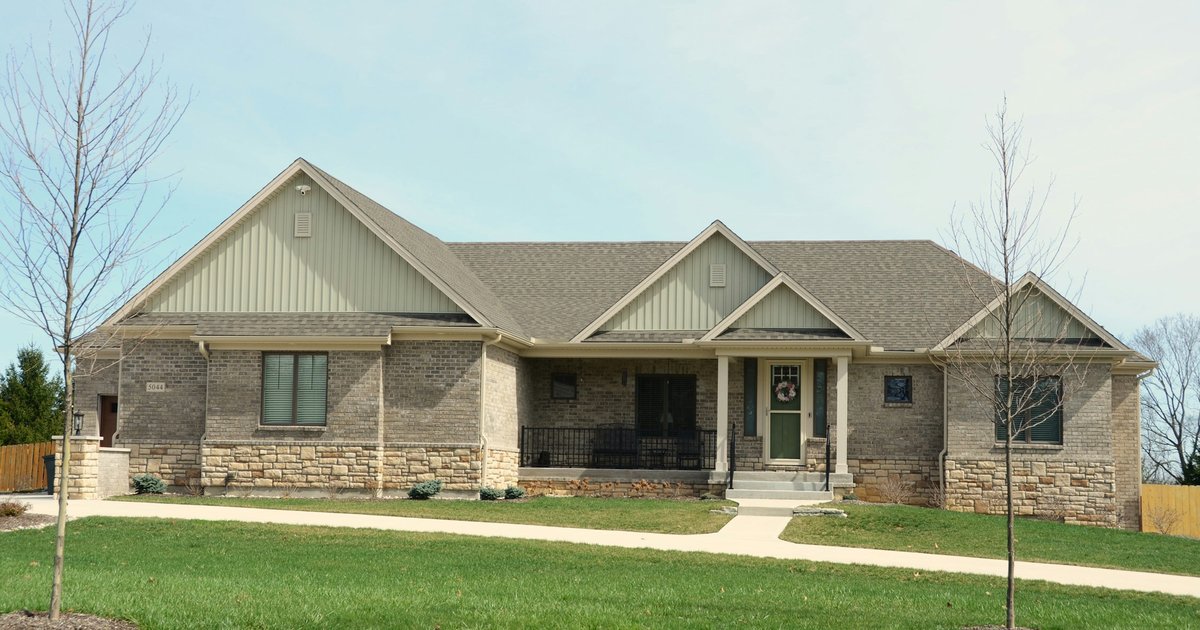
Two-story brick traditionals on generous lots make up the bulk of Flower Mound's 1990s and 2000s inventory.
Grapevine Lake anchors the southern edge, with Corps of Engineers shoreline, Twin Coves Park, and a trail network that connects into the Northshore Trail. Proximity to DFW International Airport, roughly fifteen minutes southeast, is a practical draw for the corporate relocation and frequent-traveler buyer, and it shows up in who competes for inventory here.
Three developments that will reshape the town
Lakeside DFW and Lakeside Village. A 160-acre mixed-use district at the southern gate of town near Grapevine Lake, with shops, restaurants, offices, hotels, and residential ranging from the 15-story Lakeside Tower condominiums to custom homes. In March 2026, the Villas at Lakeside Village were included in a $731 million North Texas land purchase by California builder Homebound, which plans 44 homes of 2,700 to 3,700 square feet starting at $1.79 million, per the Cross Timbers Gazette. Lakeside East, approved by council in October 2025, adds a hotel, office space, retail, and townhomes down the street.
Furst Ranch. On the far west side, roughly 1,000 acres at all four corners of US 377 and FM 1171, assembled by Jack Furst across 22 separate transactions. NBC 5 reported the approved plan calls for 3,000 single-family homes, 5,000 apartments, and substantial office and retail, with buildout potentially spanning forty years. For west-side owners who currently drive ten miles for groceries, this is the project that changes daily life.
Cottonwood and a possible Costco. In August 2026, Costco pitched a 168,256-square-foot warehouse inside Cottonwood, an 86-acre development running from Dixon Lane to FM 407, targeting a May 2028 opening. The Cross Timbers Gazette reported that the retailer is asking for 898 parking spaces, nearly 100 more than town ordinance allows for that building size, and up to 90% inorganic landscaping against a 20% cap, with traffic on FM 407 and Dixon Lane the central point of resident concern. The project goes before the Environmental Conservation Commission, Planning and Zoning, and Town Council in fall 2026.
SMARTGrowth, and why it matters to your offer
The reason those Costco parking numbers became a public argument is SMARTGrowth, a growth-management framework Flower Mound has run since February 17, 2000. It applies 29 adopted criteria across six categories, public infrastructure, public facilities, public services, economic development, environmental quality, and community character, to development proposals.
For a buyer, the practical translation is that Flower Mound is slower and more restrictive about approving density than most of its neighbors. That has kept the town's character intact and constrained new supply, which supports resale values but also means fewer new-construction options at any given moment. For a seller, it means your competition set is largely other resale homes, not a builder two miles away discounting inventory.
Property taxes and exemptions
The town's proposed fiscal 2026-27 budget of nearly $474 million holds the property tax rate flat at 38.7277 cents per $100 of assessed valuation, according to Star Local Media. Two things in that budget matter more to homeowners than the rate itself: the town continues a 20% homestead exemption, the maximum allowed under state law, and preserves a $150,000 exemption for homeowners age 65 and older or with qualifying disabilities.
Those are town-level exemptions only. Lewisville ISD and Denton County set their own rates and exemptions, and your total bill is the sum. Verify your specific parcel's assessed value, exemptions, and taxing units through the Denton Central Appraisal District before you rely on any estimate, including a listing's. School attendance boundaries should likewise be confirmed directly with the district, since portions of the far west side fall outside Lewisville ISD.
How it compares
Against Southlake, which runs well over $1.3 million at the median, Flower Mound is roughly half the price for comparable square footage, with the tradeoff being a less concentrated town center. Against Coppell, prices are broadly similar but Flower Mound offers considerably more large-lot and acreage inventory. Against Grapevine, Flower Mound trades lake access and space for less walkable historic retail. And against the Collin County growth corridor, Frisco, Prosper, Celina, Flower Mound is an older, more finished town, which means mature trees and established infrastructure instead of a construction schedule.
Frequently Asked Questions
Is Flower Mound a buyer's or seller's market in 2026?
It is close to balanced with a slight seller tilt on pace and a slight buyer tilt on price. Zillow shows homes going to pending in about 13 days with a 0.997 median sale-to-list ratio, but the typical home value is down 0.8% year over year and half of June sales closed below list. Speed does not mean price power, and pricing at last year's comps is the most common seller mistake I see here right now.
What is the property tax rate in Flower Mound?
The town's rate is 38.7277 cents per $100 of assessed value under the proposed fiscal 2026-27 budget, with a 20% homestead exemption and a $150,000 exemption for owners 65 and older or with qualifying disabilities. Lewisville ISD and Denton County levy separately on top of that, so check your parcel through the Denton Central Appraisal District for the actual combined figure.
Which part of Flower Mound is most expensive?
Wichita Chase carries the highest typical value at $914,950, followed by Bridlewood at $847,706 and Stafford Estates at $740,300, per Zillow. The lower entry points are on the eastern side toward Lewisville, where Westchester sits at $386,477 and Lake Forest at $479,740.
Will Furst Ranch and Lakeside change values in Flower Mound?
They will change inventory and amenities. Furst Ranch alone contemplates 3,000 single-family homes and 5,000 apartments over a buildout that could run four decades, and Lakeside Village is adding a new luxury tier starting near $1.79 million. What that does to any individual home's value depends entirely on location relative to those projects, and nobody can promise you a direction. What I can tell you is that west-side owners near US 377 and FM 1171 should be watching this closely.
How do I find a real estate agent who actually knows Flower Mound?
Ask for closed transactions in the specific pocket of town you are buying or selling in, not just the city name. Flower Mound spans a $500,000 range across its neighborhoods and three active mega-developments, and an agent working Bridlewood acreage is solving a different problem than one working Lake Forest resale. Ask how they price against a market where homes move in 13 days but half close under list. I am Paul Blair, founder and broker of Grey Square, and I have spent 22 years and more than $200 million in closed transactions working DFW, including the Denton County corridor from Flower Mound through Highland Village and Coppell. If you want a straight read on your situation, start a conversation.
Working with Grey Square in Flower Mound
I have sat at enough Denton County closings to know that the Flower Mound conversation is almost never about the citywide median. It is about whether the Cross Timbers lot is worth the premium, whether the Costco traffic study changes your commute, and whether your 1994 brick two-story should be updated before listing or priced for a buyer who wants to update it themselves. Those are answerable questions, and they are the ones worth spending your time on.
If you are buying or selling in Flower Mound, schedule a private consultation or browse current DFW listings to see what is moving.
Paul Blair is the founder and broker of Grey Square, a virtual real estate brokerage representing buyers and sellers across Dallas and Los Angeles. With 22 years in the business and more than $200 million in closed transactions, Paul works the full range of the market, from luxury homes in the Park Cities and Preston Hollow to estates in the Hollywood Hills and across the Westside. Connect with Paul and the Grey Square team at greysq.com. TX TREC #9011505 · CA DRE #01792671.