Miracle Mile Real Estate in 2026: What the New Subway Stop Changed
A guide to Miracle Mile, Los Angeles in 2026: price bands, the two HPOZ historic districts, the new Metro D Line station, and how it compares nearby.
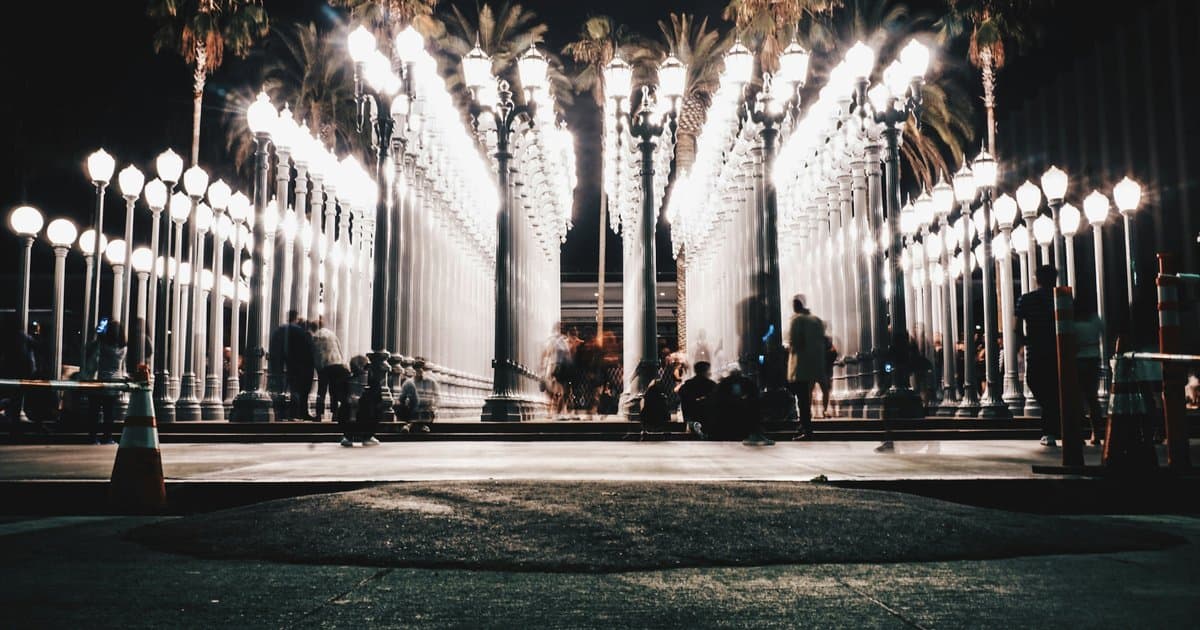
What changed in Miracle Mile in 2026? Two things, within a few hundred feet of each other on Wilshire Boulevard. The Metro D Line subway extension opened three new stations on May 8, one at Wilshire/Fairfax, and LACMA reopened on April 19 in a new 110,000 square foot building stretching roughly 900 feet across Wilshire. For a neighborhood whose housing stock has barely changed since the 1940s, that is a significant year. Median sale prices sit in the $1.6M to $1.8M range depending on the window you measure, and the practical question for anyone buying or selling here is how much of that infrastructure story is already in the price.
Where Miracle Mile Actually Is
Miracle Mile sits in central Los Angeles, roughly bounded by 3rd Street to the north, Highland Avenue to the east, San Vicente Boulevard to the south, and Fairfax Avenue to the west. The name comes from the Wilshire commercial corridor that developer A.W. Ross laid out in the 1920s, one of the first shopping districts in the country designed around the car rather than the streetcar.
That commercial spine is what most people picture. The residential neighborhood behind it is what buyers are actually shopping for: flat blocks of one-story and two-story period homes on consistent lot sizes. Two separate historic districts cover most of it.
The Miracle Mile HPOZ covers 1,347 properties between Wilshire to the north, San Vicente to the south, La Brea to the east, and Orange Grove to the west. According to Los Angeles City Planning, it is mostly one-story single-family homes north of Olympic Boulevard and one and two-story multi-family buildings south of it, with construction dates running from 1921 through roughly 2015 and the bulk built in the 1920s, '30s and '40s. It took effect in 2017.
The Miracle Mile North HPOZ is older, adopted by City Council in 1990. City Planning describes it as mostly one-story houses built between 1924 and 1941, uniform in scale, massing and setbacks. More than half are Spanish Colonial Revival, with Tudor and American Colonial Revival making up much of the rest. Paul Revere Williams and the firm Morgan, Walls and Clements both designed houses here, and the district contains two City Historic-Cultural Monuments.
If you are used to shopping the hillside markets, this is the opposite experience. No view lots, no private driveways climbing a canyon, no grading permits. The value here is in the consistency.
What the Houses Are Like
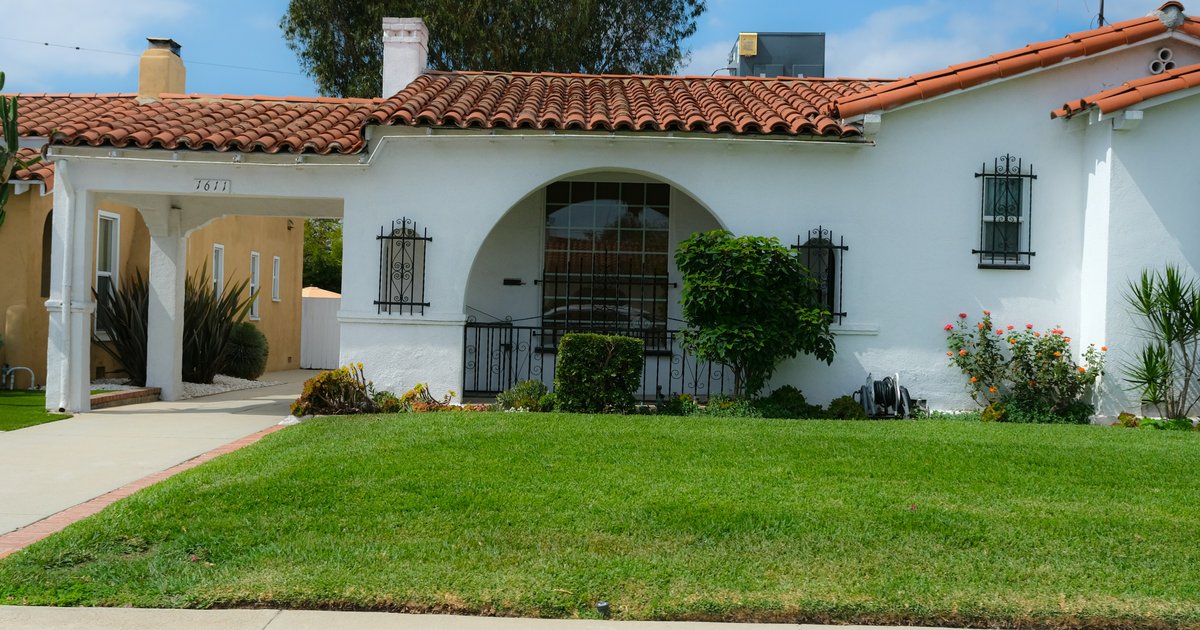
The dominant product is a 1920s or 1930s period revival house on a flat lot, typically two or three bedrooms in original form, often expanded at the back by a prior owner. Spanish Colonial Revival is the most common style: white or cream stucco, red clay tile roof, arched entry, wrought iron detail. Tudor Revival shows up in enough volume that entire blocks read as English cottage rather than Spanish. Mediterranean Revival, French Revival and Minimal Traditional houses are mixed in, plus Mid-Century Modern apartment buildings south of Olympic.
The HPOZ designation is the single most important thing to understand before you buy here, and it cuts both ways. On the buying side, it is the reason the streets still look like this: the district was established in part to limit mansionization, so you are unlikely to end up next door to a three-story spec box. On the owning side, exterior work goes through review. Anything visible from the street, including windows, roofing, front facades, additions and often fencing, is subject to the district's preservation plan and the HPOZ Board. The Miracle Mile board meets the first and third Wednesday of each month; Miracle Mile North meets the second and fourth Tuesday. Both meet at the Fairfax Branch Library. Neither is an obstacle if you plan around it. Both are a problem if you close in March assuming you will have new steel windows by June. Price the review timeline into the renovation budget the same way you price the contractor.
The Numbers, and Why They Disagree
Miracle Mile is small enough that monthly medians swing hard on a handful of sales. Different sources measuring different windows give different answers, and it is worth seeing both rather than picking the flattering one.
| Source | Window | Median | Days on market |
|---|---|---|---|
| Redfin | Nov 2025 | $1.7M, down 2.8% year over year | 74, up from 42 |
| Homes.com | Feb 2026 | $1,799,500 | 46 average |
| Homes.com | Trailing 12 months | $1,650,000, up 5% | n/a |
Homes.com also puts the active listing range from roughly $549,000 at the condo end to just under $5M at the top, across about 74 active listings. Redfin's November sale-to-list ratio was 99.4%, meaning sellers were getting close to asking even as days on market roughly doubled.
Read together: Miracle Mile is not a bidding-war market right now, but it is not a discounting one either. Homes are taking longer and closing near ask. That combination rewards accurate pricing on day one and punishes an aspirational list price, because the market here does not have the volume to correct a mistake quickly.
One practical note for sellers. The City of Los Angeles Measure ULA transfer tax applies above thresholds indexed annually, currently around $5.15M for the 4% tier. Almost nothing in Miracle Mile trades above that, so if you have been bracing for the mansion tax, it very likely does not touch your sale. The county documentary transfer tax still does.
Thinking about selling in Miracle Mile? Start with a real number rather than a portal estimate. Request a confidential valuation and we will look at your block, your architectural style, and what has actually closed nearby.
The Subway and What It Actually Means
Metro opened Section 1 of the D Line Subway Extension on May 8, 2026, adding stations at Wilshire/La Brea, Wilshire/Fairfax and Wilshire/La Cienega. That gives Miracle Mile a roughly 20-minute rail connection to Union Station and downtown. Section 2, reaching Beverly Hills and Century City, is currently targeted for 2027, with the UCLA and VA segment after that.
Two things follow, and they point in different directions.
The first is straightforward. A station at Wilshire/Fairfax puts a large share of the residential grid inside a half-mile walk of heavy rail. For buyers who work downtown or in Koreatown, that changes the commute math, and it is new. There had been no rail service on this stretch of Wilshire since 1954.
The second is the one sellers ask about less and should ask about more. Senate Bill 79, effective July 1, 2026, allows higher-density housing near qualifying transit stops statewide, generally within a half mile, and Los Angeles City Planning maintains a page on implementation. How SB 79 interacts with an adopted HPOZ gets worked out parcel by parcel over the next several years, and I would be skeptical of anyone on either side who tells you the answer is settled. If you are within a half mile of Wilshire/Fairfax or Wilshire/La Brea, the zoning question attached to your parcel is more live than it was two years ago. Worth understanding before you list, not after an offer arrives from a buyer who has already run the numbers.
Museum Row
The stretch of Wilshire from roughly Fairfax to Curson is Museum Row, and it is why Miracle Mile has a national profile a neighborhood of 1930s bungalows would not otherwise have. LACMA anchors it. The museum's new David Geffen Galleries, designed by Peter Zumthor, opened April 19, 2026 after nearly two decades of development: a single-level, 100,000 square foot building elevated above Wilshire, on 56 seismic base isolators that let it move up to five feet in any direction during an earthquake. Within a few blocks sit the Academy Museum of Motion Pictures, in the converted 1939 May Company building at Wilshire and Fairfax; the Petersen Automotive Museum; the La Brea Tar Pits; and Craft Contemporary. The Grove and the Original Farmers Market are just north at 3rd and Fairfax. You are buying a flat, walkable residential block that happens to sit behind one of the densest cultural corridors in the country.
How It Compares to What's Next Door
Hancock Park and Windsor Square, immediately east, are estate markets. Larger lots, larger houses, higher price points. If you want 6,000 square feet on a quarter acre, you go east.
Beverly Grove and the Fairfax District, north and northwest, run smaller and denser, with more commercial adjacency along 3rd and Beverly.
Carthay and South Carthay, just west, are the closest comparison. Similar era, similar period revival housing, also HPOZ-protected. Buyers cross-shop these two constantly and usually decide on the block rather than the neighborhood name.
The hillside markets like the Hollywood Hills are a different asset class, with disclosure and insurance considerations tied to fire hazard severity zones. Miracle Mile carries a minor flood risk profile and, per Redfin's climate data, under 1% of properties with meaningful wildfire exposure. That difference alone can be worth thousands a year in insurance.
Who actually buys here? It splits between people who want a period house they cannot find in newer parts of the city, and people who want to be central. Someone working in Culver City, Hollywood and downtown in the same week can do all three from here. That was true before the subway. It is more true now. You can browse current Los Angeles listings to see what is on the market nearby.
Frequently Asked Questions
What is the median home price in Miracle Mile in 2026?
It depends on the measurement window, which matters in a market this small. Redfin put the November 2025 median at $1.7M, down 2.8% year over year. Homes.com put the February 2026 median at $1,799,500, with a trailing twelve-month median of $1,650,000, up 5%. A reasonable working range is $1.6M to $1.8M, with single-family period homes generally above that and condos below.
Can I remodel a house in the Miracle Mile historic district?
Yes, with review. Both HPOZs require approval for exterior work visible from the public right of way, including windows, roofing, facade changes and additions. Interior work is generally not reviewed. Each district has its own preservation plan and board, and boards meet twice monthly at the Fairfax Branch Library. Plan the timeline before you plan the demolition.
Does Measure ULA apply to a Miracle Mile home sale?
Usually not. The ULA transfer tax applies above thresholds indexed annually, currently around $5.15M for the 4% tier and about $10.3M for the 5.5% tier. Most Miracle Mile sales close well below that. The Los Angeles County documentary transfer tax applies regardless of price. Confirm the current indexed thresholds before you close, since they adjust.
Did the new subway station change property values in Miracle Mile?
The Wilshire/Fairfax station opened in May 2026, too recent for clean data on its effect. What is measurable is that the neighborhood now has direct rail access to downtown for the first time since 1954, and that SB 79 takes effect July 1, 2026 with density provisions tied to proximity to qualifying transit. Both are real. Neither has fully worked through pricing.
Who should I work with to buy or sell a home in Miracle Mile?
Look for transaction experience specifically in HPOZ properties, because that is where deals here go sideways. What matters is whether prior exterior work was permitted and approved, how a period home appraises against a remodeled comp on the same block, and how to write disclosure and repair terms around a house built in 1931. General LA experience is not the same as historic district experience. I am Paul Blair, founder and broker of Grey Square, with 22 years and more than $200 million in closed transactions across markets like this one, including the central LA neighborhoods along Wilshire and the hillside markets north of them. To talk through a specific block or house, schedule a private consultation.
Working in Miracle Mile
The mistake I see most often is treating a Miracle Mile house like any other 1930s LA house. It isn't. The historic district review, the fact that much of the value sits in a facade you cannot casually change, and now an open zoning question tied to a subway station that opened four months ago all change how you price it and how you write the deal.
If you are considering a move in or out of Miracle Mile, start a conversation. Just a look at what your specific block is doing.
Paul Blair is the founder and broker of Grey Square, a virtual real estate brokerage representing buyers and sellers across Dallas and Los Angeles. With 22 years in the business and more than $200 million in closed transactions, Paul works the full range of the market, from luxury homes in the Park Cities and Preston Hollow to estates in the Hollywood Hills and across the Westside. Connect with Paul and the Grey Square team at greysq.com. TX TREC #9011505 · CA DRE #01792671.