What Does It Cost to Buy in Spaulding Square, Hollywood's Historic Bungalow District?
Spaulding Square homes list from $2.35 million to $3.6 million inside an eight-block Hollywood HPOZ most buyers drive past without noticing.
What Does It Cost to Buy in Spaulding Square, Hollywood?
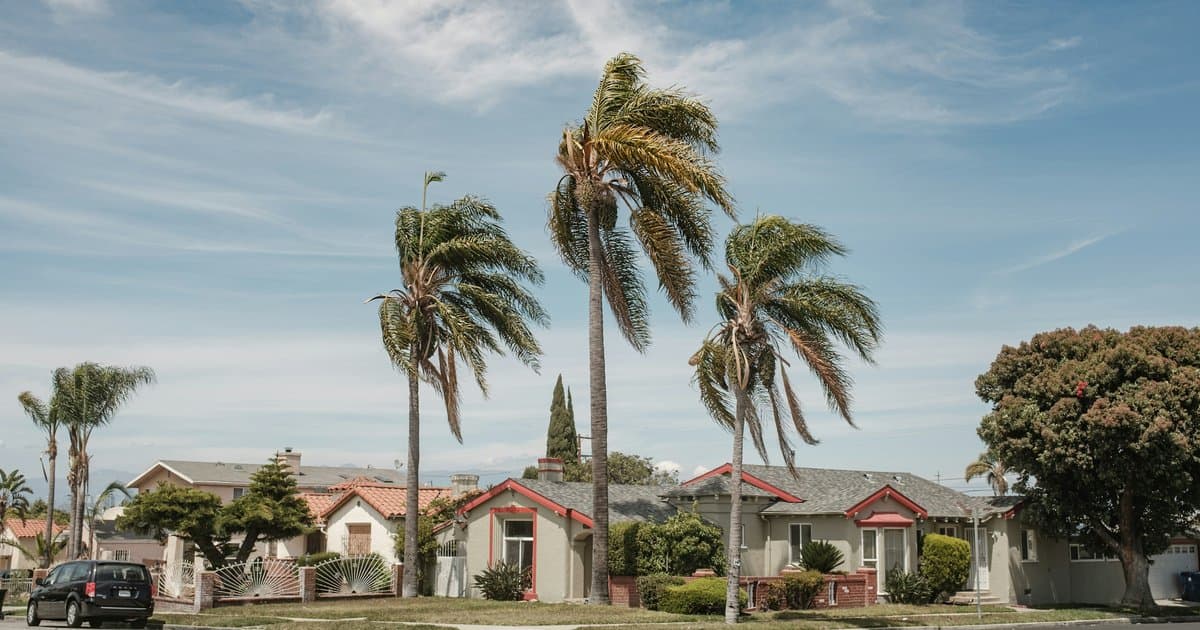
Spaulding Square is an eight-block Historic Preservation Overlay Zone tucked into flatland Hollywood, and right now it prices well above the neighborhood name most people associate with that zip code. Current listings inside the district run from 1516 N Genesee Avenue at $2,350,000 up to 1609 N Stanley Avenue at $3,595,000, with a recent closed sale at 1409 N Genesee Avenue landing at $3,250,000, or $1,026 a square foot. That is a different market than the $682,000 median Redfin reports for the broader Hollywood neighborhood, a number pulled down by the high volume of condos and apartment conversions that dominate Hollywood's sales mix. Spaulding Square is almost entirely single-family, and it trades like it.
By Paul Blair | September 22, 2026
An HPOZ Hiding in Plain Sight
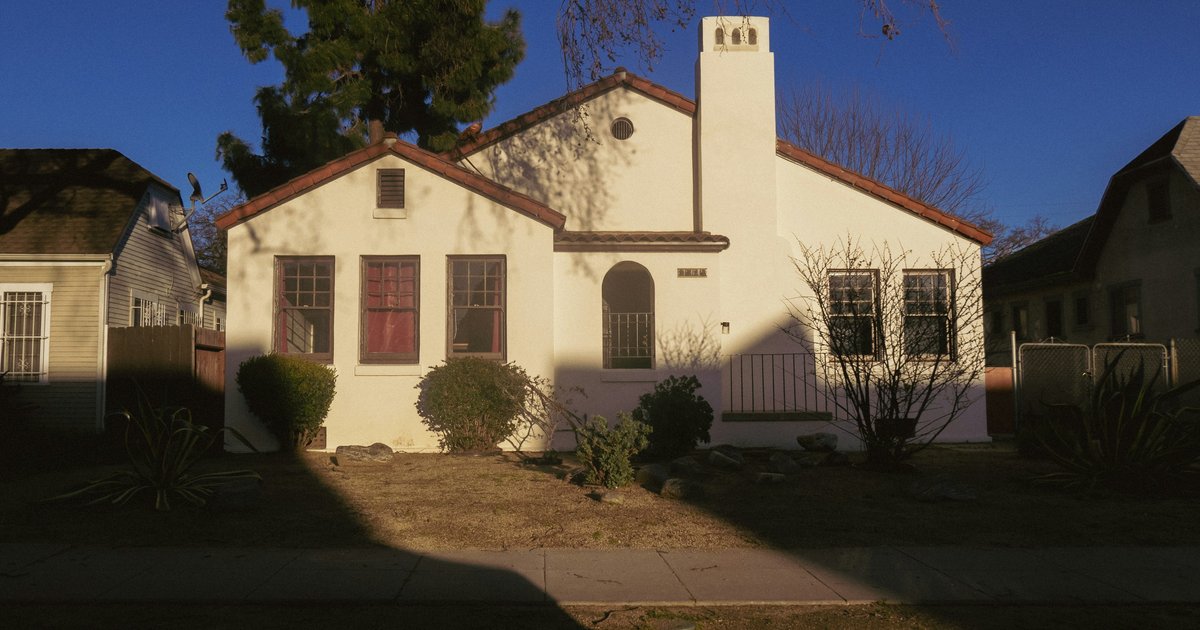
Architect Albert Starr Spaulding bought and subdivided this land in 1914, and the roughly 160 homes that fill the district went up between 1916 and 1926, according to both Wikipedia's history of the neighborhood and the Spaulding Square Neighborhood Association's own account. The district runs roughly eight blocks between Sunset Boulevard and Fountain Avenue, from Orange Grove Avenue on the west toward Stanley Avenue on the east, and the housing stock is almost entirely Period Revival: Colonial-style bungalows sit next to Italian Renaissance, English, Mediterranean, Spanish, Prairie, and Craftsman homes on the same block, per the City of Los Angeles Planning Department's HPOZ page for the district.
The neighborhood's early character came from the film industry next door. United Artists' studio lot sat nearby on Santa Monica Boulevard and Formosa Avenue, and the Beverly Press reported that silent-era actors, directors, and crew members snapped up the new houses as fast as they were built. Cinematographer Rudolph J. Berquist built his own home at 1400 N Ogden Drive in 1919 while working on films including Camille, according to Wikipedia, and Lucille Ball bought a house in the district for her mother. The neighborhood declined for a stretch in the mid-twentieth century, one longtime resident told the Beverly Press it was "run down" with "many problems," before a restoration push and the 1993 HPOZ designation locked in the character that draws buyers back today.
The Streets Themselves
The interior streets, Sierra Bonita Avenue, Spaulding Avenue, Ogden Drive, Genesee Avenue, and Poinsettia Place, run in tight, walkable blocks between the two boundary avenues, and the district has stayed on Hollywood production location lists for decades because the streetscape reads as period-correct on camera. Wikipedia notes that 1530 N Orange Grove Avenue appeared in the original Halloween in 1978, and a house on Genesee Avenue turned up in A Nightmare on Elm Street. Director Hugo Haas also lived in the district, per the same source, which fits the pattern set a generation earlier by Berquist and the other silent-film-era owners. None of that is why a buyer should pay a premium for a specific address, but it explains why the district has attracted a steady stream of location scouts and preservation-minded owners rather than developers, and why the block-by-block architecture still looks close to what Spaulding built a century ago.
What Actually Trades Inside the Boundary
Pull back to the zip code and the numbers still favor Spaulding Square. Redfin's 90046 housing market data shows a $1,669,278 median sale price over the past three months, down 6 percent year over year, with homes selling in about 85 days at 98.5 percent of list price. Spaulding Square's own listings sit above even that zip-wide figure: besides the two addresses named above, 1635 N Genesee Avenue is asking $2,995,000 and 1617 N Orange Grove Avenue is asking $2,499,000. None of that is a coincidence. A restored, HPOZ-protected Period Revival bungalow on a walkable Hollywood street is a different product than the apartment towers and dingbat fourplexes that make up most of the broader neighborhood's inventory, and buyers pay for the difference.
That gap between the district and the number attached to its own zip code is worth sitting with before you go looking. A buyer who searches "Hollywood homes for sale" and anchors on the citywide Hollywood median is pricing from the wrong comp set entirely. Spaulding Square, along with a handful of other small HPOZs scattered through flatland Hollywood, trades closer to the single-family stock in West Hollywood than to the condo towers a half mile away on the same numbered streets.
Who Actually Buys Here
The Beverly Press description of today's residents still holds: professionals, working artists, and retirees who want a "turn-of-the-century feel" and are willing to live inside an active HPOZ review process to keep it. That second part matters more than it sounds. Any exterior change inside the district, from a new roofline to a repainted porch, goes through the HPOZ Board before a permit gets pulled, and the city's Preservation Plan and District Ordinance govern what qualifies, with the board meeting twice a month to review applications. A buyer who wants to gut a house down to the studs and build something contemporary is shopping in the wrong district. A buyer who wants a 1919 Craftsman that still looks like a 1919 Craftsman a decade from now, with the resale protection that comes from knowing the house next door cannot be replaced with a five-story podium building, is exactly who this neighborhood is built for.
The review board itself meets twice a month, on the second and fourth Thursday, to work through applications for everything from window replacement to full restorations, per the city's own HPOZ page. That is a slower, more deliberate process than a buyer moving from a non-HPOZ tract will be used to, and it is worth budgeting extra time into any renovation plan before closing rather than after. The nearest comparable trade-off in this coverage area is Hancock Park, another Period Revival district built around the same decade, though Hancock Park's larger lots and estate-scale homes put it in a different price tier entirely. Spaulding Square offers a version of the same protected character at a fraction of the lot size and price. Schedule a private consultation about buying inside Spaulding Square and we can walk through what the HPOZ review process actually adds to a purchase timeline before you write an offer.
Where Measure ULA Fits, and Where It Does Not
Spaulding Square sells for real money, but it is not the market where Measure ULA drives the conversation. The Los Angeles Office of Finance confirms the city's added transfer tax applies at 4 percent above $5,400,000 and 5.5 percent above $10,900,000, on top of the base 0.45 percent documentary transfer tax, for any qualifying city sale. Every current Spaulding Square listing sits well under that first threshold, which puts this district in a different conversation than Bel Air or the Bird Streets, where ULA reshapes list-price strategy on nearly every transaction. A Spaulding Square seller pays the ordinary transfer tax and nothing more, at least at today's price levels, which is one more way this eight-block pocket behaves more like a well-located historic tract than a luxury hillside estate market.
The trade for that HPOZ protection and that price stability is inventory. With roughly 160 homes total and most owners staying put once they buy into the preservation rules, listings do not turn over the way they do in a large, unrestricted tract. For a wider look at what else is currently on the market across the city, browse current Los Angeles inventory, and for the rest of flatland Hollywood beyond this one historic pocket, our full Hollywood neighborhood guide covers the Walk Score, the condo stock, and the Measure ULA jurisdictional line with West Hollywood separately.
If you want to see what is actually listed inside the Spaulding Square boundary right now, or want a straight read on what a home in flatland Hollywood is worth before you list it, schedule a private consultation and we can go through the comps together.
Frequently Asked Questions
Where exactly is Spaulding Square?
Spaulding Square is a small Historic Preservation Overlay Zone in flatland Hollywood, roughly eight blocks running between Sunset Boulevard and Fountain Avenue, from Orange Grove Avenue on the west toward Stanley Avenue on the east. It sits close to the border with West Hollywood but is inside the City of Los Angeles.
How much does a home in Spaulding Square cost?
Current listings run from about $2.35 million to $3.6 million, and a recent closed sale hit $3,250,000. That is well above the $682,000 median Redfin reports for the broader Hollywood neighborhood, which is pulled down by condo and apartment sales, and above the $1,669,278 median for the surrounding 90046 zip code as a whole.
What is an HPOZ and how does it affect buying or renovating here?
An HPOZ, or Historic Preservation Overlay Zone, is a Los Angeles designation that protects a district's architectural character by requiring HPOZ Board review of exterior changes before a permit is issued. Spaulding Square was designated in 1993. Buyers who want to preserve or restore a Period Revival home fit well here; buyers looking for unrestricted remodel flexibility should look elsewhere.
Does Measure ULA apply to a Spaulding Square sale?
Not at today's price levels. The City of Los Angeles applies an added 4 percent transfer tax above $5,400,000 and 5.5 percent above $10,900,000, and current Spaulding Square listings sit well under the first threshold. Sellers here pay the ordinary base transfer tax rather than the ULA surcharge that shapes pricing conversations in Bel Air or the Hollywood Hills.
Who's the best real estate agent to work with in a historic district like Spaulding Square?
For an HPOZ this specific, what actually matters is knowing which comps are inside the boundary and which just share a mailing address, and understanding how the preservation review process affects a renovation timeline before a client falls in love with a house. I have represented buyers and sellers across Hollywood and the Westside for 22 years and can walk you through exactly what the HPOZ board will and will not approve on a given block. If you are weighing a purchase or a sale inside Spaulding Square, reach out and we can go through it together.
I have shown buyers through Spaulding Square coming from both directions, some moving up from Hollywood condos and some moving over from West Hollywood's own restricted stock, and the houses that hold their value best are the ones whose owners understood the HPOZ rules going in rather than fighting them after closing.
About Paul Blair
Paul Blair is the founder and broker of Grey Square, a virtual real estate brokerage representing buyers and sellers across Dallas and Los Angeles. With 22 years in the business and more than $200 million in closed transactions, Paul works the full range of the market, from luxury homes in the Park Cities and Preston Hollow to estates in the Hollywood Hills and across the Westside. Connect with Paul and the Grey Square team at greysq.com. TX TREC #9011505 · CA DRE #01792671.