Can ADU Rental Income Help You Qualify for a Mortgage in Los Angeles?
Fannie Mae now allows ADU rental income to count toward qualifying income. Here's how the 30% cap, FHA rules, and LA's market affect your mortgage.
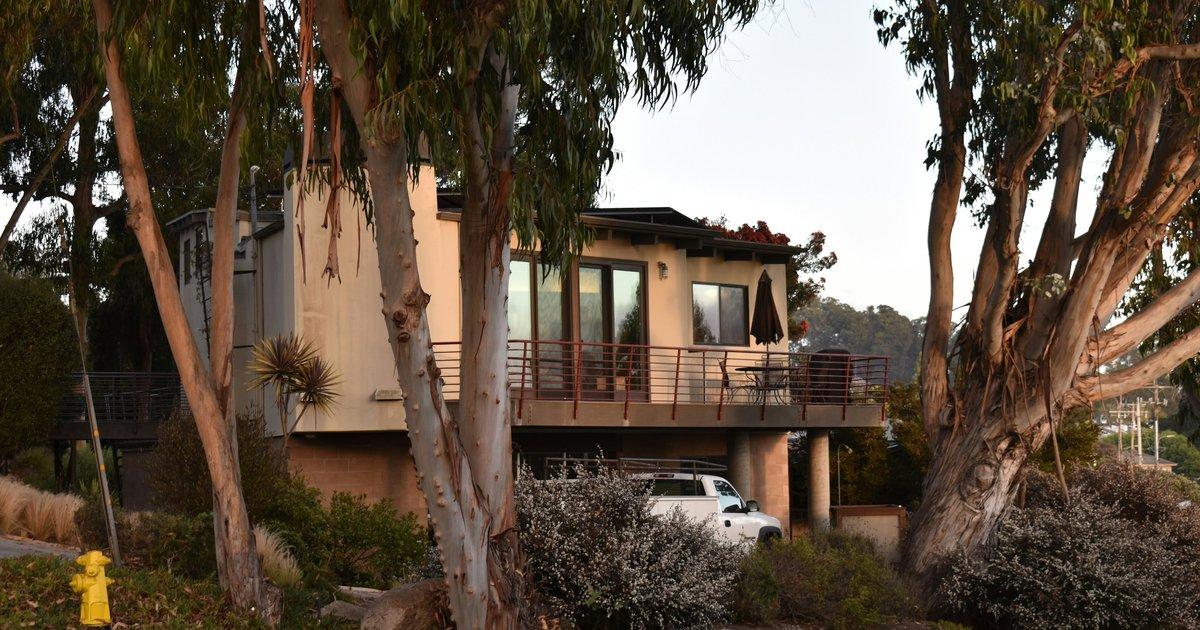

Can ADU Rental Income Help You Qualify for a Mortgage in Los Angeles?
Yes. As of October 2025, Fannie Mae allows buyers to count rental income from an existing ADU toward their qualifying income when purchasing a one-unit primary residence, with one ADU's income capped at 30% of total qualifying income. FHA has allowed it since 2023, counting 75% of estimated ADU rent. In Los Angeles, where ADUs are common and rents run $1,500 to $4,000 per month, using ADU income can meaningfully increase your borrowing power, but lender requirements, documentation, and loan type all affect whether it works in your situation.
By Paul Blair | November 17, 2026
Los Angeles is one of the densest ADU markets in the country. State law has made it easier to build, permit, and rent them, and a lot of the homes you're looking at in Silver Lake, Mar Vista, the Valley, and across the Westside have either a finished garage unit, a detached studio, or a small guest house out back.
The question buyers keep asking: can that ADU rent count when you're applying for a mortgage?
The short answer is yes, in most cases, under the right loan program, with documentation. Here's how it actually works.
The Fannie Mae Change That Matters
The most important development is Fannie Mae's October 2025 Selling Guide update (SEL-2025-08). It formally allows lenders to count rental income from an existing ADU on a one-unit principal residence toward your qualifying income.
Before this change, most conventional lenders treated ADU income the same as any rental income, which typically required a two-year history of receiving that rent on your tax returns. For a buyer purchasing a home with an ADU they haven't rented yet, that was a dead end.
The new rules are different:
- Property type: One-unit principal residence only. This is the home you'll live in.
- Transaction type: Purchase loans and limited cash-out refinances.
- ADU count: Income from one ADU only, even if the property has more than one.
- Income cap: ADU rental income can make up no more than 30% of your total qualifying income.
That last point is the one that trips people up.
Say you're buying a home in Eagle Rock with a detached ADU renting for $2,800 a month. Under Fannie Mae's rules, your lender can count that $2,800. But only if it represents 30% or less of your total qualifying income, which means your income from other sources would need to be at least $6,533 per month. The more you earn, the more room there is for ADU income to count.
How FHA Handles It
FHA has been more permissive on this longer. Since October 2023, FHA allows buyers to count 75% of the estimated rental income from an existing ADU toward qualifying income. You don't need a rental history. The lender uses an appraiser's fair market rent estimate, and you can count 75% of that figure.
For a buyer using FHA financing, the math looks like this: if the appraiser estimates the ADU rents for $2,000 per month in fair market conditions, the lender can count $1,500 of that toward your qualifying income. That's $1,500 per month added to your income stack, which translates to roughly $225,000 to $280,000 in additional borrowing power depending on your rate and other debts.
There's a reserve requirement too. FHA asks for two months of PITI reserves (principal, interest, taxes, and insurance) when you're counting ADU income. So have those reserves verified before you apply.
The property has to have an existing ADU, not a planned one. If you're buying a home intending to build an ADU and want to count the future rent, that's a different situation, one that might involve a construction or renovation loan.
What About Jumbo Loans?
Here's where LA gets complicated. With the conforming loan limit at $1,249,125 in LA County for 2026, a lot of Westside and hillside transactions go jumbo. And jumbo lenders don't follow Fannie Mae guidelines. They set their own rules.
Most jumbo portfolio lenders don't count ADU rental income toward qualifying income, at least not without a documented rental history, typically two years on your tax returns. Some will count it with a signed lease agreement and appraiser support, but it's not standardized.
If you're shopping in Beverly Hills, Bel Air, or the canyons and you need a jumbo loan, you'll want to ask your lender specifically whether they accept ADU income and under what terms before you get pre-approved. Don't assume the Fannie Mae rules apply.
For buyers in the $1.5M to $3M range who are right on the edge between high-balance conforming and jumbo, understanding how your loan program treats ADU income can genuinely change which home you can afford. It's worth a direct conversation with your lender before you go under contract on a home where the ADU is part of the qualifying strategy.
If you're weighing a home with an ADU and trying to figure out whether the rent makes your numbers work, that's exactly the kind of pre-offer analysis I walk buyers through before they commit. Reach out through greysq.com/contact and we can go through it together.
What Documentation Will Your Lender Want?
Whether you're using Fannie Mae or FHA rules, your lender will want to verify that the ADU is legitimately rentable. The typical documentation requirements:
- An appraiser confirmation that the ADU exists and an estimate of fair market rent
- A signed lease agreement if the unit is currently rented, or evidence it was recently rented
- Permit documentation showing the ADU is legally permitted (this matters for FHA in particular)
- Two months of bank statements showing rent deposits if the unit is already occupied
- Reserves as required by the loan program
Unpermitted ADUs are a problem. FHA lenders are especially strict here. If the unit shows up in the appraisal but has no permit, the lender may exclude the income, and in some cases it can complicate the loan approval entirely. Los Angeles has an ADU amnesty program (AB 2533) that lets some pre-2020 unpermitted units get retroactive permits, but that process takes time. Confirm permit status before you make an offer on a home where the ADU income is part of your qualifying strategy.
Los Angeles also has quite a few properties where what looks like a guest house was built without permits, or where an attached unit was converted informally. For properties in Silver Lake, Echo Park, Highland Park, or the Valley where ADUs are dense, it's worth asking your agent to flag this during the initial offer review. An unpermitted unit that you can't count won't necessarily kill the deal, but it changes your financing math.

The Real Math in an LA Context
Let me put some numbers to it.
Say you're pre-approved for a $950,000 purchase based on your salary alone. The home you want is listed at $1,075,000 and has a rented 1-bedroom ADU with a lease at $2,400 per month. Your lender confirms the unit is permitted, the appraiser supports a $2,300 fair market rent, and you're using a conforming conventional loan.
Under Fannie Mae's rules:
- ADU income counted: $2,400 per month (lease rate, since you have a current lease)
- 30% cap check: $2,400 is 30% of your qualifying income, so your other income needs to be at least $5,600 per month
- If it passes the cap check, your effective qualifying income increases enough to support a larger loan amount
Under FHA (if you meet the down payment and loan limit requirements):
- 75% of $2,300 appraiser fair market rent = $1,725 per month additional income
- With two months PITI reserves verified, you're qualifying with a meaningfully higher income figure
Neither scenario works if the ADU is unpermitted, the lease isn't documentable, or your lender's program doesn't accept the income. Run these specifics with a lender before you tour.
For more on how LA loans work at higher price points, the post on jumbo loans in Los Angeles covers what buyers above the conforming limit should expect, and there's more on ADU permit considerations for sellers in this overview of ADU home sales.
What to Ask Your Lender Before You Make an Offer
Three questions that will save you a lot of frustration:
- Does your program allow ADU rental income for a primary residence purchase? Under which guidelines (Fannie Mae, FHA, or your own portfolio criteria)?
- What documentation will you require for the ADU income to count?
- If the ADU income doesn't qualify, what does my maximum loan amount look like without it?
Having those answers before you make an offer on a home where the ADU is central to your financing plan keeps you out of trouble.
Frequently Asked Questions
Can I count future ADU rental income if the unit isn't rented yet?
Under Fannie Mae's current guidelines, you can count ADU income from an existing unit even if it's currently vacant, as long as an appraiser confirms it exists and provides a fair market rent estimate. FHA follows similar logic for existing units. If you plan to build a new ADU after buying, that projected income generally won't count toward qualifying income for the initial purchase loan.
Does the ADU need to be a fully separate unit to qualify?
The ADU needs to be a legally permitted, self-contained accessory dwelling unit. That typically means its own entrance, kitchen or kitchenette, and bathroom. A finished basement with no separate entrance, a bonus room, or an unpermitted garage conversion may not meet lender requirements. Los Angeles has specific permitting definitions; confirm the classification with your agent before relying on the income.
Will all lenders count ADU income the same way?
No. Fannie Mae and FHA have specific guidelines, but lenders can be more restrictive than the guidelines require. Jumbo lenders set their own rules entirely. Even within conventional and FHA loans, documentation requirements and income counting methods can vary between lenders. Getting pre-approved with a lender who explicitly knows how to handle ADU income is worth the extra step.
How does ADU rental income affect my debt-to-income ratio?
It increases your qualifying income, which improves your DTI ratio. If you have a lease in place, some lenders will also count the ADU mortgage contribution, meaning they consider the ADU as offsetting part of your housing expense rather than adding it to your income stack. The treatment varies; ask your lender how they're running the scenario in their underwriting system.
Is ADU income counted differently for a property with two ADUs?
Under Fannie Mae's rules, only one ADU's income can be counted, even if the property has two. FHA has similar limitations. If you're buying a property with multiple ADUs and both are rented, your lender will typically count income from just one of them. That said, both units contribute to the appraised value of the property regardless of whether both rents qualify.
ADU income can genuinely move the needle on what you qualify for in this market, but it's not automatic. The loan type, the documentation, and the lender all matter. If you're looking at homes with ADUs and trying to figure out how they fit into your financing picture, that's a good conversation to have before you're in contract.
About Paul Blair Paul Blair is the founder and broker of Grey Square, a virtual real estate brokerage representing buyers and sellers across Dallas, Los Angeles and Houston. With 22 years in the business, Paul works the full range of the market, from luxury homes in the Park Cities and Preston Hollow to estates in the Hollywood Hills and across the Westside. Connect with Paul and the Grey Square team at greysq.com. TX TREC #9011505 · CA DRE #01792671.
Want to know what this looks like for you?
Tell us the price range and the timeline and we will run it against the actual property, not a generic calculator.