What Does It Actually Cost to Buy a Home in Culver City in 2026?
Culver City home values hit $1,287,430 in July 2026. Here's what the streets, price bands, and the city's own transfer tax mean for buyers and sellers.
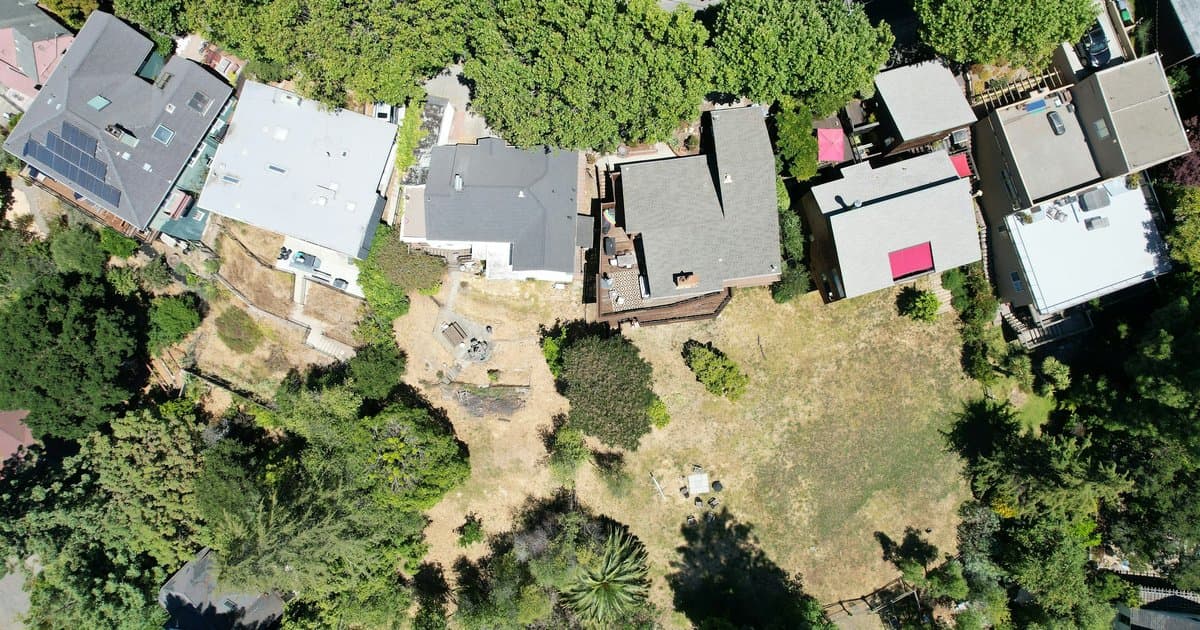
What Does It Actually Cost to Buy a Home in Culver City in 2026?
By Paul Blair | August 14, 2026
What does it actually cost to buy a home in Culver City in 2026? The typical Culver City home is valued at $1,287,430 as of July 31, 2026, up 2.0 percent year over year, with a June median sale price of $1,217,500, according to Zillow's Culver City home value data. Detached houses on the established residential streets sit well above that: Blair Hills carries a median value near $1.96 million, Washington Culver near $1.87 million. Homes go to pending in about 24 days, and 55.5 percent of June sales closed above list price.
That last figure is the one worth sitting with. Culver City is five square miles almost entirely surrounded by the City of Los Angeles, and it behaves like its own market with its own inventory, its own zoning, and its own transfer tax. Buyers who treat it as a slightly cheaper version of Mar Vista or Palms tend to get surprised at the closing table. So do sellers.
Five square miles that do not act like the rest of the Westside
The nickname is "The Heart of Screenland," and it is not marketing. Sony Pictures Studios still occupies the old MGM lot on Washington Boulevard. Amazon rebuilt the historic Culver Studios into its own production campus. Apple, TikTok, and HBO Max all put real square footage inside the city limits, and as Commercial Observer reported in June 2026, Culver City is the one Los Angeles submarket where the tech story, the media story, and institutional capital are converging at once.
The result is a city of about 40,000 people carrying the employment density of a much larger one. Downtown runs a walkable few blocks around the Culver Hotel and the Kirk Douglas Theatre. Ivy Station sits on top of a Metro E Line stop. The Helms Bakery District turned eleven acres of 1930s industrial buildings into showrooms and restaurants. And the Hayden Tract, the low-rise corridor Eric Owen Moss and the Samitaur Smiths spent three decades turning into experimental architecture, is about to change again.
The streets, one pocket at a time
Culver City's residential neighborhoods are small, defined, and priced differently from one another. The city publishes an official neighborhood map worth pulling up before you tour, because the boundaries are tighter than most people expect.
| Neighborhood | Median home value (July 2026) | Character |
|---|---|---|
| Blair Hills | $1,963,601 | Hillside lots, winding streets, elevation and views |
| Washington Culver | $1,870,190 | Walking distance to downtown and the E Line |
| Park East | $1,859,100 | Traditional streets east of Carlson Park |
| Studio Village | $1,771,079 | Planned mid-century layout, larger lots |
| Park West | $1,650,786 | Bungalows and remodels west of Carlson Park |
| Blanco / Culver Crest | $1,532,067 | The highest elevation in the city |
| Sunkist Park | $1,406,505 | Post-war single-story stock, heavily remodeled |
| Clarkdale | $1,323,072 | Compact lots near the Fox Hills side |
| Jefferson | $636,549 | Predominantly attached and multi-family product |
Values above are Zillow neighborhood ZHVI figures as of July 31, 2026, covering all housing types, so a condo-heavy pocket like Jefferson reads far lower than a detached-house pocket like Blair Hills. Do not use them as a comp. Use them to understand the spread.
The practical version: for a detached house on a flat street, you are shopping Carlson Park, Park East, Park West, and Sunkist Park, and you should plan on competing. For elevation, a longer driveway, and a lot that does not sit shoulder to shoulder with the next one, you are shopping Blair Hills and Culver Crest, and you should plan on paying for it. For square footage per dollar, Fox Hills has the deepest supply of attached product in the city.
The transfer tax that catches sellers off guard
Here is the part almost nobody accounts for until escrow opens.
Culver City levies its own Real Property Transfer Tax on top of the Los Angeles County documentary transfer tax. Since April 1, 2021, following voter approval of Measure RE, the city rate has been marginal and tiered rather than flat. Per the City of Culver City's Real Property Transfer Tax page, the brackets are 0.45 percent up to $1,499,999, 1.5 percent from $1,500,000 to $2,999,999, 3.0 percent from $3,000,000 to $9,999,999, and 4.0 percent at $10,000,000 and above.
Read the first two brackets against the price table above and the problem shows up immediately. The 1.5 percent tier starts at $1.5 million, which is roughly where detached-house pricing in Culver City begins. Two examples:
- A $1,850,000 sale owes $12,000 in Culver City RPTT ($6,750 plus 1.5 percent of the amount over $1.5 million), plus the county's documentary transfer tax at $1.10 per $1,000.
- A $3,200,000 sale owes $35,250 in city RPTT alone.
Two details matter beyond the rate. The tax applies to the value conveyed including any liens or encumbrances remaining at sale, a narrower exclusion than many jurisdictions use. And either party may pay it, with buyer and seller jointly liable if it goes unpaid. It is a negotiated line item, not a fixed cost, and it belongs in the offer rather than the settlement statement.
One thing that does not apply here: Measure ULA. That is a City of Los Angeles ordinance, and Culver City is a separate incorporated municipality. A home three blocks across the border on the Los Angeles side falls under the City of LA's own documentary transfer tax structure instead, which the Los Angeles County Registrar-Recorder documents by city.
If you are weighing a sale in Culver City and want the net proceeds figure with the RPTT tier already built in rather than estimated after the fact, request a confidential valuation for your Culver City home.
What is being built, and why it changes the calculus
Culver City decided to build housing and followed through. It expanded the share of land zoned for residential construction from 50 percent to 80 percent, abolished parking minimums in 2022, and became the first city in California to legalize single-stair buildings, all documented by Commercial Observer. The pipeline now sits at roughly 4,500 units, enough to add as much as 20 percent to the city's population.
The Hayden Tract is the next chapter. Culver City Crossroads reported in July 2026 that the Hayden Tract Specific Plan heads to Planning Commission review in October and a City Council vote in November. It would raise the district's height limit from 56 feet to 110 feet, converting an office corridor running 25.7 percent vacant into a mixed-use neighborhood between two Metro E Line stations.
None of this changes a single-family house. It changes what surrounds it over the next decade: more attached housing, more street-level activity, a different skyline on the eastern side of the city. Some buyers read that as upside. Others want distance from it, which is part of why the hillside pockets hold the premium they do. Know which read you hold before you write an offer.
Who actually buys in Culver City
The profile is specific. It skews toward people whose work sits inside the five square miles, and toward buyers who want a detached house on the Westside without Santa Monica or Brentwood pricing. Culver City sits east of the 405, more central and more car-accessible than the coastal options, and the E Line reaches downtown Los Angeles without a freeway.
Against Mar Vista and Palms, Culver City trades at a premium for the municipal services, the walkable downtown, and a permitting process that moves differently from the City of Los Angeles. Against Santa Monica, it trades at a discount and gives up coastal proximity along with the Coastal Commission jurisdiction attached to it.
Inventory is the binding constraint. Zillow counted 115 homes for sale citywide and 37 new listings during July 2026. In a city of 40,000 people that is thin, and it explains how 24 days to pending and more than half of sales above list can both be true in a year when the value index moved only 2 percent.
Frequently Asked Questions
What is the median home price in Culver City in 2026?
The median sale price was $1,217,500 in June 2026, and the typical home value across all housing types was $1,287,430 as of July 31, 2026, per Zillow. Detached single-family homes on the established residential streets generally transact above those figures, with hillside pockets like Blair Hills and Culver Crest carrying median values in the $1.5 million to $2 million range.
Does Measure ULA apply when I sell a home in Culver City?
No. Measure ULA is a City of Los Angeles ordinance, and Culver City is a separate incorporated city. Culver City sales are subject to Culver City's own Real Property Transfer Tax under Measure RE, which is tiered at 0.45 percent, 1.5 percent, 3.0 percent, and 4.0 percent depending on price, plus the Los Angeles County documentary transfer tax. The city publishes the full calculation methodology and a tax calculator.
Which Culver City neighborhoods have the highest home values?
By Zillow's July 2026 neighborhood-level data, Blair Hills leads at roughly $1.96 million, followed by Washington Culver at about $1.87 million, Park East at about $1.86 million, and Studio Village at about $1.77 million. These are all-housing-type medians, so they reflect the mix of detached and attached inventory in each pocket rather than a per-property valuation.
How competitive is the Culver City market right now?
Tight on inventory and quick on timeline. Zillow recorded 115 active listings citywide as of July 31, 2026, a median 24 days to pending, and 55.5 percent of June sales closing above list price. Well-prepared listings draw multiple offers. Deferred-maintenance properties and units competing against the newer attached supply move slower.
How should I pick an agent to sell a house in Culver City?
Start with transaction volume inside the city limits, not the broader Westside. Culver City has its own transfer tax tiers, its own rent stabilization ordinance if the property has more than one unit, and a Report of Building Records application required on every sale regardless of price. An agent who works mostly in the City of Los Angeles will not have those steps sequenced correctly, and the cost of learning them on your file is measured in days of escrow. Ask anyone you interview to walk you through the RPTT tier your price lands in and who pays it. I am Paul Blair, founder and broker of Grey Square, with 22 years in the business and more than $200 million closed across Los Angeles and Dallas, representing buyers and sellers across the Westside including Culver City and West LA. To talk through your property, start a conversation.
Working with Grey Square in Culver City
Culver City rewards preparation. Inventory is thin enough that a well-positioned listing controls its own timeline, and the transfer tax structure is unusual enough that a wrong assumption costs real money.
Schedule a private consultation about Culver City, or browse current Los Angeles listings. The buyer and seller resources cover the California transaction step by step.
Paul Blair is the founder and broker of Grey Square, a virtual real estate brokerage representing buyers and sellers across Dallas and Los Angeles. With 22 years in the business and more than $200 million in closed transactions, Paul works the full range of the market, from luxury homes in the Park Cities and Preston Hollow to estates in the Hollywood Hills and across the Westside. Connect with Paul and the Grey Square team at greysq.com. TX TREC #9011505 · CA DRE #01792671.