Lender-Required Repairs in Texas: What DFW Buyers and Sellers Need to Know
In Texas, neither buyer nor seller must pay lender-required repairs by default. Here's how TREC Paragraph 7E works and what the 5% rule means for DFW deals.
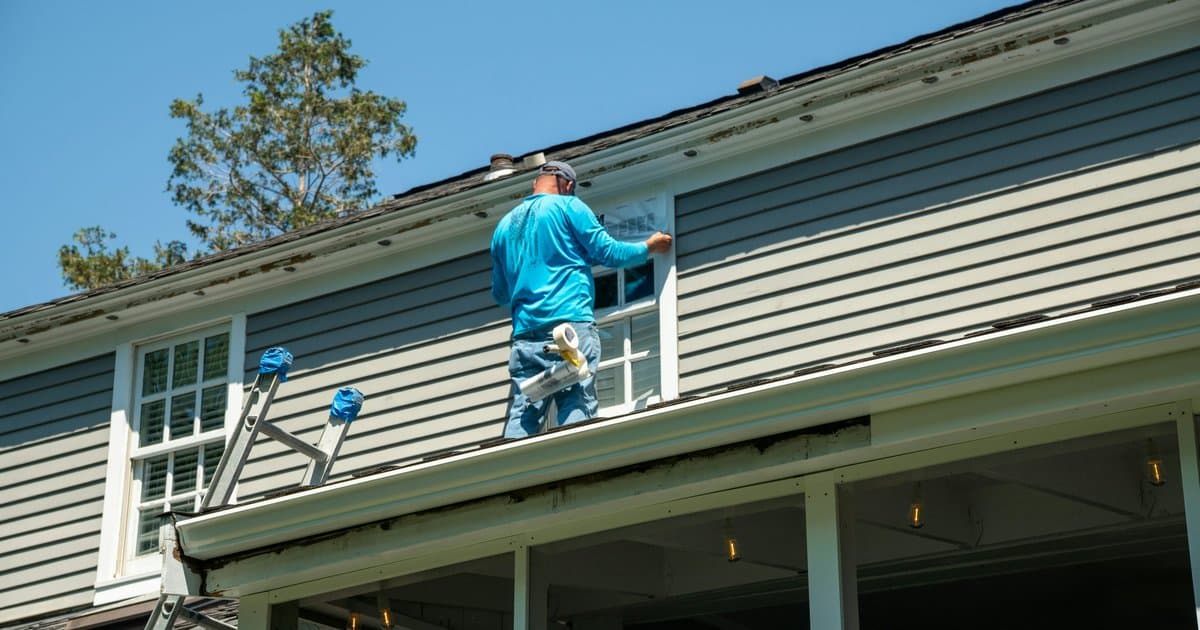

What happens when a lender requires repairs before closing in Texas?
In Texas, neither the buyer nor the seller is automatically required to pay for lender-mandated repairs. TREC Paragraph 7E governs these situations: both parties must agree in writing on who pays, or the contract terminates and the buyer receives the earnest money back. If repair costs exceed 5% of the purchase price, the buyer has the right to terminate regardless of any seller commitment to pay.
By Paul Blair | November 3, 2026
Your loan officer just called with news you weren't expecting: the appraiser is requiring repairs before the deal can close.
Maybe it's a roof without enough life left. Maybe it's foundation work. Maybe it's a structural issue the VA appraiser flagged on a pre-1980 home in Plano. Whatever it is, you now have a problem that the inspection you already paid for didn't resolve, and the clock is ticking.
This is one of the most common transaction questions I hear from DFW buyers and sellers, and it trips people up because the answer isn't obvious. Most people assume the seller has to fix it. Some assume the buyer is on the hook. Neither is automatically correct.
Here's how it actually works.
The Texas Default: No One Has to Pay
The standard Texas resale contract (TREC form 20-14) is specific on this point. Under Paragraph 7E, neither the buyer nor the seller is required to pay for lender-required repairs unless they agree to it in writing.
This surprises a lot of people. The lender isn't a party to the purchase contract. When an appraiser flags a repair condition, the lender is telling the buyer "we won't fund this loan unless this is fixed" but that requirement doesn't automatically become the seller's obligation.
What happens if they can't agree? The contract terminates, and the buyer gets the earnest money back.
That's the safety net built into the Texas contract. You're not stuck paying for something no one agreed to. You can negotiate, or you can walk.
The 5% Termination Right
There's a separate protection worth knowing: if the total cost of lender-required repairs exceeds 5% of the sales price, the buyer has the right to terminate the contract and receive the earnest money back, even if the seller has already agreed to pay the full amount.
On a $450,000 purchase, that threshold is $22,500. On a $700,000 purchase, it's $35,000. If repair bids come in above that number, the buyer can exit without penalty regardless of any prior negotiation.
This right exists independently of the option period. By the time an appraisal happens, the option period is usually over. Paragraph 7E gives buyers a separate path out when lender-required repairs become the issue.
What Changed in 2026
Two updates this year affect how these situations play out in DFW.
TREC Form 39-11 (effective July 1, 2026). The Texas repair amendment changed. TREC form 39-11 replaced the prior form 39-10 as the mandatory document for agreed repair terms. The new form includes a dedicated field specifying who pays lender-required repairs and at what amount. TREC publishes current promulgated forms at trec.texas.gov.
VA Minimum Property Requirement changes (May 1, 2026). The Department of Veterans Affairs updated its appraisal guidelines under Change 46 to the VA Lender's Handbook. For all VA appraisals ordered on or after May 1, 2026, two long-standing repair conditions were removed: peeling paint on homes built after 1978 (no longer a required repair condition), and outbuildings such as detached garages and sheds (no longer evaluated for MPR compliance). The VA announced these changes as part of an effort to reduce delays for veteran buyers.
For DFW's large veteran buyer population, particularly in the Ft. Worth, Alliance Corridor, and North Richland Hills areas, this is meaningful. VA loans already move more slowly than conventional, and removing unnecessary repair triggers helps deals close on time.
The core VA standard hasn't changed: a home must still be safe, sanitary, and structurally sound. A VA appraisal is not a home inspection.
FHA vs. VA vs. Conventional: How Often Repairs Are Required
The loan type determines how often lender-required repairs come up, and how strict the standards are.
| Loan Type | Repair Standard | Frequency of Required Repairs | Who Pays |
|---|---|---|---|
| FHA | HUD Minimum Property Standards (MPS) | Most common; roof, foundation, safety hazards | Negotiable |
| VA (post-5/1/26) | Updated MPRs, narrowed list | Frequent on older homes and pre-2000 stock | Negotiable |
| Conventional | Fannie Mae/Freddie Mac guidelines | Rare; major habitability issues only | Negotiable |
FHA loans come with the strictest conditions in practice. Roofs with fewer than three layers remaining, active foundation movement, non-functional HVAC, exposed wiring: these all trigger required repairs on FHA appraisals.
In DFW, where North Texas clay soils cause foundation movement in older homes across Plano, Richardson, Garland, and inner Dallas neighborhoods, FHA appraisals on pre-2000 homes sometimes flag conditions that conventional appraisals would pass over entirely. This is worth knowing before you write an FHA offer on a 1985 ranch in Lake Highlands.
If you're working with a VA buyer or using a VA loan yourself, this post on what happens when a mortgage falls through before closing in Texas covers the financing contingency side of the same situation.
If you're in a DFW transaction right now and an appraisal just flagged required repairs, the first step is getting contractor bids quickly. The sooner you have actual numbers, the sooner you can decide whether to negotiate or exercise your termination right. I walk buyers and sellers through these situations regularly across Dallas and the northern suburbs. Connect at greysq.com/contact and let's figure out your options.
How Negotiations Work Once Repairs Are Required
When an appraiser requires a repair, someone has to arrange and pay for the work before the lender releases funds. The options are:
Seller makes the repairs. The most common resolution. The seller hires a contractor, the work gets done before closing, and the appraiser re-inspects. This typically adds one to three weeks to the timeline.
Seller repair credit. Instead of doing the work, the seller credits the buyer money at closing to cover repair costs after the fact. There are loan-type limits: FHA caps seller concessions at 6% of the lesser of appraised value or sales price; VA caps at 4%. Credits cannot go toward the minimum down payment.
Price reduction. The parties agree to a lower sales price reflecting the repair cost. This keeps the buyer's loan balance in line with actual market value.
Buyer pays. Less common, but it happens when a buyer is strongly motivated and wants to close without delay.
Contract terminates. If no agreement is reached, Paragraph 7E ends the deal and the buyer gets the earnest money back.
In practice, the fastest resolution is getting competing contractor bids immediately and bringing specific dollar amounts to the table. Vague repair estimates slow everything down. An experienced agent will push for real numbers fast.
If You're Selling: What to Know Before You List
If your buyer is using FHA or VA financing, appraisal-required repairs are a real possibility on older homes. The conversation worth having before listing is: what would likely flag on an FHA or VA appraisal?
Common seller responses when repairs come up:
- Make the repairs and keep the deal on schedule
- Offer a repair credit within the loan-type limits
- Counter with a split arrangement, documented on TREC Amendment 39-11
- Decline and let the contract terminate (the buyer keeps earnest money and moves on)
If you're selling a pre-2000 home in Dallas, Plano, Richardson, or any neighborhood where foundation movement is common, having this conversation with your agent before going under contract saves time and prevents surprises. It doesn't mean every FHA deal will have issues. It means you're ready when one does.
Frequently Asked Questions
Does the seller have to pay for lender-required repairs in Texas?
No. Under TREC Paragraph 7E, neither the buyer nor the seller is automatically required to pay for lender-mandated repairs. The cost is negotiated between the parties. If they cannot reach an agreement, the contract terminates and the buyer receives the earnest money back.
What is the 5% rule for lender-required repairs in Texas?
If the total cost of lender-required repairs exceeds 5% of the sales price, the buyer has the right to terminate the contract and recover the earnest money, regardless of any seller agreement to pay. This termination right exists even after the option period has expired and does not require the seller's consent.
What is TREC form 39-11 and when does it apply?
TREC form 39-11 is the Amendment to Contract, which became mandatory on July 1, 2026, replacing the prior form 39-10. It documents agreed repair terms, including who pays, the amount, and the deadline. Any negotiated repair arrangement in a Texas real estate transaction after July 1, 2026 should use this form.
What changed about VA appraisal requirements in 2026?
Effective May 1, 2026, the VA removed two long-standing repair triggers from its Minimum Property Requirements: peeling paint on homes built after 1978, and outbuildings such as detached garages and sheds. The core standard, that a home must be safe, sanitary, and structurally sound, has not changed.
How do I find an agent who knows how to handle lender-required repair negotiations in DFW?
Look for an agent with specific Texas contract experience and a track record with FHA and VA transactions. Ask how they've handled appraisal repair conditions in past deals and whether they're current on the post-July 2026 TREC 39-11 form. A good agent knows the Paragraph 7E mechanics, the 5% threshold, and how to move quickly once repair bids come in. The Grey Square team works with buyers and sellers across Dallas and the northern suburbs, including many FHA and VA transactions. Connect at greysq.com/contact.
Navigating lender-required repairs in Texas comes down to knowing what the contract actually says, understanding which loan type is in play, and getting repair numbers on the table fast. The Paragraph 7E default protects both parties. Everything after that is a negotiation, and the best outcomes happen when both sides move quickly.
About Paul Blair Paul Blair is the founder and broker of Grey Square, a virtual real estate brokerage representing buyers and sellers across Dallas, Los Angeles and Houston. With 22 years in the business, Paul works the full range of the market, from luxury homes in the Park Cities and Preston Hollow to estates in the Hollywood Hills and across the Westside. Connect with Paul and the Grey Square team at greysq.com. TX TREC #9011505 - CA DRE #01792671.
Want to know what this looks like for you?
Tell us the price range and the timeline and we will run it against the actual property, not a generic calculator.