What Does It Actually Cost to Buy a Luxury Home in Los Angeles in 2026?
Los Angeles is the nation's second-priciest luxury market. Here's what luxury actually costs across the city's neighborhoods in 2026.
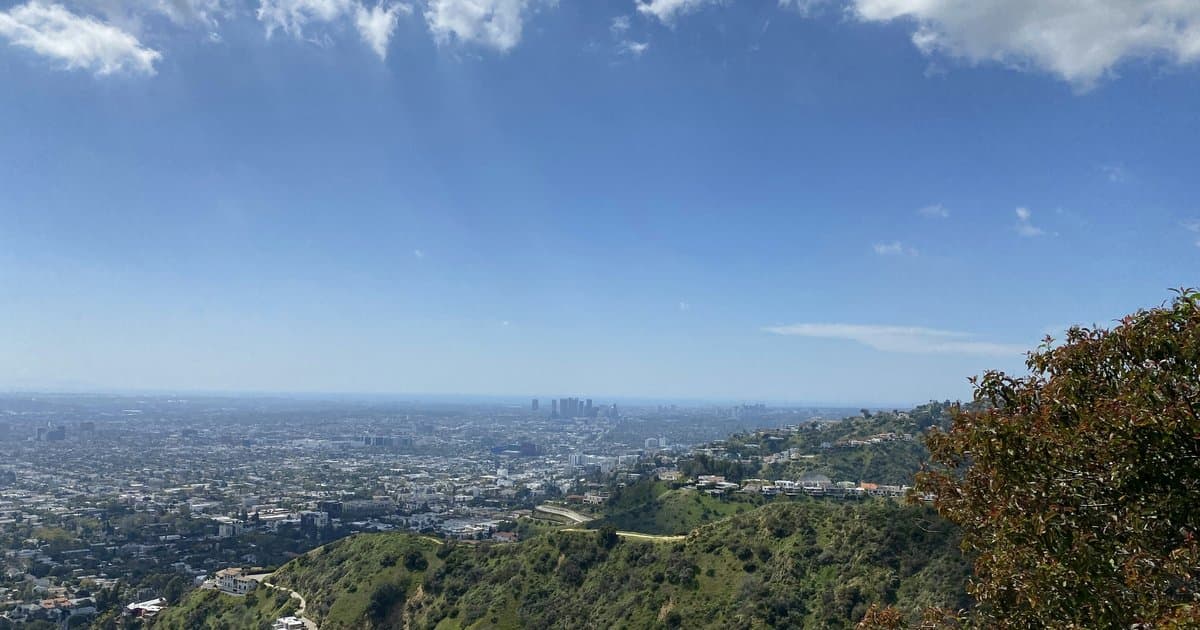
What does it actually cost to buy a luxury home in Los Angeles in 2026? The city-wide median tells you almost nothing: a home in the City of Los Angeles sold for a median $1.03 million last month, according to Redfin, essentially flat with a year ago. But that figure blends starter condos in the flats with hillside estates above Sunset. The real luxury entry point is a different number entirely. Realtor.com's research, reported by Fox Business in April, put the top 10 percent of LA metro listings starting at $4.255 million in March, more than three times the $1.25 million national luxury threshold and second highest of any metro in the country, trailing only Bridgeport, Connecticut and just ahead of Kahului, Hawaii.
That number is a useful floor, but it still hides the real story. Los Angeles isn't one luxury market. It's dozens of them, stitched together across hillsides, canyons, beach towns, and flats, each with a different price band, a different tax exposure, and a different reason buyers choose it over the one next door. After spending the past several weeks walking through Hollywood Hills, Bel Air, Beverly Hills, Malibu, Santa Monica, Brentwood, and a dozen more neighborhoods one at a time, it's worth stepping back and looking at how they actually compare. For a current snapshot of what's on the market across the city, browse active Los Angeles listings.
A city of submarkets, not one market
The clearest evidence of that patchwork comes from Redfin's own analysis of the priciest neighborhoods in the Greater LA metro, published through Stacker in November and based on data gathered in mid-October 2025. The top five:
| Neighborhood | City | Median sale price | Median days on market |
|---|---|---|---|
| Hill Section | Manhattan Beach | $9,425,000 | 37 |
| The Riviera | Los Angeles (Pacific Palisades border) | $9,400,000 | 49 |
| The Oaks | Calabasas | $5,952,000 | 80 |
| Point Dume | Malibu | $5,600,000 | 108 |
| Regent Square | Santa Monica | $5,500,000 | 19 |
Two things stand out. The days-on-market spread is wide even within the top five, from 19 days in Regent Square to 108 in Point Dume, which says more about how tightly each pocket is held by long-term owners than about demand. And The Riviera, tucked along Amalfi Drive between Pacific Palisades and Brentwood, sits at nearly the same price as Manhattan Beach's Hill Section despite the two having little else in common: one a canyon-adjacent enclave of gated estates, the other a flat, walkable beach grid three blocks from the sand.
Hillside, flats, coast, and canyon: four different bets
Every neighborhood Grey Square has covered this year falls into one of four broad categories, and the category tells a buyer more than the zip code does.
Hillside and canyon estates, the terrain of Hollywood Hills and Laurel Canyon, trade view and privacy for wildfire zone exposure, hillside grading restrictions, and often a longer escrow while lenders and insurers sort out fire hardening requirements. Bel Air and Beverly Hills' Trousdale Estates sit at the top of this tier; both are covered in more depth in Grey Square's Beverly Hills and Bel Air coverage.
Flat prestige enclaves, Beverly Hills Flats, Brentwood Park, Holmby Hills, and pockets of Hancock Park, offer wider lots, easier construction, and none of the Fire Hazard Severity Zone paperwork, at a price premium that reflects the convenience.
Coastal cities, Malibu, Santa Monica, and Manhattan Beach among them, layer Coastal Commission review on top of everything else, and two of the three (Malibu and Manhattan Beach) sit entirely outside Los Angeles city limits, which changes their tax exposure in a way that matters at the closing table.
Valley-side hillside neighborhoods, Studio City and Sherman Oaks along the Fryman Canyon and Longridge corridors, offer a version of the same hillside product at a meaningful discount to their Westside counterparts, largely because the commute calculus is different.
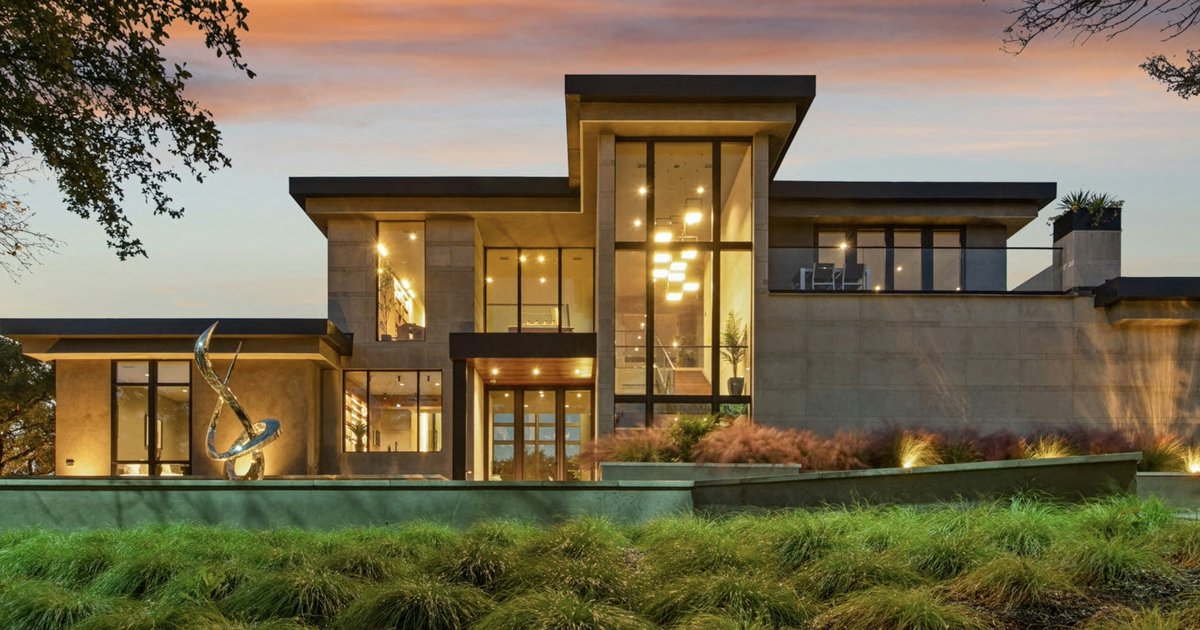
None of these categories are better or worse. They're different products serving different priorities, and the mistake most out-of-town buyers make is comparing a Malibu price per square foot to a Bel Air one without weighing what each dollar is actually buying.
What's actually happening in the market right now
Three things are true in Los Angeles' luxury tier at the same time in 2026, and they pull in different directions.
Single-family luxury is holding up better than the headlines suggest. The Real Deal's weekly market recap noted that Southern California condo prices fell 6 percent year-over-year in February, the sharpest drop in 14 years, even as single-family sales in the $2.5 million to $5 million range tracked close to the record levels set in 2021. Condos and single-family estates are not moving on the same curve right now.
Cash is doing more of the work as the price point rises. Realtor.com data cited across recent luxury reporting put the cash share at 25.4 percent for LA sales between $1 million and $5 million, 54.3 percent between $5 million and $10 million, and 56.7 percent above $10 million, a reminder that financing contingencies become less relevant, not more, as the price climbs.
Foreign buyer interest has cooled from its post-fire peak but hasn't disappeared. Realtor.com's analysis found international demand for LA luxury homes rose 18.2 percent through the end of 2025 before easing in early 2026, with Canadian buyers the largest share at 29 percent, followed by the UK, Australia, Germany, and Mexico. Part of that interest ties to California's proposed billionaire wealth tax, still in signature-gathering for a possible November ballot, a separate question from Measure ULA but one shaping the same conversations among high-net-worth sellers right now.
If you're weighing a purchase in any of these submarkets, the numbers above are a starting point, not a substitute for walking the specific streets. Schedule a private consultation to talk through which neighborhood actually fits what you're trying to buy.
Measure ULA doesn't apply everywhere, and that's the whole point
The single biggest variable in net proceeds for a Los Angeles luxury seller isn't the neighborhood. It's whether the property sits inside Los Angeles city limits at all. Per the City of Los Angeles Office of Finance's own FAQ, transactions closing after June 30, 2026 face a 4 percent transfer tax above $5.4 million and 5.5 percent above $10.9 million, on top of the county's standard $1.10-per-$1,000 documentary transfer tax. That threshold adjusts every July 1 based on the Chained Consumer Price Index.
But Beverly Hills, Santa Monica, Malibu, West Hollywood, and Manhattan Beach are all separately incorporated cities, and Measure ULA doesn't reach any of them. A $9 million sale in Malibu's Point Dume owes only the county rate. The same sale inside LA city limits, in Bel Air or Brentwood, clears the ULA threshold and owes an additional $360,000 to the city. That single structural fact is the reason several sellers across this series, in Sherman Oaks and Studio City especially, have chosen to renovate and hold rather than list, a trend covered in more depth in Measure ULA Is Here to Stay.
Who buys where
Buyer behavior tracks the property, not the person. Hillside canyon estates draw buyers prioritizing privacy, view, and architectural character, comfortable with a longer due diligence period around fire hardening and grading. Flat prestige lots draw buyers who want maximum square footage and the fewest construction constraints. Coastal properties draw buyers for whom proximity to the water outweighs the Coastal Commission's added review timeline. Valley hillside properties draw buyers who want the canyon lifestyle at a lower basis and a shorter commute to Burbank or the studio corridor.
If a Measure ULA threshold, an insurance question, or timing is keeping you on the sidelines, a confidential look at where your specific property lands is a reasonable next step. Request a confidential valuation before deciding whether this is the year to list.
Frequently Asked Questions
What is considered a luxury home in Los Angeles in 2026? By Realtor.com's metro-wide analysis, the top 10 percent of LA listings started at $4.255 million in March 2026. In practice, "luxury" varies sharply by submarket: it starts closer to $2.5 million in parts of the Valley and Westside flats and well above $9 million in top-tier pockets like Manhattan Beach's Hill Section or The Riviera.
Which Los Angeles neighborhoods are exempt from Measure ULA? Any property outside Los Angeles city limits is exempt, regardless of price. That includes Beverly Hills, Santa Monica, Malibu, West Hollywood, and Manhattan Beach, all separately incorporated cities. Everything inside LA city limits, including Bel Air, Brentwood, Hollywood Hills, and Hancock Park, is subject to the tax above $5.4 million.
Is now a good time to buy luxury real estate in Los Angeles? Days on market have lengthened to roughly 61 days citywide and single-family luxury pricing has stabilized rather than continuing to climb, which favors buyers with time to be selective. Condo pricing has softened more sharply. Cash buyers, who make up more than half of transactions above $5 million, are less affected by financing costs either way.
Why does days on market vary so much between luxury neighborhoods? It reflects ownership pattern as much as demand. Regent Square in Santa Monica turned over in a median 19 days in the most recent data, while Point Dume in Malibu took 108. Tightly held enclaves with few long-term owners willing to sell will always show longer marketing times than areas with more regular turnover, independent of buyer interest.
Who's the best agent to work with when buying or selling across different LA neighborhoods? The honest answer is someone who has spent real time in the specific submarket, not just the city as a whole, since hillside, flats, coastal, and Valley properties each carry different diligence questions around fire zones, Coastal Commission review, and tax exposure. Paul Blair has represented buyers and sellers across the Hollywood Hills, Bel Air, and the Westside for 22 years and more than $200 million in closed transactions, and works this specific range of Los Angeles submarkets directly rather than treating the city as one market. Start a conversation about your specific neighborhood and situation.
Twenty-two years in this business has taught me that the neighborhoods above don't compete with each other so much as they solve different problems for different buyers, and matching the right one to the right situation is most of the job. Paul Blair is the founder and broker of Grey Square, a virtual real estate brokerage representing buyers and sellers across Dallas and Los Angeles, from luxury homes in the Park Cities and Preston Hollow to estates in the Hollywood Hills and across the Westside. Connect with Paul and the Grey Square team at greysq.com. TX TREC #9011505, CA DRE #01792671.