Renovation Loans in Dallas: How DFW Buyers Can Finance a Fixer-Upper in 2026
FHA 203k and HomeStyle renovation loans let DFW buyers purchase and renovate a fixer-upper in one closing. Here is what Dallas buyers need to know about costs, limits, and the draw process in 2026.
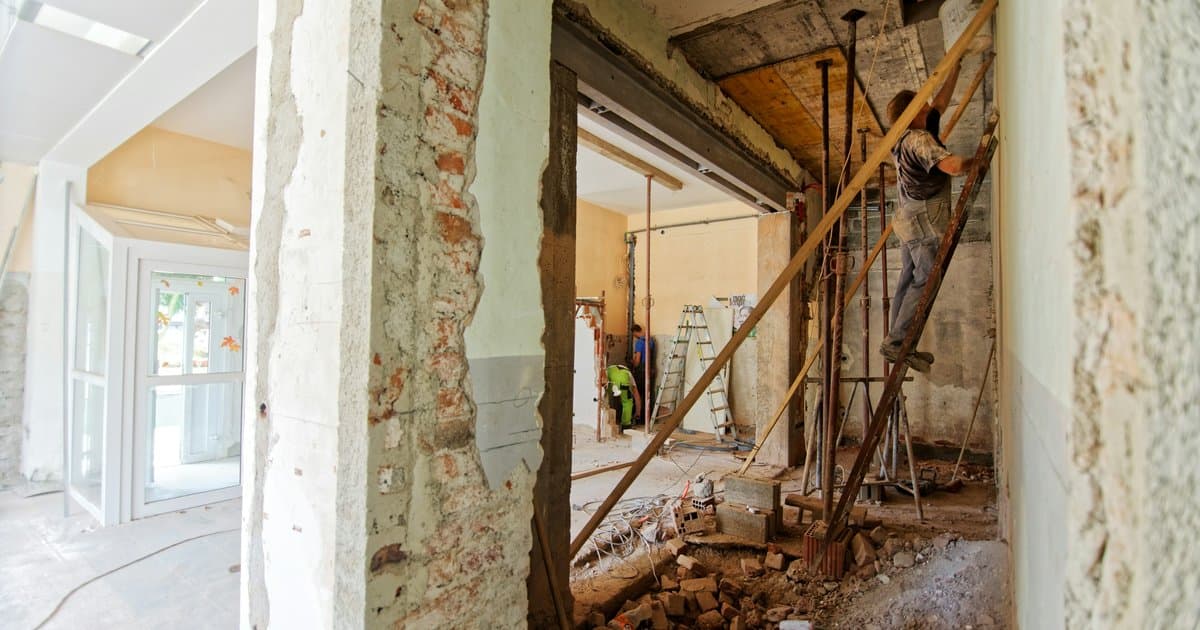
What is a renovation loan and how does it work for Dallas buyers?
A renovation loan combines the purchase price and the cost of repairs into a single mortgage with one closing. The most common options are the FHA 203k (backed by HUD) and the Fannie Mae HomeStyle conventional loan. Rather than financing a home purchase and then taking a separate personal loan for work, you close once. Your lender holds the renovation funds in escrow and releases them to your contractor in draws as milestones are completed. In DFW, the FHA 203k limit for Dallas and Collin counties is $563,500, and the HomeStyle conforming limit is $832,750, covering most of the homes where buyers are finding value in 2026.
By Paul Blair | August 9, 2026
With inventory up more than 20% across the Dallas-Fort Worth metro and price reductions showing on roughly 40% of active listings, fixer-uppers in inner suburbs like Richardson, Garland, and Mesquite are finally within reach. The problem is that most buyers try to finance them with a standard mortgage and hit a wall. Lenders will not fund a home with active foundation movement, a failed roof, or a non-functioning HVAC on a conventional or standard FHA loan.
Renovation loans were built for exactly this situation. They exist to let you buy below market value, fix what is wrong, and build equity from day one. And in a buyer's market like Dallas has right now, that combination matters.
How Renovation Loans Work
The core concept is a single close. You submit contractor bids as part of your loan application. The lender appraises the property based on its estimated value after renovation, which is called the after-repair value, or ARV. If the numbers work, you close on both the purchase and the renovation financing together. The lender holds the repair funds in a dedicated escrow account and releases money in scheduled draws once an inspector confirms each phase of work is done.
You are not writing checks to contractors out of your savings. The lender manages the draw disbursements, usually through the title company or a servicing agent.
This does add some complexity. You need licensed contractors with insurance, and you will need contractor bids before you close. But the payoff is that you can buy a home that no one else wants to touch and emerge with a property worth more than you paid plus what you put in.
FHA 203k: Two Versions for Two Situations
The FHA 203k comes in two forms. Choosing the wrong one slows your loan and can cause the whole transaction to fall apart.
203k Limited is for non-structural cosmetic work: kitchens, baths, flooring, roofing, windows, HVAC, and mechanical systems. The renovation cap is $75,000 (raised from $35,000 per HUD guidance effective late 2024). No HUD 203k Consultant is required, which keeps costs down and timelines shorter. You get 6 months to complete the work.
203k Standard covers structural repairs, room additions, foundation work, and any project where the cost exceeds $75,000. A HUD-approved 203k Consultant is required. The consultant inspects the property, writes up the scope of work, and then inspects at each draw to confirm completion. Consultant fees typically run $400 to $1,000. Timeline is also 6 months, with extensions available. If you are buying a 1970s home in Garland that needs new piers plus a kitchen update, this is the version you need.
Both versions require a minimum 580 credit score with 3.5% down, or a 500 to 579 score with 10% down. FHA mortgage insurance runs for the life of the loan if your down payment is less than 10%.
HomeStyle: The Conventional Alternative
If your credit score is 620 or above and you want to avoid lifetime mortgage insurance, the Fannie Mae HomeStyle loan is worth looking at. A few reasons it works well for certain Dallas buyers:
- Down payment starts at 3% for eligible first-time buyers and 5% for most others
- PMI is cancellable once you reach 20% equity, which often happens quickly when renovation adds value
- Luxury upgrades are allowed (pools, landscaping, ADUs, high-end appliances) while FHA 203k excludes them
- Investment properties qualify; FHA 203k requires primary residence only
- You get 12 months to complete the work instead of 6
- You can do up to 10% of the renovation yourself with lender approval
The HomeStyle conforming loan limit in Dallas and Collin counties for 2026 is $832,750, which opens the door to larger renovation scopes.
Side-by-Side: Which Loan Fits Your Situation
| Feature | FHA 203k Limited | FHA 203k Standard | HomeStyle Conventional |
|---|---|---|---|
| Minimum credit score | 580 | 580 | 620 |
| Down payment | 3.5% | 3.5% | 3 to 5% |
| Renovation cap | $75,000 | No max (subject to loan limit) | 75% of after-repair value |
| Structural work | No | Yes | Yes |
| Luxury upgrades | No | No | Yes |
| Investment property | No | No | Yes |
| Mortgage insurance | Life of loan if under 10% down | Life of loan if under 10% down | Cancellable at 20% equity |
| HUD Consultant required | No | Yes | No |
| Renovation timeline | 6 months | 6 months | 12 months |
| 2026 loan limit (Dallas/Collin) | $563,500 | $563,500 | $832,750 |
What This Looks Like in DFW's 2026 Market
Here is a realistic scenario for a buyer looking in Richardson or Garland right now.
A 1,700-square-foot home built in 1982 is listed at $285,000. The kitchen is original, two bathrooms have not been touched since 1995, the HVAC is 17 years old, and the inspector flagged 4 failed piers under the back of the house. A standard FHA loan will not touch it. A conventional loan will not either. And a cash offer at $285K from the buyer would mean financing the renovation separately.
With a 203k Standard loan, the buyer rolls in $90,000 for the renovation and closes on a combined loan of $375,000. The lender appraises the ARV at $420,000. The buyer has $45,000 in built-in equity on day one of moving in.
A sample renovation budget for an early 1980s inner-suburb home:
- Kitchen update: $25,000 to $45,000
- Two bathrooms: $12,000 to $22,000
- Foundation piers (5 to 8): $5,000 to $12,000
- HVAC replacement: $8,000 to $12,000
- Roof (if needed): $10,000 to $15,000
That adds up to $60,000 to $106,000, putting a full-scope project squarely in 203k Standard territory.
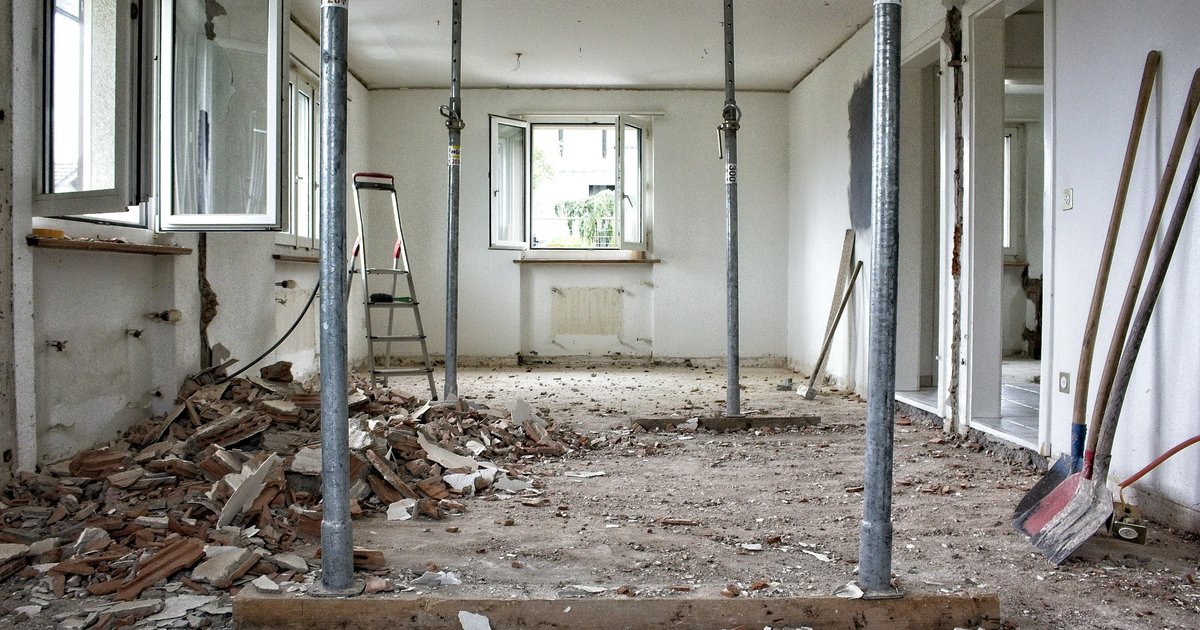
One DFW-specific note on foundation work: Texas Blackland Prairie clay is highly expansive. Foundation movement is flagged on nearly every pre-1995 home in Dallas and Collin counties. Pier and beam work qualifies for the 203k Standard. Post-tensioned slabs, which are common in DFW new construction built since the early 1980s, require a structural engineer sign-off as part of the 203k work write-up. This is standard procedure here, not a dealbreaker, but it needs to be in the work plan from the start.
Also keep in mind: Texas TREC disclosure requirements still apply. Sellers must complete a Seller's Disclosure Notice even when selling a fixer-upper. Known defects cannot be withheld just because the buyer is planning to renovate. And your option period under the TREC contract still runs; you can still get an inspection, negotiate, or terminate during the option window.
After renovation, your Collin County or Dallas County CAD (county appraisal district) will reassess the property at its new value, typically on the next annual cycle. Budget for a property tax increase as your renovation-driven appreciation is reflected in the appraisal.
Evaluating a specific fixer-upper in Richardson, Plano, or Garland and wondering if the renovation math pencils out for your budget? Schedule a private consultation with the Grey Square team to run the numbers before you write an offer.
What Disqualifies a Home
Not every fixer-upper qualifies. A few situations that create problems:
- Active termite infestation or structural damage from pest activity must be treated and cleared before the 203k Standard will fund
- Environmental hazards such as lead paint, asbestos, or underground tanks must be addressed in the renovation scope, which adds cost and complexity but does not necessarily kill the deal
- Properties with tax liens that exceed the ARV after renovation may not appraise to cover the full loan
- Manufactured homes do not qualify for FHA 203k (though Freddie Mac CHOICERenovation has some options)
- Homes with structural damage so severe that the project timeline exceeds 6 months will need a lender extension or a different financing path
Related Reading
If you are earlier in the process, a few related posts that build on this one:
- Before committing to a fixer-upper, understand how the FHA loan limit in Dallas compares to conventional financing options
- If foundation movement is what is stopping the deal, read what buyers actually pay to address it in buying a house with foundation problems in Dallas
- Renovation or not, mortgage pre-approval in Texas works differently than most states because of the property tax PITI math; start there
- Know what to negotiate: what to ask the seller to fix after a Dallas inspection covers the alternative path (seller credits instead of renovation financing)
Frequently Asked Questions
Will FHA lend on a house with foundation issues in Texas?
Yes, but the right 203k version matters. Minor settling that does not affect structural integrity may not require a structural repair at all. Active pier failure or slab movement requiring repair work is structural and routes you to the 203k Standard, not the Limited. Your HUD 203k Consultant will classify the work in the scope and the lender will underwrite accordingly. Foundation issues do not disqualify a home from renovation financing in DFW; they just determine which 203k track you are on.
Can I buy a fixer-upper with less than 10% down in Dallas?
Yes. The FHA 203k requires as little as 3.5% down with a 580 credit score, and the HomeStyle conventional loan starts at 3% down for eligible first-time buyers with a 620 score. The tradeoff with FHA at less than 10% down is mortgage insurance for the life of the loan. With HomeStyle, PMI cancels once you hit 20% equity, which renovation-driven appreciation often helps you reach faster than the amortization schedule alone would suggest.
How long does a 203k renovation loan take to close?
A 203k loan typically takes 60 to 90 days to close, compared to 30 to 45 days for a standard mortgage. The extra time comes from the contractor bid requirements, the HUD Consultant scope of work (for Standard), and the underwriting review of the renovation plan. Build this into your offer timeline. Once the loan closes, you have 6 months to complete the renovation.
What is the difference between 203k Limited and 203k Standard?
The Limited handles non-structural work under $75,000 without a HUD Consultant. The Standard handles structural work, projects over $75,000, and anything requiring a more complex scope such as room additions, foundation repair, or full gut renovations. Standard requires a HUD-approved 203k Consultant who writes the work plan and inspects each draw. Both require 3.5% down and a 580 credit score, and both carry FHA mortgage insurance for the life of the loan if you put less than 10% down.
What renovations are not covered by FHA 203k?
The FHA 203k excludes luxury improvements: pools, hot tubs, tennis courts, gazebos, and in-ground sprinkler systems installed as new construction. It also excludes work that would not be a permanent improvement, such as temporary structures. The HomeStyle conventional loan has fewer exclusions and allows pools, landscaping, and ADUs; if those are part of your renovation vision, HomeStyle is the better fit.
How do I find a buyer's agent who actually knows how renovation loans work in the Dallas suburbs?
The most important thing is that your agent understands how renovation financing affects your offer and your timeline. A standard offer letter does not flag that you are using 203k, and many listing agents will interpret a longer closing timeline or a financing contingency differently than they would a conventional offer. You want an agent who has closed renovation loan transactions in DFW specifically, who knows which suburbs have the right inventory for fixer-upper plays (Richardson, Garland, Mesquite, older Plano), and who can position your offer clearly to a seller who may be fielding cash offers alongside yours. Paul Blair at Grey Square has worked renovation-financed transactions in this market and can walk you through how to structure the offer, timeline your contractor bids, and negotiate with a seller who needs to understand what you are doing and why.
Ready to evaluate a specific property? If you are looking at a fixer-upper in Richardson, Garland, Plano, or anywhere else in the DFW suburbs and want to know whether the renovation loan math works for your situation, schedule a private consultation with Grey Square. We will run through the numbers together.
In 22 years working Dallas transactions, renovation-financed deals are where I have watched buyers build the most equity the fastest; buy a 1982 ranch in Richardson for $280K, spend $90K on a full renovation via 203k Standard, and move into a home worth $430K on closing day. That math does not happen any other way.
About Paul Blair Paul Blair is the founder and broker of Grey Square, a virtual real estate brokerage representing buyers and sellers across Dallas and Los Angeles. With 22 years in the business and more than $200 million in closed transactions, Paul works the full range of the market, from luxury homes in the Park Cities and Preston Hollow to estates in the Hollywood Hills and across the Westside. Connect with Paul and the Grey Square team at greysq.com. TX TREC #9011505 · CA DRE #01792671.