Rustic Canyon in 2026: What a $9.7 Million Sale on Ranch Lane Reveals
A $9.7 million sale on Ranch Lane shows what Rustic Canyon homes are fetching in 2026, as the wider Pacific Palisades market keeps resetting.
What Does a Home Actually Sell for in Rustic Canyon, Pacific Palisades in 2026?
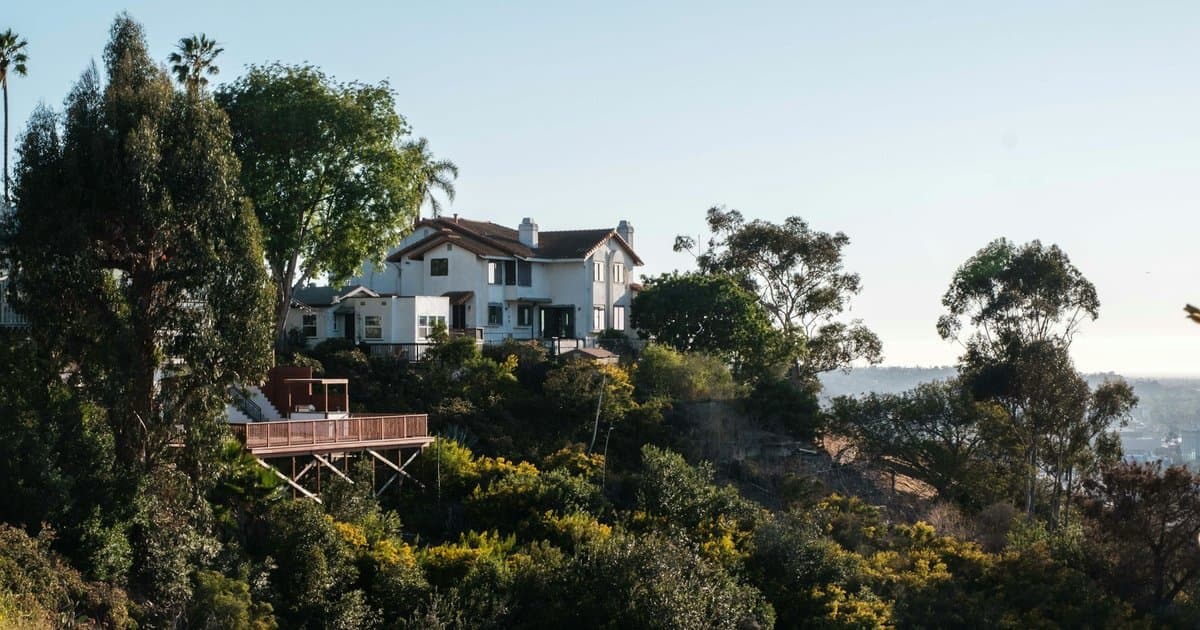
In June 2026, a five bedroom house on Ranch Lane in Rustic Canyon closed for $9,735,000, after four months on the market and one price cut from its original ask of $10,995,000. That single sale is a reasonable stand-in for the whole micro-neighborhood right now, comfortably into eight figures, patient rather than rushed, and priced in a canyon that sits at the eastern edge of a Pacific Palisades market still working through the aftermath of the January 2025 fire.
By Paul Blair | September 17, 2026
Rustic Canyon does not show up on most buyers' shortlists by name. It is a quiet fold of eastern Pacific Palisades, tucked between Sunset Boulevard, Santa Monica Canyon, and Will Rogers State Historic Park, and it rarely produces more than a handful of sales in a given year. The numbers behind those few sales say something about how the wider Palisades market is actually behaving right now, not just how it looks in a headline median. For the broader neighborhood picture, our Pacific Palisades guide covers the rest of the area in more depth.
The sale on Ranch Lane
782 Ranch Lane went on the market February 5, 2026 at $10,995,000. The list price was cut to $10,750,000 in mid-March, the house went into contract in late April, and it closed June 12 at $9,735,000, about 11 percent under the original ask. Public listing records show the same house last traded for $8,800,000 in February 2022, which puts the total gain over four years at roughly 11 percent, not the double-digit annual appreciation some Palisades sellers still expect. The house is 6,652 square feet, five bedrooms and six baths, on a 9,184 square foot lot, and it sits on one of a small handful of Los Angeles streets that still carries the name of the private club that built it.
A ranch, a club, and the streets that are left
Ranch Lane, Latimer Road, Haldeman Avenue, and Brooktree Drive all trace back to the same source. The Uplifters, a private social club founded in 1913 by plumbing fixture manufacturer Harry Marston Haldeman as an offshoot of the Los Angeles Athletic Club, bought a 120 acre ranch near what is now Will Rogers State Historic Park in 1920. The club built a Spanish Colonial clubhouse with a pool, tennis courts, and a trap shooting range, then leased lots to members who built their own cottages under the club's architectural rules. The membership roster reads like a studio backlot from the period. Walt Disney, Clark Gable, Spencer Tracy, Harold Lloyd, Darryl F. Zanuck, and Will Rogers himself all belonged, and children's author L. Frank Baum named the club and wrote its anthem. The Uplifters disbanded in 1947, and the city took over the ranch facilities in the early 1950s, turning them into what is now the Rustic Canyon Recreation Center. The street names are what is left of that history today.
What's actually selling
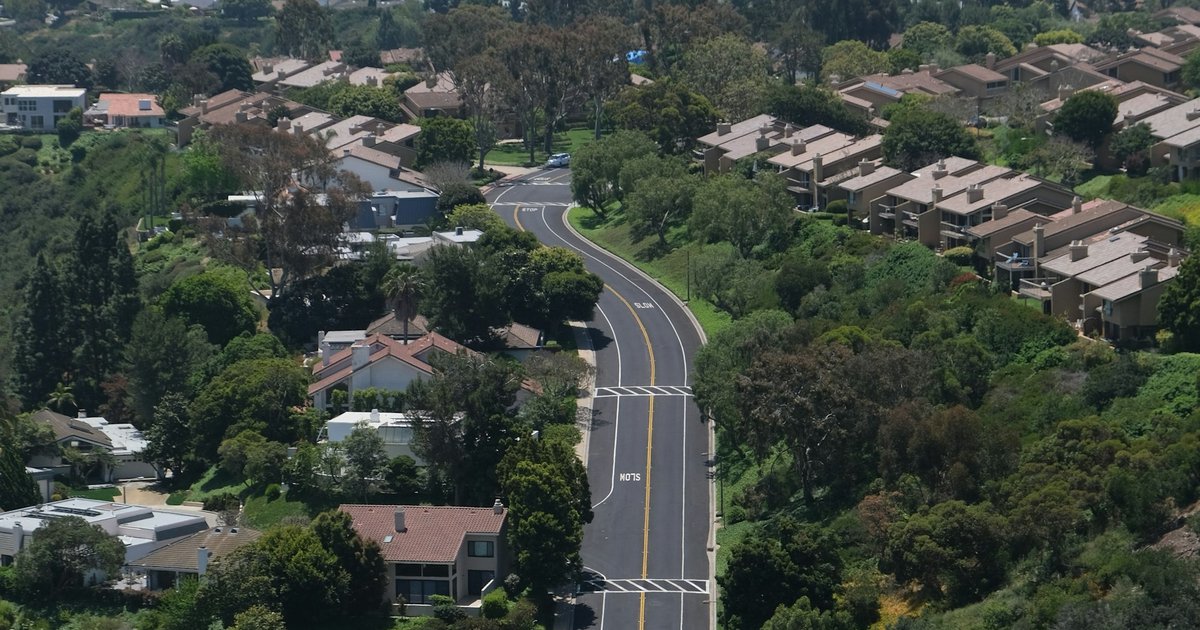
Rustic Canyon's build quality has stayed unusually high for a neighborhood most buyers cannot place on a map. Architects including Lloyd Wright, Richard Neutra, Craig Ellwood, Ray Kappe, Marmol Radziner, and Moore Ruble Yudell have all worked in the canyon over the decades, and this year's sales sit right alongside that history. A 1923 Craftsman on Latimer Road that Marmol Radziner redesigned sold for $10,287,500 in May 2026. An English Tudor built in 1928, also on Latimer, sold for $8,150,000 in June. A smaller, unrenovated 1924 cottage on Hillside Lane sold for just $1,442,000 in August, marketed openly as a teardown, a reminder that the canyon still has room for a buyer who wants to build new rather than restore something old.
What the fire did and did not do here
None of that sales activity happened in a market untouched by what happened seventeen months earlier. The Palisades Fire burned through January 2025, destroying more than 6,500 structures across roughly 23,700 acres, according to the Los Angeles Fire Department, and it reached the edge of Rustic Canyon directly. The historic ranch house and stables at Will Rogers State Historic Park, which borders the canyon, were both destroyed, along with 30 buildings across Will Rogers and Topanga State Parks combined, according to California State Parks. What is harder to pin down is how much of Rustic Canyon's own residential streets burned. Neither the LAFD nor CAL FIRE breaks out structure losses by an informal neighborhood name like Rustic Canyon, and the clearest evidence available is the resale activity itself. The four sales named above are all finished, intact, architecturally detailed homes, not rebuilds on cleared lots, which suggests the canyon's own core fared better than the hardest hit stretch of the Alphabet Streets closer to the coast. Anyone buying here should still confirm a specific address's fire history and current Fire Hazard Severity Zone status directly rather than assuming from the neighborhood's overall reputation.
Why the Palisades median is hard to trust right now
The headline numbers for Pacific Palisades as a whole are genuinely difficult to read at the moment, and it helps to know why before anyone quotes a single median at you. Vacant lot listings across the Palisades went from roughly 7 in November 2024 to more than 300 a year later, and investors are reportedly behind close to 40 percent of those lot purchases, per an analysis from the Eric Haskell Group. Blend a typical $1.6 million lot against finished home sales running $6 million to $18 million, and the published median swings hard depending on what happened to close that month. Canyon News put the citywide Palisades median at $3,350,000 in May 2026, on 174 sales, up from 119 a year earlier, which reads as a volume story more than a price story. Rustic Canyon's own figures, drawn from a much smaller pool, showed a $5.0 million median over the three months ending in March 2026, but that is three transactions, not enough to call a trend in either direction. If you own in Rustic Canyon or elsewhere in the Palisades and want a clearer read on what your own property is worth in a market like this, request a confidential valuation rather than leaning on an automated estimate built from a handful of comps.
The rebuild, and what it means for insurance
The rebuild itself is still early. As of the end of May 2026, the Palisadian Post's rebuild dashboard counted 928 permits issued and 586 lots sold since the fire, against just 15 homes that had actually reached a certificate of occupancy. Insurance is the obstacle owners keep naming. Many lost standard coverage before the fire and have been pushed onto the California FAIR Plan, which works as a baseline safety net in high risk zones but comes with narrower coverage and higher premiums than a standard policy, according to reporting on the rebuild from the Santa Monica Observer and Canyon News. None of that is unique to Rustic Canyon, but anyone buying a standing home here should ask directly what insurance the current owner carries and what it would cost to replace it, since FAIR Plan math on a $9 million or $10 million house looks very different than it does on a starter home. Our earlier look at FAIR Plan coverage for wildfire zone buyers goes into more detail on how that works across the Westside.
What Measure ULA adds to a sale like this one
Measure ULA, the city's transfer tax on high value sales, applies to the Ranch Lane deal because Rustic Canyon's Pacific Palisades addresses sit inside the City of Los Angeles. At $9,735,000, the sale lands in the tax's 4 percent tier, which currently runs from $5,400,000 to $10,900,000. Add the county's documentary transfer tax of $1.10 per $1,000 and the city's own base transfer tax of 0.45 percent, and the full transfer tax bill on this sale comes to:
- County transfer tax: $10,709
- City base transfer tax: $43,808
- Measure ULA, 4 percent tier: $389,400
- Total: $443,916
That comes off the seller's side at closing, and at this price point in Rustic Canyon it is a routine cost of doing business, not an edge case. A few streets over on Latimer Road, sales in the same $8 million to $10 million range face the same math, assuming those particular parcels sit inside city limits rather than under Santa Monica's separate jurisdiction. The two cities share zip codes in this pocket of the canyon in a way that is genuinely easy to get wrong on a listing sheet, so anyone pricing a sale here should confirm jurisdiction with a preliminary title report rather than a mailing address alone.
Frequently Asked Questions
Is Rustic Canyon part of Pacific Palisades or Santa Monica?
Most of Rustic Canyon carries Pacific Palisades addresses in the 90272 zip code, but some streets in the canyon, including stretches of Latimer Road, are addressed under Santa Monica's 90402 zip code even though the parcels themselves can sit inside different municipal boundaries. Because that affects which transfer taxes apply, confirm jurisdiction with a preliminary title report rather than the mailing address on a listing sheet.
Did Rustic Canyon burn in the January 2025 Palisades Fire?
The fire reached the edge of Rustic Canyon and destroyed the historic ranch house and stables at the adjacent Will Rogers State Historic Park, but no fire agency publishes structure loss counts for an informal neighborhood name like Rustic Canyon specifically. The steady pace of finished, intact home sales in the canyon through 2026 suggests its residential core fared better than the hardest hit sections of the Palisades closer to the coast, though any specific address's fire and rebuild history should be confirmed directly.
How much does Measure ULA add to a sale like the one on Ranch Lane?
At $9,735,000, the Ranch Lane sale falls in Measure ULA's 4 percent tier, adding $389,400 in city transfer tax on top of roughly $54,500 in standard county and city transfer taxes, for a total transfer tax bill of $443,916. The tax is paid by the seller at closing.
What is driving sales in Rustic Canyon right now?
A small, steady pool of buyers willing to pay for architectural pedigree, canyon privacy, and a Pacific Palisades address, even while the broader Palisades market works through a slow, insurance constrained rebuild. Recent sales include a mix of restored, architect designed homes and at least one unrenovated cottage sold as a teardown, which points to demand across both ends of that spectrum.
Should I use a local agent to sell a home in a canyon neighborhood like Rustic Canyon?
What actually matters is transaction experience specific to hillside and canyon properties, since title, easement, and insurance issues show up here more often than in a flat subdivision, along with a working knowledge of how the post fire rebuild is affecting values on any given street. I have spent years working hillside and canyon transactions across the Los Angeles market alongside my Dallas practice, and I am glad to walk you through what that means for a specific Rustic Canyon or Pacific Palisades property. Reach out anytime to start that conversation.
Rustic Canyon was never going to be a high volume market. A neighborhood built by a private social club a century ago, with a handful of sales a year and homes by some of the most recognized architects in Los Angeles, is not going to trade like a subdivision. What the Ranch Lane sale shows is that buyers are still willing to pay eight figures for that trade-off, even with the wider Palisades market still working through its rebuild. If Rustic Canyon's mix of canyon quiet and a Pacific Palisades address is on your list, schedule a private consultation to talk through what is actually available right now, here or elsewhere across our Los Angeles listings.
I have spent years walking hillside and canyon buyers through the title, insurance, and jurisdiction questions that a standard purchase agreement does not anticipate, and Rustic Canyon is exactly the kind of pocket where that experience earns its keep.
About Paul Blair
Paul Blair is the founder and broker of Grey Square, a virtual real estate brokerage representing buyers and sellers across Dallas and Los Angeles. With 22 years in the business and more than $200 million in closed transactions, Paul works the full range of the market, from luxury homes in the Park Cities and Preston Hollow to estates in the Hollywood Hills and across the Westside. Connect with Paul and the Grey Square team at greysq.com. TX TREC #9011505, CA DRE #01792671.