Your 2026 Texas Property Tax Bill Is Here: What DFW Homeowners Should Do Before January 31
Your 2026 DFW property tax bill is here. Check your homestead exemption, review escrow, and decide whether to prepay before December 31. Deadline: January 31.
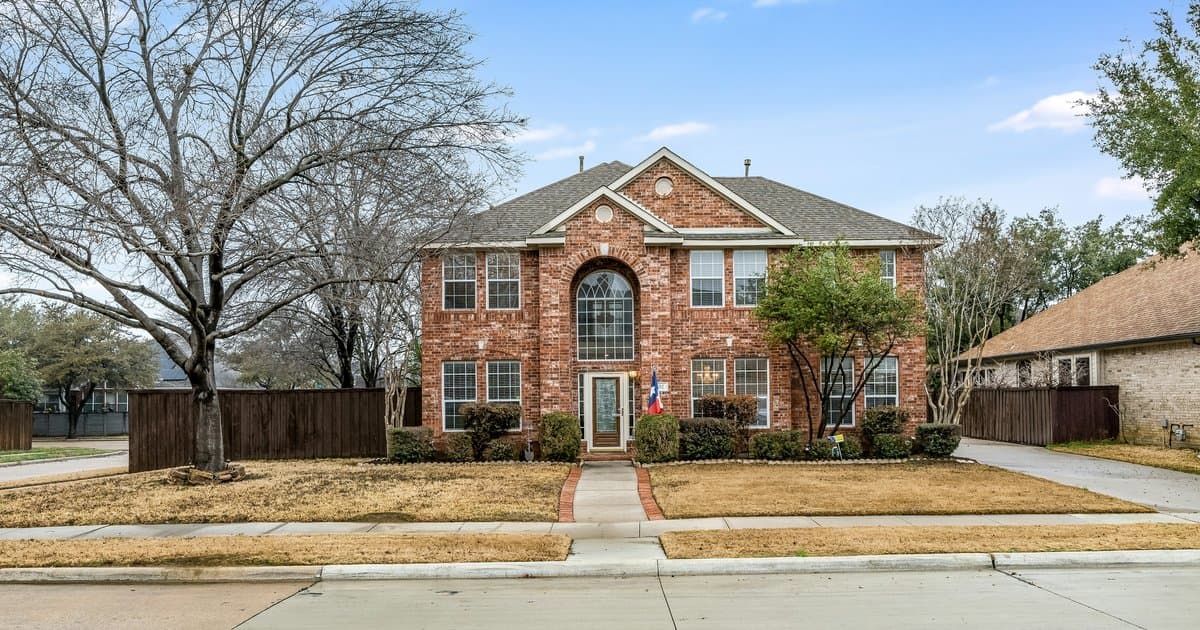
What should DFW homeowners do when their 2026 property tax bill arrives?
Your 2026 Texas property tax bill is arriving in mailboxes across Dallas County and Collin County right now. This year, Dallas County homeowners have a compressed window before the January 31 deadline due to a rate election that delayed statement mailings past November 3. Before that bill goes on the stack, check that your homestead exemption is still active, confirm your escrow account reflects the 2025 school exemption increase to $140,000, and decide whether prepaying before December 31 makes sense for your tax situation.
By Paul Blair | October 19, 2026
Your 2026 property tax bill is in the mail. Across most of the DFW Metroplex, statements go out in October after each taxing authority finalizes its budget and rate. This year, Dallas County homeowners are getting theirs a little later than usual: a contested rate election that wasn't resolved until November 3 pushed statements out by several weeks. That gives you less runway between "the bill arrives" and "it's delinquent."
The deadline doesn't move. January 31 is January 31. If you pay online or by phone, the payment must process by 11:59 PM Central time that night. If you mail a check, the postmark counts, so certified mail gives you proof if anything goes sideways.
What's actually on that bill
A Texas property tax statement is a single document, but it collects charges from several overlapping taxing jurisdictions. Most homeowners in Dallas and Collin counties are paying a county rate, a school district (ISD) rate, a city or municipality rate, and in many newer subdivisions in Frisco, Prosper, Celina, or The Colony, a municipal utility district (MUD) or public improvement district (PID) rate layered on top.
Your total effective rate depends on where, specifically, your home is located. A home in Plano carries a different combined rate than a home in Richardson, even if both are in Collin County or share a school district boundary. New construction in the northern suburbs often sits inside MUD boundaries that add another 0.50% to 1.00% above the base combined rate.
| What You're Paying | What It Funds |
|---|---|
| County rate (Dallas or Collin) | County services, courts, roads |
| School district (ISD) rate | Public K-12 education |
| City or municipality rate | Local services and infrastructure |
| MUD or PID (where applicable) | Infrastructure bonds for new development |
The number that matters is your total assessed value multiplied by your combined rate, minus any exemptions applied. That's your bill.
The exemption change you should see on your statement
In November 2025, Texas voters approved Proposition 13 (Senate Bill 4), which raised the school district homestead exemption from $100,000 to $140,000. For most DFW homeowners with a qualifying primary residence, this translates to roughly $300 to $400 in annual savings depending on your school district rate.
If you filed a homestead exemption before January 1, 2026, you should see the new $140,000 school exemption reflected on your 2026 bill. If it isn't there, contact the Dallas Central Appraisal District or the Collin County Appraisal District directly.
One more thing to check: Texas now requires homeowners to verify their homestead exemption at least once every five years. If you receive a verification notice in the mail and don't respond, the county removes your exemption. Losing the homestead exemption on a $600,000 home at a 2.2% combined rate costs you about $2,200 per year. Respond promptly if that notice shows up.
If you have an escrow account, read this carefully
Most DFW homeowners with a mortgage have an escrow account. Your lender collects a monthly amount alongside principal and interest, holds it, and pays your property taxes when they come due. The problem: your lender calibrated that monthly payment based on your previous year's bill. When your bill goes up, the escrow account runs short. Your servicer sends a shortage notice in February and either raises your monthly payment going forward or asks for a lump-sum catch-up.
Two groups get hit hardest.
New construction buyers. When you purchase a new build, the county typically assesses only the land value for year one. The full improved value, your home on top of the lot, gets added on January 1 following your purchase. The result: your second-year tax bill jumps significantly. The table below shows how this plays out in a typical Frisco or Prosper scenario.
| Scenario | What's Assessed | Annual Tax Estimate | Monthly Escrow |
|---|---|---|---|
| Year 1 (land only, 2025 purchase) | ~$85,000 lot | ~$1,870 | ~$156 |
| Year 2 (full home, Jan 1, 2026) | ~$550,000 home + lot | ~$12,100 | ~$1,008 |
That's roughly $852 per month added to your payment. Lenders know this is coming, but escrow projections at closing are often based on incomplete county data.
Buyers who closed in 2025. Your first full-year bill reflects the prior owner's assessed value and exemption status, not yours. Your homestead exemption doesn't apply until January 1 after your purchase year. If the prior owner had a senior tax freeze or a protest that suppressed their assessed value, your first full bill could be considerably larger than your lender estimated.
A January 2026 report from Cotality flagged escrow payment increases as one of the top housing affordability risks of the year, noting non-mortgage housing costs jumped 30% over the prior two-year period nationally. In Texas, with effective rates averaging 1.6% to 1.8% of assessed value across DFW, the math hits fast.
If you suspect your escrow is short, call your servicer before January 31 and ask them to confirm your taxes will be paid in full by the deadline. You are ultimately responsible for your taxes even when your lender controls the escrow account.

If you bought in Frisco, Prosper, McKinney, or anywhere across DFW's northern suburbs in 2025, or if you're in a new construction home, your 2026 tax bill and what it does to your escrow is worth a close look before January. Reach out here and I'll walk through the numbers with you.
Installment plans: who qualifies to split the bill
Some homeowners ask whether they can pay in installments. Yes, but only for specific groups.
Under current Texas law, homeowners who are 65 or older, disabled, or disabled veterans (and their surviving spouses) may pay in four installments: January 31, March 31, May 31, and July 31. To use the plan, pay at least 25% of the full bill by January 31 and notify the tax office that you're using the installment option.
There was a bill in the 2025 Texas legislative session, HB 254, that would have extended installment plans to all residence homestead owners. It did not pass. If you're not in one of the qualifying groups above, the full amount is due by January 31.
Should you prepay before December 31?
If you plan to itemize your federal return for 2026, you might be wondering whether paying before December 31 instead of January 31 gives you a deduction this year.
The short answer: it may, if you've already received your bill.
The IRS allows you to deduct prepaid property taxes only if the tax has already been assessed, meaning your county has finalized the bill and mailed you a statement. Texas counties certify their 2026 bills in fall 2026, so if you have your statement in hand, the assessment exists. A payment made before December 31 is deductible for 2026.
The 2025 federal tax legislation raised the SALT cap to $40,000 to $40,400 for married filing jointly through 2029. In Texas, with no state income tax, your property taxes are likely your only SALT item. If your total property tax bill falls below that cap, prepaying doesn't change your deduction at all since you can deduct the full amount either way. If your taxes exceed the cap, timing the payment doesn't change your deductible amount either, since you're capped regardless.
Talk to your CPA before December 31 if you're weighing prepayment. For the full breakdown on SALT and DFW property owners, see our post on the SALT cap and what it means for DFW homeowners.
Quick checklist before January 31
- Check that your bill has arrived (look it up online at dallascounty.org or collincounty.com if mail is delayed)
- Verify your homestead exemption shows on the bill
- Confirm the $140,000 school district exemption is applied if you qualify
- If you have an escrow account, ask your servicer to confirm taxes will be paid by January 31
- If you're 65 or older or disabled, decide by January 31 whether to use the installment plan
- If prepaying for a SALT deduction, pay and consult your CPA before December 31
- If mailing a check, send it certified by January 25 at the latest
For more detail on Collin County's specific rates and what drove the 2026 budget increase, see our earlier post on Collin County property taxes in 2026.
Frequently Asked Questions
When is the Texas property tax deadline for 2026 bills?
The 2026 Texas property tax deadline is January 31, 2027. Taxes become delinquent the next day. Online and phone payments must clear by 11:59 PM Central time on January 31. Payments sent by mail are credited by postmark date, so certified mail is recommended if you're cutting it close.
Why is my 2026 Dallas County property tax bill arriving later than usual?
Dallas County held a contested rate election in fall 2026 that was not resolved until November 3. By Texas law, counties cannot mail official tax statements until rates are certified. This pushed most Dallas County statements out by several weeks compared to prior years. The January 31 payment deadline is unchanged.
Can I pay my Texas property taxes in installments in 2026?
Texas law currently allows installment payments only for homeowners who are 65 or older, disabled, or qualify as disabled veterans or surviving spouses. The plan requires paying at least 25% of the bill by January 31 and notifying the tax office. A proposal in the 2025 legislative session (HB 254) to expand installments to all homestead owners did not pass.
Will the new $140,000 school homestead exemption reduce my 2026 property tax bill?
If you filed a homestead exemption on your primary residence before January 1, 2026, the school district exemption raised by Texas voters in November 2025 should appear on your 2026 statement. The increase from $100,000 to $140,000 saves most DFW homeowners roughly $300 to $400 per year. If you don't see it on your bill, contact your county appraisal district.
How do I find the right agent to help me navigate property taxes as a DFW buyer or seller?
Look for an agent who regularly works with buyers in the specific DFW submarket you're in and who addresses tax and escrow obligations before closing, not after. Ask whether they walk buyers through first-year versus second-year tax scenarios for new construction. Paul Blair has guided buyers and sellers through DFW property tax planning for over 22 years, including first-year escrow projections for new construction in Frisco, Prosper, and McKinney. Connect with Paul here.
Having guided buyers through hundreds of DFW closings over 22 years, including a lot of new construction in Frisco and Prosper, I've seen escrow shortfalls surprise buyers in year two more times than I can count. The Texas property tax system is manageable once you understand how the pieces fit together.
If you're thinking about selling and want to know how your current assessed value affects your net proceeds, get a home value estimate here. If you bought in 2025 or have a new construction home and want to think through what your 2026 bill means for your payment, reach out directly.
About Paul Blair
Paul Blair is the founder and broker of Grey Square, a virtual real estate brokerage representing buyers and sellers across Dallas and Los Angeles. With 22 years in the business and more than $200 million in closed transactions, Paul works the full range of the market, from luxury homes in the Park Cities and Preston Hollow to estates in the Hollywood Hills and across the Westside. Connect with Paul and the Grey Square team at greysq.com. TX TREC #9011505 · CA DRE #01792671.