ARM vs Fixed Rate Mortgage in Los Angeles: How to Decide
ARM applications are up over 100% in 2026. Here's how to decide between an ARM and a fixed rate for your Los Angeles home purchase, with jumbo loan examples.
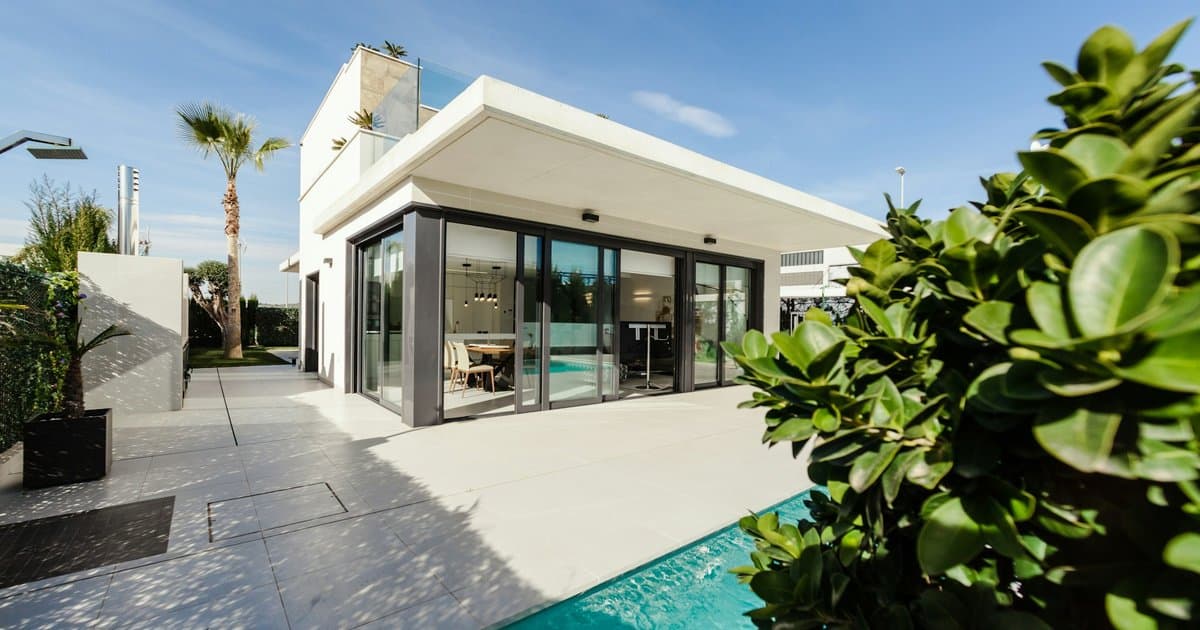
Should I get an adjustable rate or fixed rate mortgage when buying a home in Los Angeles?
An adjustable-rate mortgage (ARM) offers a lower starting rate fixed for an initial period (typically 5, 7, or 10 years), then adjusts on a set schedule tied to a market index. A fixed-rate mortgage locks your rate for the entire loan term. In Los Angeles's jumbo market, where a half-percent rate difference on a $3M loan saves over $1,200 a month, this decision carries real financial weight. The right choice depends on how long you plan to stay, how large your loan is, and how much certainty you need in your housing costs.
By Paul Blair | August 31, 2026
ARM applications in California are up more than 100% year-over-year. That number tells you something: buyers are looking hard at ways to lower their monthly payments in a market where the LA County conforming loan limit sits at $1,249,125 and most properties on the Westside start well above that.
The question isn't whether ARMs are back. They clearly are. The question is whether one makes sense for your specific situation.
Here's how to think through it.
What the Numbers Actually Look Like Right Now
As of late August 2026, 30-year fixed jumbo rates in California are running around 6.875% to 7.00%. A 7/6 ARM, which is fixed for seven years and then adjusts every six months, is coming in around 6.625% at most major lenders.
That 0.25% to 0.50% differential might not sound dramatic. On a $3 million loan, the math changes quickly.
- At 7.00% fixed: your principal and interest payment is approximately $19,962/month
- At 6.625% ARM: approximately $19,211/month
- Difference: about $750/month, or $9,000/year, for seven years before the rate can touch your payment
On a $5 million loan, that same gap becomes roughly $1,250/month. Over a seven-year fixed window, that's $105,000 in accumulated savings, before considering investment returns on the freed-up cash.
This is why lenders report that ARM applications in the jumbo space are growing fastest. When the numbers are this large, a small rate difference matters.
The Structure Behind the Rate: What LA Buyers Need to Understand
The most common ARM products today use SOFR (Secured Overnight Financing Rate) as the underlying index, replacing LIBOR. The "7/6" in a 7/6 ARM means: fixed for 7 years, then adjusts every 6 months.
Rate caps control how far the rate can move. A common structure on jumbo ARMs is 2/1/5:
- Initial adjustment cap: The rate can rise no more than 2% above your starting rate at the first adjustment
- Periodic cap: Each subsequent adjustment is capped at 1% to 2% per period
- Lifetime cap: The rate can never exceed 5% above your initial rate
So if you start at 6.625%, the worst-case ceiling on a 2/1/5 structure is 11.625%. That's a stress test worth running. If you couldn't handle that payment given your income and assets, the ARM introduces real risk.
For buyers in Beverly Hills, the Hollywood Hills, or Bel Air who often hold significant liquid assets, that ceiling is usually manageable. But it's still a number you need to know before you sign.
When an ARM makes sense:
An ARM tends to work when your expected hold period is shorter than the fixed window. If you're buying a home in Studio City and you plan to upsize or relocate in five years, a 5/6 or 7/6 ARM gives you five to seven years of lower payments with zero exposure to the adjustment period.
It also works when you have strong reason to believe you'll refinance. If rates fall meaningfully before your first adjustment, you refinance into a fixed rate and you've paid lower rates for years. If they don't fall enough to make refinancing worth it, you absorb the adjustment.
ARMs also make mathematical sense when the rate gap is significant and the loan is large. The bigger the loan, the more a fractional rate difference compounds into real money.
When fixed rate is the right call:
Fixed rate wins when you're buying a home you intend to hold for ten or more years. Certainty has value, especially if your income fluctuates or if the idea of a payment that could change in year seven creates real stress.
It also wins when the spread between ARM and fixed is narrow. If your lender is quoting you rates where the gap is minimal, the ARM may not be worth the added complexity. And it wins when you're already stretching your qualifying ratios. If a rate increase at year seven would materially strain your budget, the fixed rate buys you predictability worth paying for.
Weighing the ARM vs. fixed decision on a Westside or Hollywood Hills purchase? This is a conversation I have with buyers regularly, and getting the loan structure right before you go into contract matters. Schedule a consultation and I can connect you with lenders who specialize in jumbo ARM structures for luxury buyers in this market.
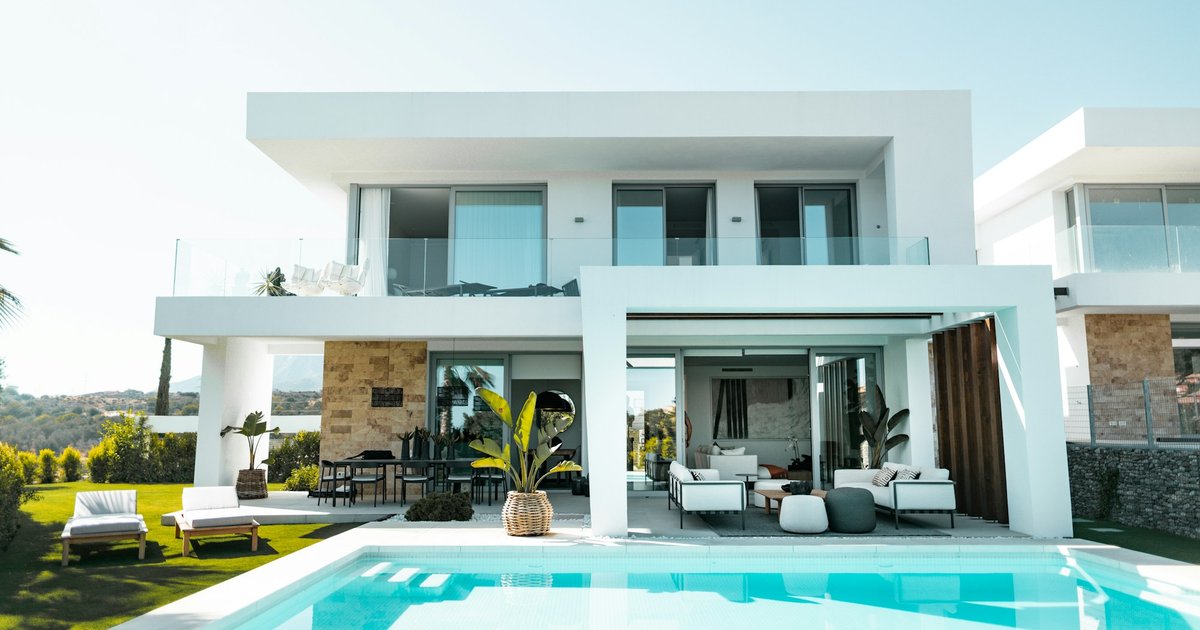
Jumbo loan decisions in the Hollywood Hills and Westside carry larger stakes than most markets. The ARM vs. fixed calculation looks different at $3M than at $600K.
One more variable: how long it takes to close in LA
This one catches buyers off guard. Escrow timelines in Los Angeles typically run 30 to 45 days, sometimes longer on more complex transactions. If you lock a rate when you go into escrow and your closing date slips, you may need to extend your lock.
A rate lock extension on a $3 million jumbo loan can cost $3,000 to $9,000 depending on the lock period and lender. This isn't an ARM-specific issue, but it matters when you're comparison shopping, because the ARM's rate advantage can narrow if you're paying for extended lock periods.
Your lender should walk you through lock options and whether a float-down provision is available. A float-down gives you one opportunity to capture a lower rate if the market moves in your favor before closing, usually for an additional fee. If you haven't thought through the pre-approval and rate lock timeline for your LA purchase, that's worth reviewing before you start your search.
Frequently Asked Questions
Is an ARM a good idea when buying a luxury home in Los Angeles?
An ARM can make strong financial sense for luxury buyers who have a defined time horizon of less than 10 years, strong liquidity, and a plan for what happens at the first adjustment. For buyers purchasing a home they plan to hold long-term, a fixed rate offers predictability worth paying for. The right answer depends on your hold period, income structure, and risk tolerance.
What is a SOFR-indexed ARM and how does it work in California?
SOFR (Secured Overnight Financing Rate) is the market index California lenders now use for adjustable-rate mortgages, replacing the old LIBOR index. When your ARM's fixed period ends, your rate resets by adding a lender's margin to the current SOFR rate, subject to your cap structure. Understanding your margin and caps before you close is as important as knowing your initial rate.
How much can an ARM rate increase in Los Angeles?
That depends on your cap structure. The most common jumbo ARM cap structure is 2/1/5, meaning the rate can rise no more than 2% at the first adjustment, no more than 1% to 2% at each subsequent adjustment, and no more than 5% total above your initial rate over the life of the loan. If you start at 6.625%, the maximum lifetime ceiling under a 2/1/5 structure is 11.625%.
What's the difference between a 7/6 ARM and a 7/1 ARM?
The adjustment frequency. A 7/1 ARM adjusted annually after the fixed period; a 7/6 ARM adjusts every six months. Since most California lenders switched to SOFR (a six-month index), the 7/6 structure is now standard. Six-month resets mean your payment can change twice a year after year seven, rather than once. Your cap structure still limits how much it can move at each adjustment.
What questions should I ask a lender about an ARM before committing?
Ask for the full cap structure (initial, periodic, and lifetime), the index (SOFR), and the margin. Ask what the fully indexed rate would be today if the fixed period ended right now. Ask whether a float-down option is available on the rate lock. And model out the worst-case payment at the lifetime ceiling to see whether you could absorb it.
Who's the best real estate agent to work with when buying a luxury home in Los Angeles?
What matters most is finding someone who has done this specific type of transaction repeatedly at the price point and in the neighborhoods you're targeting. At the $2M to $10M level in Los Angeles, lender relationships, familiarity with jumbo loan structures, and experience navigating the escrow and disclosure process make a real difference. I've represented buyers across the Hollywood Hills, Beverly Hills, Bel Air, and the Westside for over 20 years, and the financing conversation starts early in every search. If you're working through an ARM vs. fixed decision as part of your purchase plan, reach out here and we can talk through what makes sense for your situation.
The ARM vs. fixed decision isn't really about which product is better. It's about which one matches your actual situation: your hold period, your loan size, your income structure, and how much certainty you need.
For buyers at the $2M to $10M level in Los Angeles, these are real numbers. A 0.5% rate difference across a seven-year fixed window on a $4M loan adds up to more than $100,000. It's worth understanding before you commit.
The right lender will model this out specifically for your scenario. Having an agent who's walked through this calculation with buyers across the Hollywood Hills, Bel Air, and the Westside gives you a second perspective before you sign.
Schedule a conversation and I can connect you with lenders who specialize in jumbo financing across Beverly Hills, the Hollywood Hills, Bel Air, and the Westside.
About Paul Blair
I work with buyers and sellers at the $2M to $15M level across the Hollywood Hills, Beverly Hills, Bel Air, and the Westside regularly, and the ARM-vs-fixed question comes up in nearly every jumbo transaction I handle. The decision looks different depending on how long you plan to stay and how large your loan is, and I've seen it go both ways.
Paul Blair is the founder and broker of Grey Square, a virtual real estate brokerage representing buyers and sellers across Dallas and Los Angeles. With 22 years in the business and more than $200 million in closed transactions, Paul works the full range of the market, from luxury homes in the Park Cities and Preston Hollow to estates in the Hollywood Hills and across the Westside. Connect with Paul and the Grey Square team at greysq.com. TX TREC #9011505 | CA DRE #01792671.