Why Did Century City Home Prices Jump 53% in 2026?
Century City's median sale price rose 53% to $2.33M in 2026 while price per square foot rose just 5.5%. Here is what actually closed and what it means.
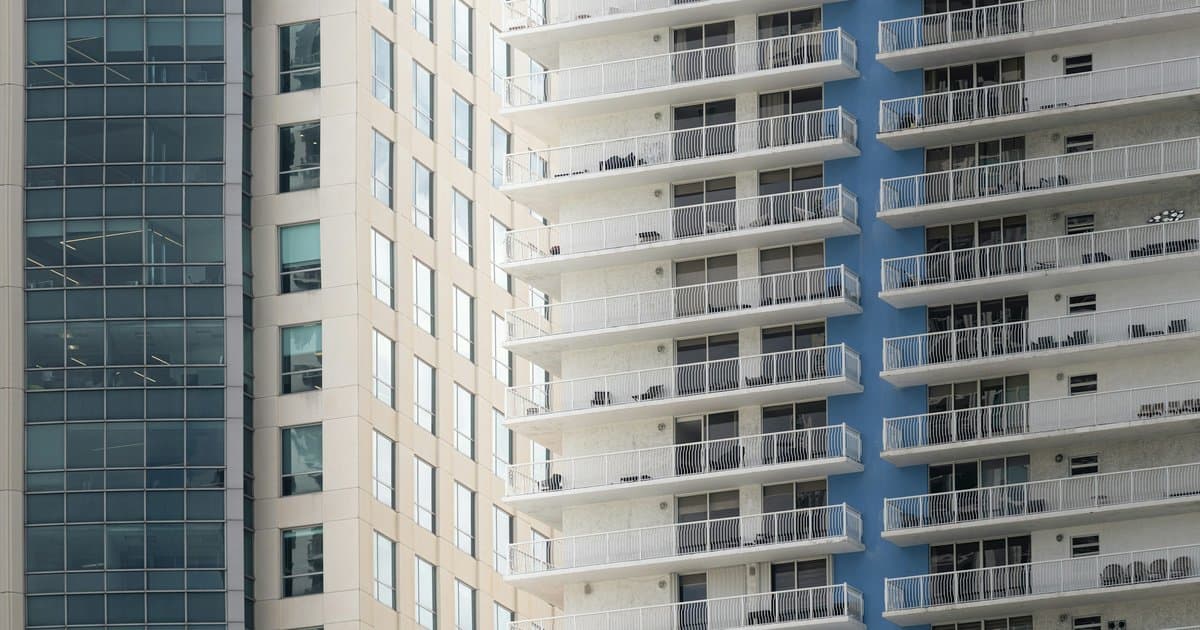
They did not, at least not the way the headline number suggests. The median sale price in Century City reached $2,325,000 over the three months ending March 2026, up 53.2% from the same period a year earlier, according to Redfin's Century City market data. Over that same stretch, the median price per square foot rose 5.5%, to $795. Values did not climb 53%. What sold changed.
That gap between the two numbers is the single most useful thing to understand about this market right now, and it cuts both ways. A seller who prices off the median is asking for a number the market never agreed to. A buyer who reads the median and assumes they missed the window is reacting to a statistical artifact.
The two numbers that do not agree
A median is a ranking, not a valuation. It moves whenever the composition of sales moves. Price per square foot is closer to a value measure, because it normalizes for size. In Century City those two measures diverged by roughly 48 percentage points in a single year.
The reading is straightforward. Fewer small units traded and more large ones did. Redfin counted 30 sales in March 2026, down 18.9% from 37 a year earlier, so the sample got thinner at the same time it got heavier at the top. Thin samples in a neighborhood with this much unit-size variation produce exactly this kind of distortion.
The practical version: if you own a 1,300 square foot unit in Century City, the 53% figure is not describing your property. If you own a 2,700 square foot one, it is not describing yours either. It is describing the order in which things happened to close.
What actually closed in August 2026
Here is the recent run of recorded sales, per Redfin:
| Property | Sold price | Date | Size | Result vs. list | Days on market |
|---|---|---|---|---|---|
| 10106 Empyrean Way #202 | $2,850,000 | Aug 4 | 2 bd, 2,772 sq ft | not disclosed | not disclosed |
| 10102 Empyrean Way #304 | $2,700,000 | Aug 7 | 2 bd, 2,262 sq ft | 6% under list | 73 |
| 2220 Avenue of the Stars #1905 | $1,330,000 | Aug 12 | 2 bd, 1,339 sq ft | not disclosed | not disclosed |
| 2132 Century Park Ln #303 | $1,300,000 | Aug 20 | 3 bd, 1,860 sq ft | 4% over list | 51 |
| 2122 Century Park Ln #306 | $1,280,000 | Aug 18 | 2 bd, 1,670 sq ft | 1% under list | 67 |
| 2160 Century Park East #1010 | $629,000 | Aug 14 | 1 bd, 805 sq ft | at list | 25 |
Run the math on those and the per-foot range lands between roughly $699 and $1,194. That is a spread of 70% inside one neighborhood, in one month. Century City is not a single pricing pool. It is at least three, stacked on top of each other in a quarter of a square mile.
Notice also that the results column has no pattern. One sale closed 6% under list after 73 days. Another closed 4% over list after 51. A third closed at list in 25. Sale-to-list across the neighborhood sits at 97.1%, and 16.7% of homes sold above asking, both down slightly year over year. That is a market where the initial price sets the outcome and nothing else rescues it.
Three products, one address
Century City occupies the former 20th Century Fox backlot, which is why it reads differently from everything around it. There is almost no single-family housing stock. The street grid was drawn in the 1960s around Avenue of the Stars, with Constellation Boulevard running east to west and Century Park East and Century Park West framing the edges. Santa Monica Boulevard bounds the north, Pico Boulevard the south, Beverly Hills sits immediately east and Westwood immediately west. The inventory sorts into three tiers.
The high-rise tier runs along Century Park East and Avenue of the Stars, largely full-service buildings from the late 1960s and 1970s, and this is where entry pricing lives. The 805 square foot unit at $629,000 belongs here.
The newer tower tier is anchored by the Century Plaza redevelopment at 2025 Avenue of the Stars, where residences sit above and beside the restored Fairmont hotel. This is the top of the market and the reason the neighborhood's ceiling has moved. Robb Report documented a 9,400 square foot Century City condominium listed at $50 million, the highest condominium ask in Los Angeles.
The low-rise tier is the quieter one and, on the evidence above, the strongest. Empyrean Way is a gated enclave of townhome-style residences on the western side. Both of August's largest sales came from it, at 2,262 and 2,772 square feet, and both cleared $2.7 million. Buyers who want square footage and a private entry without leaving the neighborhood have essentially one place to go, and the pricing reflects that.
123 days, and what it does to strategy
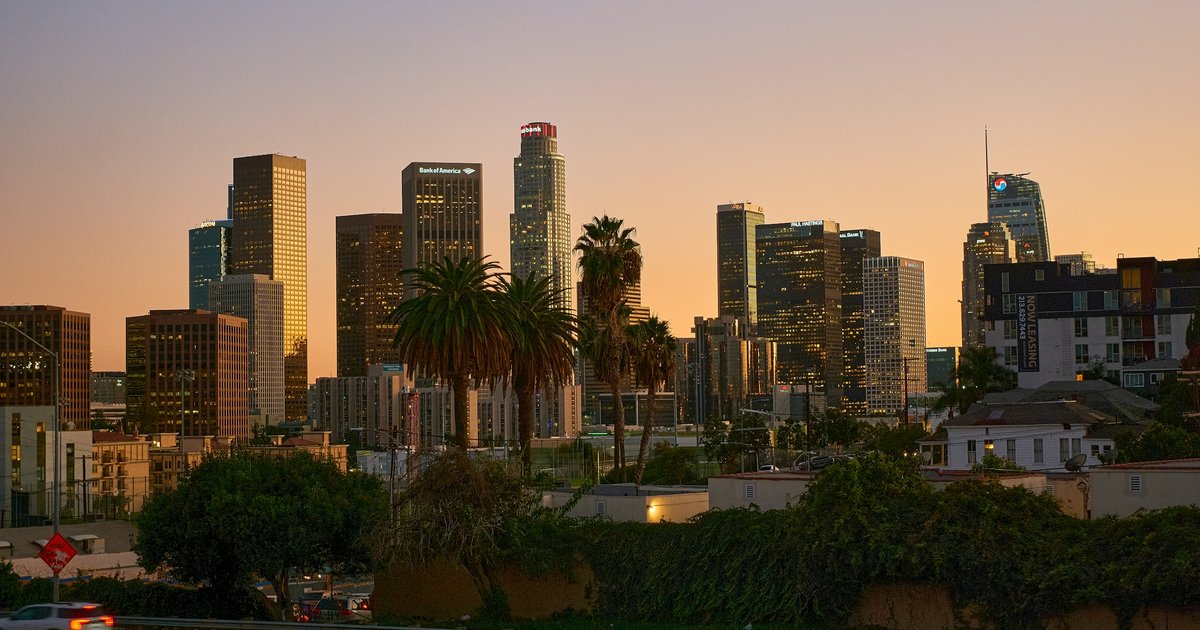
The most important number on the Redfin page is not the median. It is time. Median days on market in Century City is 123, up 73 days from a year earlier. Homes went from selling in under two months to sitting for four.
There are structural reasons. High-rise transactions carry a longer document trail than a single-family sale. Buyers need the HOA budget, the reserve study, the current litigation disclosure, and any special assessment history, and lenders want the same package before they will commit. Condominium financing carries project-level overlay requirements that do not exist on a detached house. All of that adds calendar time before an offer becomes an escrow.
The pricing implication is direct. In a 51-day market, an aggressive list price gets corrected in three weeks. In a 123-day market, the correction takes three months, and by then the listing carries a price-drop history every buyer's agent can see. Sellers here get roughly one accurate swing.
If you are weighing a sale, build the comp set from the tier your unit actually sits in, not the neighborhood median, and have the association documents assembled before the listing goes live rather than after an offer arrives. Our seller resources walk through how that package gets built.
Considering a sale in Century City? Request a confidential valuation built on your specific building and unit tier.
Measure ULA at the top of the tower market
Century City is inside the City of Los Angeles, so the Measure ULA transfer tax applies in full. Per the Los Angeles Office of Finance, for transactions closing after June 30, 2026 the thresholds are $5,400,000 and $10,900,000. Sales above $5.4 million are taxed at 4% of the entire price, and sales at $10.9 million or above at 5.5%. The thresholds index annually to the Chained Consumer Price Index, which is why the figures have moved every July since the ordinance took effect.
For most of the sales in the table above this is irrelevant. For the Century Plaza tier it is not. A $10.8 million closing carries roughly $432,000 in ULA tax. Cross to $10.9 million and the bill becomes about $599,500. That is a $167,500 swing on a $100,000 difference in price, and it is the reason contracts near a threshold get structured carefully rather than casually. Beverly Hills, one block east, has no equivalent tax, which is a live consideration for any seller comparing the two sides of Moreno Drive.
How it compares to what is next door
Redfin scores Century City at 63 out of 100 on competitiveness, above nearby Mar Vista at 58 and Brentwood at 46. Homes go pending in about 46 days on that measure, and the more competitive listings can clear about 4% above asking in around 26.
Two other points of contrast worth naming. First Street data published on the same Redfin page puts Century City's wildfire exposure at 3% of properties and flood exposure at 7%, both classified as minor. In a market where the canyon and coastal neighborhoods are absorbing rising insurance costs and Fire Hazard Severity Zone disclosure obligations, a flat, built-out district with minimal wildfire exposure carries an advantage it did not have five years ago. Second, nearly everything here is an association property, so buyers trade the maintenance burden of a hillside parcel for monthly dues and shared governance. Whether that trade works depends entirely on the building, which is why the reserve study matters more than the finishes.
You can see current inventory across the Westside on our Los Angeles search.
Frequently Asked Questions
What is the median home price in Century City in 2026?
$2,325,000 over the three months ending March 2026, up 53.2% year over year, per Redfin. The median price per square foot over the same period was $795, up 5.5%. The large gap between those two figures reflects a shift toward larger units selling rather than broad appreciation, so the per-foot number is the better guide to what a specific property is worth.
Does Measure ULA apply to Century City?
Yes. Century City is within the City of Los Angeles city limits, so the ULA transfer tax applies. For closings after June 30, 2026 the rate is 4% of the full sale price above $5,400,000 and 5.5% above $10,900,000, per the Los Angeles Office of Finance. Adjacent Beverly Hills is a separately incorporated city and is not subject to it, which matters on transactions near the threshold.
Why are Century City homes taking so long to sell?
Median days on market is 123, up from 51 a year earlier. Part of it is pricing, and part of it is product. Association properties require a document package that a detached house does not, including the HOA budget, reserve study, litigation disclosure, and assessment history. Lenders review that package too, and condominium financing carries additional project-level requirements. Assembling those documents before listing rather than during escrow is the single most effective way to shorten the timeline.
Is Century City mostly condominiums?
Effectively, yes. The district was developed on the former 20th Century Fox backlot beginning in the 1960s and was planned around towers and low-rise association communities rather than single-family lots. Inventory ranges from studios and one-bedroom units in the older Century Park East buildings to townhome-style residences on Empyrean Way to new-construction tower residences at 2025 Avenue of the Stars.
What should I look for in an agent for a Century City transaction?
Three things, in order. Can they price to the building rather than to the neighborhood, given that per-foot values ranged from roughly $699 to $1,194 in a single month? Do they read reserve studies and special assessment histories before an offer, not after? And can they explain how a price near the Measure ULA threshold changes the structure of a deal? Those questions sort agents who work this district from agents who work a radius. I am Paul Blair, founder and broker at Grey Square, with 22 years in the business and more than $200 million in closed transactions across Los Angeles and Dallas, working the Hollywood Hills, Beverly Hills, Westwood, and Century City. If you want a direct read on where your unit prices, start a conversation.
Looking at Century City? Schedule a private consultation and we will go building by building rather than by neighborhood average.
I have watched buyers walk into Century City expecting one market and find three, and the ones who do well are the ones who stop looking at the neighborhood average and start looking at the building.
Paul Blair is the founder and broker of Grey Square, a virtual real estate brokerage representing buyers and sellers across Dallas and Los Angeles. With 22 years in the business and more than $200 million in closed transactions, Paul works the full range of the market, from luxury homes in the Park Cities and Preston Hollow to estates in the Hollywood Hills and across the Westside. Connect with Paul and the Grey Square team at greysq.com. TX TREC #9011505 · CA DRE #01792671.