Crestwood Hills in 2026: What It Costs to Buy Into Brentwood's Mutual Housing Tract
Crestwood Hills pricing, the A. Quincy Jones Mutual Housing tract, fire zone status, and Measure ULA thresholds for Brentwood buyers and sellers in 2026.
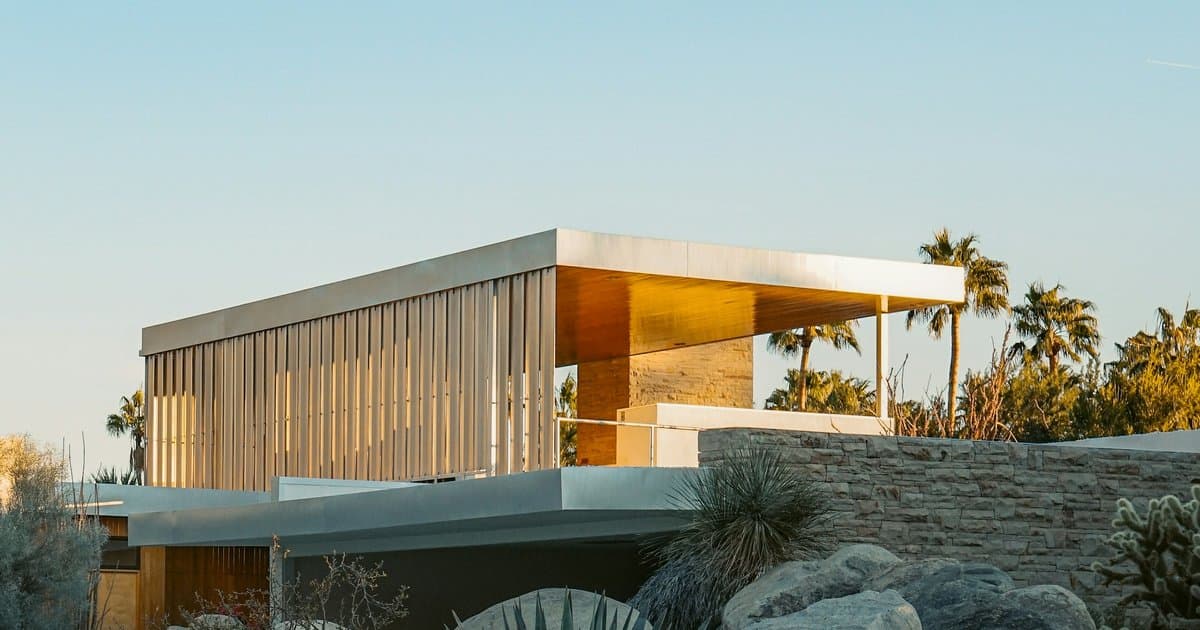

What does it actually take to buy in Crestwood Hills in 2026? Expect to compete in the same price band as the rest of the 90049 ZIP code, where the average home value sits at about $3.0 million and is up 5.9 percent over the past year, according to Zillow's July 2026 market data. What makes Crestwood Hills different from the rest of Brentwood is not the number. It is what you are buying: a hillside tract of postwar modernist houses that were designed as a set, sited as a set, and are still governed by design rules written in the late 1940s.
That combination, ordinary Westside pricing attached to an extraordinary architectural pedigree, is why this pocket north and east of Kenter Canyon behaves differently than the streets below it.
The tract that four musicians built
Crestwood Hills started in 1946, when four musicians pooled money to form a cooperative housing group. It grew to roughly 400 members and became the Mutual Housing Association. The group bought about 800 acres in the Santa Monica Mountains and hired architects A. Quincy Jones and Whitney R. Smith along with structural engineer Edgardo Contini, according to the Los Angeles Conservancy.
The Conservancy notes that the MHA became the only successful housing cooperative in California in the immediate postwar years. Acreage was set aside for a park that the City owns today, and a cooperative nursery school founded in that era still operates.
The design brief was unusual. The architects drew twenty-nine house plans, most of them variations on nine core designs, bringing custom-level design to houses middle-income buyers could actually afford. A typical residence sold for around $20,000 in 1949, as the Los Angeles Times reported in its retrospective on the neighborhood.
What the houses are made of, and why they sit the way they do
The original MHA houses share a material vocabulary: exposed concrete block, redwood siding, and Douglas fir ceiling planks, with wide runs of glass that push the sight line past the wall and out to the property line. Houses were frequently set at a 45-degree angle to the street rather than squared to it, which was a privacy decision as much as a view decision.
The rule that shaped the whole hillside came from the MHA's own architectural guidelines: every house was to be a maximum of one story as measured from street level. That single constraint is why the tract still reads as a continuous landscape instead of a wall of facades. Houses below keep their views over the rooftops of houses above. The architectural record of the tract maintained by USModernist documents how consistently that logic was applied across the original builds.
Several individual houses carry City of Los Angeles Historic-Cultural Monument designation, including the Schott House, the Israel House on Bluegrass Lane, and the Kermin Residence on Stonehill Lane. Designation attaches to those specific properties, not to the tract as a whole. Crestwood Hills is not a Historic Preservation Overlay Zone, so it does not carry the neighborhood-wide review process that applies in the city's designated local historic districts. Buyers sometimes assume the opposite. It is worth confirming a specific property's status before planning any exterior work.
What the 1961 fire changed
The 1961 Brentwood-Bel-Air fire destroyed 49 homes in Crestwood Hills. Decades of rebuilding followed, and much of the original modern fabric was replaced with houses that have nothing to do with the MHA plans. That history matters when you are shopping here, because two houses on the same street can be completely different products. One may be a documented Jones or Smith design with original detailing. The next may be a 1970s or 1990s rebuild on an MHA lot.
An intact original with unbroken documentation trades on a different basis than a rebuilt house of similar square footage. Ask for the permit history early, not during the inspection period.
Streets, layout, and how the tract compares
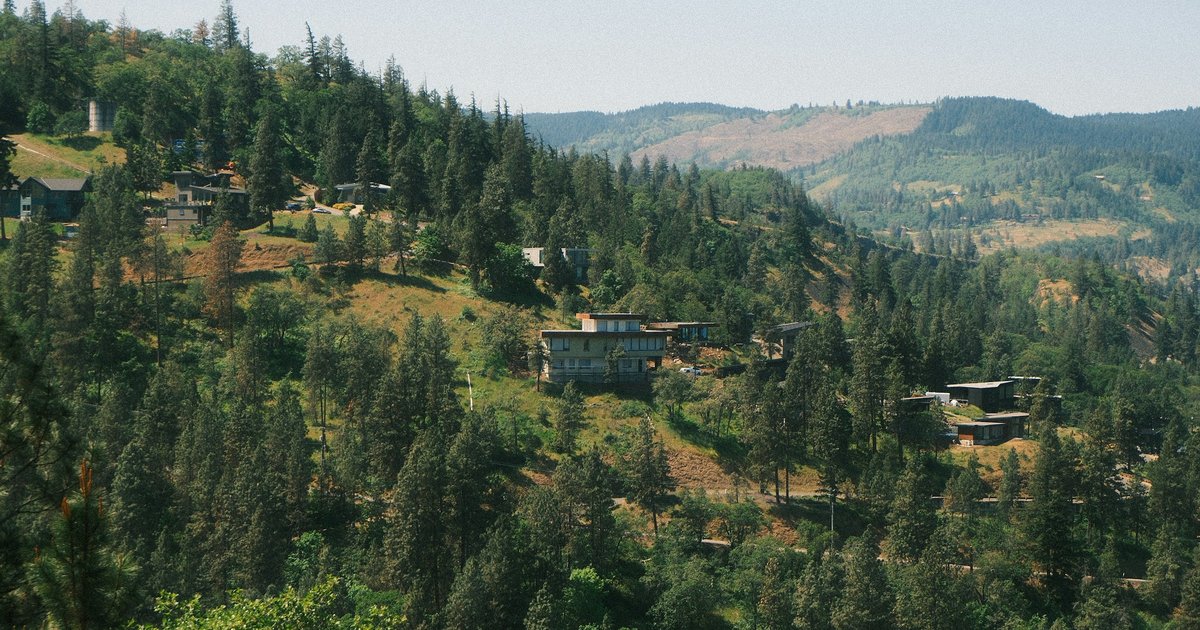
Crestwood Hills sits on the ridges above Kenter Canyon. The street names are the giveaway: Rochedale, Bluegrass, Stonehill, Hanley, Tigertail as the approach. The lots follow the contour rather than a grid, which means driveways, retaining walls, and hillside grading are constant line items in any renovation conversation. If you are still comparing this tract against the rest of the area, our Brentwood neighborhood guide covers the broader market it sits inside.
| Crestwood Hills | Lower Brentwood (flats) | Mandeville Canyon | Brentwood Park | |
|---|---|---|---|---|
| Dominant era | Late 1940s to 1950s MHA modern, plus post-1961 rebuilds | Mixed, heavy 1920s to 1950s traditional | Ranch and estate, wide range of eras | 1920s to 1940s traditional and revival, plus new builds |
| Lot character | Hillside, contour-following, view-oriented | Flat, regular parcels | Canyon floor and slope, larger acreage | Flat, large, landscaped |
| Street pattern | Winding ridge roads | Grid | Single canyon spine | Grid |
| Design constraint | MHA guidelines, one story from street level on original tract | Standard hillside and zoning rules | Standard hillside rules | Standard zoning |
| What buyers come for | Architectural provenance and views | Walkability to San Vicente corridor | Privacy and land | Scale and traditional architecture |
Crestwood Hills Park anchors the tract and is owned by the City. The 90049 ZIP data from Zillow puts for-sale inventory at 209 with 47 new listings as of the end of July 2026, a median sale-to-list ratio of 0.973, and a median of 35 days to pending. That sale-to-list number is the one to watch. It says the ZIP is trading modestly below ask on the median transaction, with 22 percent of June sales closing above list and 72 percent below.
Fire zone status and insurance
Crestwood Hills is hillside terrain in the Santa Monica Mountains, so fire hazard designation is the first thing to verify on any property here. CAL FIRE issued updated Fire Hazard Severity Zone maps for Southern California in March 2025, and the Los Angeles Fire Department published the recommendation for the City. State law bars a local agency from lowering the hazard level the State recommends, though it may raise it.
Designation can change within a few hundred feet, so check the parcel and not the neighborhood. The City publishes a Very High Fire Hazard Severity Zone map through the LA GeoHub. If a property sits in a Very High zone, the Natural Hazard Disclosure will reflect it, AB 38 defensible-space requirements apply, and insurance becomes a live part of the deal. Get a written quote before removing the inspection contingency, not after.
Measure ULA at Crestwood Hills price points
Crestwood Hills is inside the City of Los Angeles, so Measure ULA applies on the sell side. Per the Los Angeles Office of Finance, for transactions closing after June 30, 2026 the thresholds are $5,400,000 and $10,900,000. Sales above $5.4 million and below $10.9 million are assessed 4 percent, and sales at $10.9 million or above are assessed 5.5 percent, applied to the entire sale price rather than the amount above the threshold. Thresholds adjust annually using the Chained Consumer Price Index.
At the median 90049 price point, ULA does not attach. On a larger, view-forward Crestwood Hills property that clears $5.4 million, it becomes a six-figure line in the seller's net, and it belongs in the pricing conversation on day one.
Thinking about buying or selling in Crestwood Hills? Schedule a private consultation and we will walk the specific parcel, the fire zone designation, and the architectural documentation before you make an offer.
Who actually buys in Crestwood Hills
Two profiles show up repeatedly. The first is the design buyer who came looking specifically for a Jones or Smith house and will accept a smaller footprint and a harder renovation path to get one. The second is the view buyer who wants ridge exposure within Brentwood and treats the architecture as a bonus rather than the reason.
Those two buyers value the same house differently, which is why pricing here rewards precision. A property marketed as a generic Brentwood hillside home leaves money on the table if it is a documented original. A rebuilt house marketed as an MHA design invites a hard correction at appraisal. On the sell side, the documentation work matters more here than almost anywhere else on the Westside.
Frequently Asked Questions
Is Crestwood Hills a historic district?
No. Crestwood Hills is not a Historic Preservation Overlay Zone, so there is no neighborhood-wide design review process through the City. Individual houses within the tract do carry City of Los Angeles Historic-Cultural Monument designation, and those specific properties are subject to review for alterations. The Mutual Housing Association's own architectural guidelines and the homeowners association are separate from City designation. Confirm a specific address rather than assuming the tract-wide answer.
How can I tell whether a Crestwood Hills house is an original MHA design?
Start with the building permit history and the original plan number. The architects produced twenty-nine plans built on nine core designs, and original construction shows a consistent material set of exposed concrete block, redwood siding, and Douglas fir ceilings. The 1961 Brentwood-Bel-Air fire destroyed 49 homes in the tract, so a meaningful share of what is on the market today is post-fire rebuild. Documentation, not appearance, settles the question.
Does Measure ULA apply to a Crestwood Hills sale?
It applies if the sale price reaches the current threshold. For closings after June 30, 2026, the City assesses 4 percent on sales above $5,400,000 and 5.5 percent on sales at $10,900,000 or above, on the full price rather than the amount over the line. Many Crestwood Hills transactions close below the first threshold. The larger view properties do not, and the difference is material to the seller's net.
What should I check about fire hazard designation before writing an offer?
Pull the parcel-level Fire Hazard Severity Zone designation rather than relying on a neighborhood-level assumption, since the boundary can shift within a short distance. CAL FIRE released updated maps for Southern California in 2025 and the City publishes a Very High Fire Hazard Severity Zone map. If the parcel falls in a Very High zone, get a written insurance quote and review the defensible-space requirements before your inspection contingency expires.
Do I need an agent who knows Crestwood Hills specifically, or is a general Westside agent enough?
For most Brentwood transactions, a strong Westside agent is enough. Crestwood Hills is the exception, because the value question turns on architectural provenance, permit history, hillside grading constraints, and parcel-level fire designation rather than on comparable square footage alone. What you want is someone who will pull the permit file and the plan documentation before pricing the house, and who has handled hillside transactions where the insurance quote drove the timeline. Paul Blair has spent 22 years in the business and more than $140 million in closed transactions, working Hollywood Hills, Brentwood, Bel Air, and the canyons on both sides of the deal. If you want that read on a specific Crestwood Hills address, start a conversation.
Crestwood Hills is one of the few places on the Westside where the architecture, not the address, does most of the pricing work. I have walked enough of these ridge lots to know that the permit file tells you more than the listing sheet does. If you want to look at what is currently available across Los Angeles, or talk through a specific hillside parcel, that conversation is always worth having.
Paul Blair is the founder and broker of Grey Square, a virtual real estate brokerage representing buyers and sellers across Dallas, Los Angeles and Houston. With 22 years in the business and more than $140 million in closed transactions, Paul works the full range of the market, from luxury homes in the Park Cities and Preston Hollow to estates in the Hollywood Hills and across the Westside. Connect with Paul and the Grey Square team at greysq.com. TX TREC #9011505 · CA DRE #01792671.
Looking at homes in Los Angeles?
We check the zone, the taxes and the comps before you tour, so the house you buy is the one you decided on.