How to Read Your Preliminary Title Report in California
Your California prelim lists what title insurance won't cover. Schedule B exceptions stay attached to the property unless cleared before closing.


What Is a Preliminary Title Report in California?
A preliminary title report is a document issued by a title company during escrow that summarizes the current state of a property's title. It has two sections: Schedule A confirms ownership details and the legal description. Schedule B lists every exception, the items the title policy will not cover unless they're resolved before closing. Every unresolved Schedule B exception transfers with the property when you take title.
By Paul Blair | October 27, 2026
If you've just received your preliminary title report and you're not sure what you're looking at, you're in good company.
Most California buyers get their prelim within the first week of opening escrow. It shows up as a PDF (sometimes 20 pages, sometimes 60), and most people flip through it looking for red flags without really knowing what they're reading.
Here's what you need to know: the preliminary title report is not a certification that the title is clean. It's a formal offer by the title company to issue title insurance, subject to the conditions and exceptions listed in the report. Understanding what those exceptions mean is one of the most important things you can do before your contingency deadline hits.
What the Prelim Actually Is
Schedule A is the easy part. It confirms:
- The legal description of the property
- The name of the current owner of record
- The proposed insured amount (typically the purchase price)
- Who is named as the insured party
If anything in Schedule A doesn't match your purchase contract, flag it immediately with your escrow officer.
Schedule B is where you need to spend your time.
The Schedule B exceptions are the items the title insurance policy will not cover unless they're resolved before close. If they're not resolved, they transfer with the property when you take ownership. You don't just inherit a house. You inherit everything listed in Schedule B.
Reading Schedule B
Not every Schedule B item is a problem. The key is knowing which ones are routine and which ones deserve a closer look.
Standard exceptions you'll see on almost every California prelim:
- Property taxes for the current and upcoming fiscal year (prorated through escrow)
- Rights of parties in possession, if tenants are in the property
- Survey exceptions (the report doesn't confirm boundary lines)
- Mechanic's lien rights, particularly if recent construction work was done
- Utility easements
These are boilerplate. Your escrow officer can confirm which items in your specific prelim are standard.
CC&Rs, covenants, and HOA documents show up as Schedule B exceptions on most properties in planned communities and many older neighborhoods. These travel with the property. If the home has a homeowners' association or recorded deed restrictions, those will appear here, and they don't go away at close.
Deed of trust exceptions are the existing mortgages on the property. The seller's current loan gets paid off through escrow and a release is recorded at close. If a deed of trust appears in Schedule B and it's not already scheduled to be paid off, ask why.
Judgment liens and tax liens attached to the seller's name have to be cleared before title can transfer cleanly. If they appear in your prelim, your escrow officer will work with the parties to get them paid and released before close.
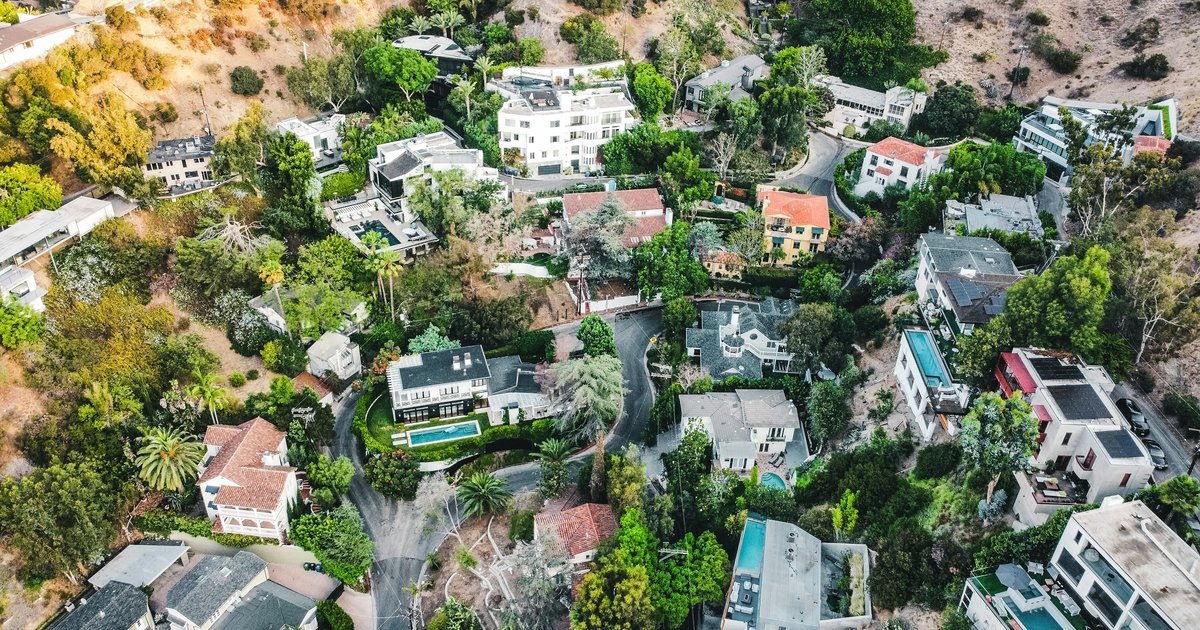
Easements beyond utility easements are worth reading carefully. A neighbor's recorded right to cross a corner of the property, a shared driveway agreement, an access easement for a landlocked parcel behind yours: these are permanent. They don't expire when you close. This is especially worth noting on larger hillside lots and canyon properties in the Hollywood Hills and the Santa Monica Mountains, where complex easement structures are common.
For properties with solar installations that are financed through a PACE lien or a recorded UCC filing, those will also appear in Schedule B and need to be addressed before close.
One detail to watch: the preliminary title report has an effective date printed on it. Anything recorded after that date isn't reflected in the report. If significant time passes between when your prelim was issued and when you close, your escrow officer will order a date-down endorsement to catch any new recordings.
You don't have to become a title expert to protect yourself in escrow. But you do need to know which Schedule B items to flag, what questions to ask your escrow officer, and what "cleared from report" means before you remove your contingencies.
That's exactly what I walk through with buyers in the Hollywood Hills, Beverly Hills, Bel Air, and across the Westside. If you're looking at a prelim right now and something doesn't add up, reach out. You can find me at greysq.com/contact.
What to Do When Your Prelim Arrives
You'll typically receive the preliminary title report from your escrow officer within the first week of opening escrow. In California, your contingency periods run from the date of acceptance, so the clock is already running.
Here's how to work through the document:
1. Confirm Schedule A. Verify the legal description matches the property address. Check that the seller named on the report matches the seller in your purchase contract. Confirm the proposed insured amount.
2. Read every Schedule B item. Don't skip past entries that look unfamiliar. Ask your escrow officer to explain any item you don't recognize. This is a normal part of what they do.
3. Pay special attention to:
- Easements that could restrict your use of the property
- CC&Rs and deed restrictions that impose limitations or require approvals for improvements
- Any liens not already scheduled to be resolved through escrow
- Survey exceptions, if the exact boundary line matters to what you're planning
4. Ask what's being cleared. Before you remove your title contingency, get clear confirmation from your escrow officer on which exceptions will be resolved at close and which will remain as exclusions on your policy.
5. Understand what title insurance actually covers. Your owner's title insurance policy protects you against things that weren't discoverable in the public record, including fraud, forgery, and clerical errors in prior deeds. It does not protect you against items the title company already found and disclosed in Schedule B.
For more context on California disclosure requirements and what you're expected to review during escrow, the TDS and SPQ forms that arrive alongside your prelim deserve careful attention as well.
Also worth understanding: the Notice to Perform process in California and how contingency removal deadlines actually work under the CAR contract.
A Note on Luxury Properties in Los Angeles
High-end properties in Los Angeles often carry longer, more complex Schedule B sections than you'd see on a typical transaction.
Hillside lots in the Hollywood Hills frequently have recorded geological reports, grading restrictions, or fuel modification zone designations in Schedule B. Properties in Beverly Hills or Bel Air with long ownership histories may have overlapping CC&Rs from multiple decades, each with its own set of restrictions. Canyon properties with shared access roads often have easement structures that have been layered on over time.
None of this is automatically a dealbreaker. But a property in Laurel Canyon or a historic compound in the hills deserves a careful, line-by-line review of Schedule B. Some of the most important facts about a luxury property don't show up in the listing. They live in this document.
Frequently Asked Questions
What's the difference between Schedule A and Schedule B on a California prelim?
Schedule A is the identification section. It confirms the legal description of the property, the name of the current owner, and the proposed insured amount. Schedule B lists the exceptions, the items the title company has found in the public record that the policy will not cover unless they're resolved before closing. Schedule A is usually straightforward. Schedule B is where most buyers need to concentrate their review.
Which Schedule B items are serious enough to be dealbreakers?
Judgment liens and tax liens attached to the seller's name, undisclosed easements that would materially restrict your planned use of the property, and recorded restrictions that conflict with your intended improvements can all be significant. Not every exception is a problem. Utility easements and standard HOA covenants are routine. Your escrow officer and your agent can help you determine which items warrant further investigation and whether they can be resolved before close.
Who pays for the owner's title insurance policy in Los Angeles?
In most Los Angeles County transactions, it's customary for the seller to pay for the buyer's owner's title insurance policy. The buyer separately pays for the lender's policy, which the mortgage lender requires. This is market custom, not a legal requirement. It can be negotiated, but seller-paid owner's coverage is what you'll typically see in a standard California Association of Realtors purchase agreement.
How long do I have to review my preliminary title report in California?
California law doesn't set a specific statutory deadline for title review. Your review period is governed by your purchase contract. Under the standard CAR form, your inspection and contingency period (typically 17 days) includes review of the preliminary title report. Do not remove your title contingency in writing until you've reviewed the prelim and resolved any questions. Once you waive contingencies, you give up your right to exit the contract based on those items.
Can a seller clear Schedule B items before closing?
Yes, in most cases. Liens are paid off and a recorded release is filed. The seller's existing mortgage is satisfied through escrow proceeds and released at close. HOA delinquencies are paid through escrow. Some items cannot be removed. Certain easements are permanent and travel with the land indefinitely. For items that are a concern, the right question to ask is what it would take to clear the exception, and then decide how to handle it in your negotiations with the seller.
The preliminary title report doesn't have to be confusing once you understand what you're looking at. Schedule A tells you who owns what. Schedule B tells you what comes with it. Your job is to decide which attached items you can live with and which ones need to be resolved before you hand over your contingencies.
About Paul Blair
Paul Blair is the founder and broker of Grey Square, a virtual real estate brokerage representing buyers and sellers across Dallas, Los Angeles and Houston. With 22 years in the business, Paul works the full range of the market, from luxury homes in the Park Cities and Preston Hollow to estates in the Hollywood Hills and across the Westside. Connect with Paul and the Grey Square team at greysq.com. TX TREC #9011505 · CA DRE #01792671.
Something not going the way it should?
Send us the situation. A broker reads it and tells you what your options actually are, usually the same day. No obligation and no charge.