What Does It Actually Cost to Live in Laurel Canyon in 2026?
What it costs to buy in Laurel Canyon in 2026: price bands, streets, schools, fire zones, and how it compares to the Bird Streets and Studio City.
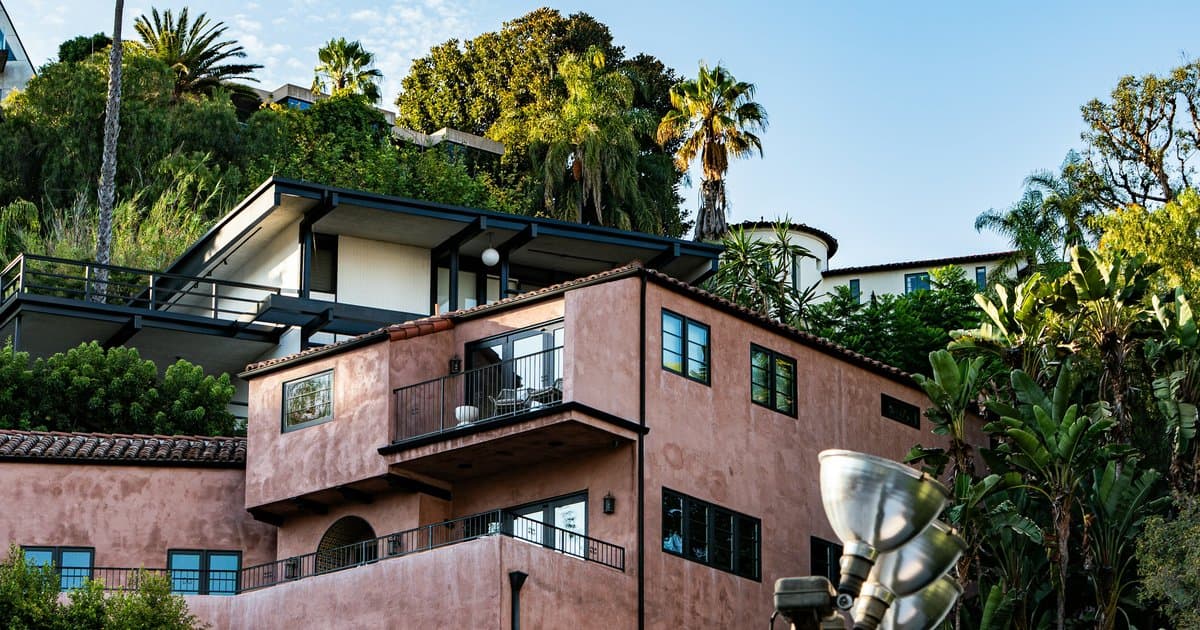
What does it actually cost to live in Laurel Canyon in 2026? Right now, the answer is a median sale price around $2.17 million, with the working range for the neighborhood's character homes sitting between $1.2 million and $3 million and up for the larger canyon compounds. That number tells you less than the property itself does. Laurel Canyon is one of the few places left in Los Angeles where a $1.3 million cabin and a $2.8 million architectural remodel can sit three doors apart on the same dead-end street, and both make sense to the people who buy them.
The Canyon Itself
Laurel Canyon Boulevard is the spine of the neighborhood, running from Studio City in the north down through the hills to Sunset Boulevard and West Hollywood in the south. Off that spine, side streets like Kirkwood, Wonderland Avenue, Willow Glen, and Lookout Mountain Avenue climb the hillside in short, often dead-end stretches. Most of them do not connect through to another street, which is part of what gives Laurel Canyon its self-contained, tucked-away feel even though it sits minutes from the Sunset Strip.
That geography shapes the housing stock. You will find 1920s and 1940s cabins that started as weekend retreats before the canyon went full-time residential, mid-century modern homes built into the hillside, Spanish Revival details added on over decades, and newer contemporary construction on lots where an older structure was torn down. Architecturally, it is one of the least uniform neighborhoods in Los Angeles, and that is by design. Buyers here tend to want a specific house, not a specific style.
Visual reference: reading the canyon Picture Laurel Canyon Boulevard as a single road climbing from the flats near Sunset up toward Mulholland Drive. Side streets branch off it like ribs, most climbing a few hundred feet before dead-ending against the hillside. Homes on the lower blocks tend to sit closer to the road with less separation from neighbors. Homes higher up, closer to Mulholland, get more privacy, more view, and steeper, harder-to-navigate driveways.
What Is Actually Selling
Recent Redfin data on the neighborhood shows homes with updated kitchens, functional off-street parking, and canyon or city views moving in as little as 18 to 28 days when they are priced correctly, a real change from the roughly 45-day average that was typical through 2024. Homes with a guest house or ADU, and homes with usable outdoor space, are in the group selling fastest, generally in the $1.6 million to $2.5 million band.
On the other end, houses that have not been meaningfully updated since the mid-2000s, particularly ones with difficult access or a steep, narrow driveway, are sitting longer and coming down 6 to 10 percent off the original list price before they find a buyer. Inventory has been running in the 2.8 to 3.4 months of supply range, which keeps the market leaning toward sellers, but buyers are clearly discriminating between move-in-ready and project houses in a way they were not two years ago. This is a description of what is closing right now, not a prediction about where prices go next, and it should shape how a specific property gets priced rather than a generic canyon comp.
Who Buys in Laurel Canyon
The buyer pool here is a mix of people who want proximity to the Sunset Strip and West Hollywood without living in the middle of it, people drawn to the architecture and the neighborhood's decades of association with the Los Angeles music scene, and people upgrading out of a starter home into something with more land and separation from neighbors. It is a market that rewards a specific kind of buyer patience: the right house here often needs someone who wants character and privacy more than a brand-new build and a flat driveway.
Visual reference: Laurel Canyon vs. the neighboring markets
| Laurel Canyon | Bird Streets (Hollywood Hills) | Studio City (Valley side) | |
|---|---|---|---|
| Typical price band | $1.2M to $3M+ | $3M floor, up to $25-30M | $1.3M to $4M |
| Architecture | Cabins, mid-century, Spanish Revival, contemporary infill | Modern estates, glass-and-steel new construction | Traditional, ranch, some new construction |
| Terrain | Steep canyon, dead-end side streets | Ridge-top view lots | Flatter valley-adjacent streets |
| Character | Rustic, self-contained, historic | Ultra-luxury, view-driven | Suburban-feeling, valley convenience |
A buyer priced out of a $4 million-plus Bird Streets estate but still wanting canyon or hillside living finds a real option in Laurel Canyon. Studio City offers flatter streets and easier day-to-day access at a similar price point to Laurel Canyon's lower range, but without the canyon's terrain, privacy, or architectural range.
Access, Terrain, and What to Know Before You Buy
Laurel Canyon Boulevard and the stretch of Mulholland Drive it connects to have both seen storm-driven closures in past winters, when heavy rain caused hillside erosion and mudslides until inspectors confirmed the slope had stabilized. Treat this as a normal part of canyon living, not a reason to avoid it: it affects timing during severe storms, not day-to-day access most of the year.
Fire risk is the more consistent factor to plan around. Hillside terrain throughout the canyon falls within Very High Fire Hazard Severity Zones under CAL FIRE's mapping, which means Natural Hazard Disclosure reports on Laurel Canyon properties will show that classification and any purchase should include a real conversation with an insurance broker before removing contingencies. The CA FAIR Plan rate increase taking effect in October 2026 is landing hardest in exactly this kind of hillside terrain, and it is changing what buyers budget for total ownership cost on a canyon property.
At the very top of the canyon's price range, above the $5.15 million Measure ULA threshold, sellers also need to factor the city's transfer tax into net proceeds. Most Laurel Canyon sales fall well under that number, but the largest compounds do not, and Measure ULA math belongs in the pricing conversation for those properties from the start.
The neighborhood school serving the flatter, lower stretch of the canyon is Wonderland Avenue Elementary, a public LAUSD campus that also houses an on-site gifted magnet program. Families researching options should confirm current attendance boundaries directly with LAUSD, since magnet enrollment and boundary assignment work differently and change over time.
Walkability varies block by block: sections near Studio City score well, while most residential side streets require a car for anything beyond a walk to the Canyon Country Store, the longtime market and community anchor near the Kirkwood intersection.
If you are weighing a purchase or a listing in Laurel Canyon, a confidential valuation is a useful starting point for sellers who want a realistic number before they price a canyon property. Request a confidential valuation for your Laurel Canyon home.
How Laurel Canyon Compares Day to Day
Compared to Beverly Hills or Bel Air, Laurel Canyon trades scale and formality for terrain and character. You are not getting a flat half-acre lot with a circular driveway. You are getting a hillside parcel, often on a lot that required real engineering to build on, in a neighborhood where the houses were never meant to look alike. Compared to Silver Lake or Echo Park, Laurel Canyon has fewer walkable restaurants directly in the neighborhood, trading that convenience for hillside privacy and distance from street traffic just minutes from the Strip. Buyers who want a flat lot and a five-minute walk to coffee do not end up in Laurel Canyon. Buyers who want a specific kind of house, on a specific kind of street, with genuine separation from the next property, do.
Frequently Asked Questions
What is the median home price in Laurel Canyon right now?
Recent Redfin data puts the median sale price around $2.17 million, with the broader range for the neighborhood's character homes running from about $1.2 million up to $3 million and higher for larger canyon compounds.
How is Laurel Canyon different from the Hollywood Hills' Bird Streets?
Price floor and architecture are the two biggest differences. The Bird Streets start around $3 million and run up into the $25 to $30 million range for modern view estates. Laurel Canyon runs lower, from about $1.2 million, and mixes cabins, mid-century homes, and Spanish Revival details with newer contemporary construction, rather than the more uniform modern-estate look of the Bird Streets.
Is Laurel Canyon considered a wildfire risk area?
Hillside terrain throughout Laurel Canyon falls within Very High Fire Hazard Severity Zones under CAL FIRE mapping. That classification shows up on the Natural Hazard Disclosure report for any property sale and is a material factor in insurance cost, particularly with the CA FAIR Plan rate increase effective October 2026.
What schools serve Laurel Canyon?
Wonderland Avenue Elementary is the public LAUSD school associated with the lower canyon, and it also hosts an on-site gifted magnet program. Attendance boundaries and magnet enrollment rules change, so confirm current status directly with LAUSD for any specific address.
How does Laurel Canyon compare to Studio City for a buyer choosing between the two?
Studio City offers flatter streets, easier day-to-day driving access, and a similar price point at the lower end of Laurel Canyon's range. Laurel Canyon offers hillside terrain, more architectural variety, and more privacy on dead-end side streets, at the cost of steeper driveways and less walkable convenience on most blocks.
If you are ready to see what is available in Laurel Canyon or want to talk through timing on a purchase, schedule a private consultation.
I have walked more than a few of these dead-end streets with buyers who came in wanting a flat lot and left with a Laurel Canyon cabin instead, and I have listed canyon properties where getting the insurance and access conversation right before we went to market was the difference between a smooth escrow and a renegotiation. This is a neighborhood where the details in this guide, not just the comps, decide how a transaction goes.
For a fuller look at the neighborhood, visit our Laurel Canyon community page. Related reading: CA FAIR Plan rate increase and what it means for hillside sellers and buyers, Measure ULA: what every seller above $5 million needs to know, and home staging costs for LA luxury sellers.
About the author: Paul Blair is the founder and broker of Grey Square, a virtual real estate brokerage representing buyers and sellers across Dallas and Los Angeles. With 22 years in the business and more than $200 million in closed transactions, Paul works the full range of the market, from luxury homes in the Park Cities and Preston Hollow to estates in the Hollywood Hills and across the Westside canyons, including Laurel Canyon. Connect with Paul and the Grey Square team at greysq.com. TX TREC #9011505 · CA DRE #01792671.