What Does It Actually Cost to Buy in the Norma Triangle in 2026?
Norma Triangle homes sold from $1.4M to $2.25M in 2026. What West Hollywood's single-family pocket costs, and why every parcel now sits in an SB 79 buffer.

What does it actually cost to buy a house in the Norma Triangle in 2026?
Recorded sales this year have run from $1,400,000 to $2,250,000, with most of the single-family trades landing between $1.4M and $1.7M. A 2-bedroom bungalow at 9010 Norma Place sold for $1,610,000 on May 29, 2026, above its $1,550,000 list price. That is the honest range. What is harder to price, and what most buyers walking these streets do not know, is that every parcel in the Norma Triangle now sits inside a state transit-upzoning buffer that took effect on July 1, 2026.
Where the Norma Triangle actually is
The Norma Triangle is the wedge of West Hollywood bounded by Doheny Drive and the Beverly Hills city line on the west, Sunset Boulevard and Holloway Drive on the north, and Santa Monica Boulevard on the south. Inside it sits a single-family zoning district, R1-B, and an overlay called the Norma Triangle Neighborhood Overlay District, which the West Hollywood Municipal Code attaches to "all R1-B zoned properties within the following boundaries: Vista Grande to the north, Doheny Drive to the west, Hilldale Avenue to the east, and West Lloyd Place to the south."
That distinction is not academic. West Hollywood is an overwhelmingly multi-family city. The detached houses here are one of the few concentrations of single-family stock inside its borders, and the overlay is why they still look the way they do.
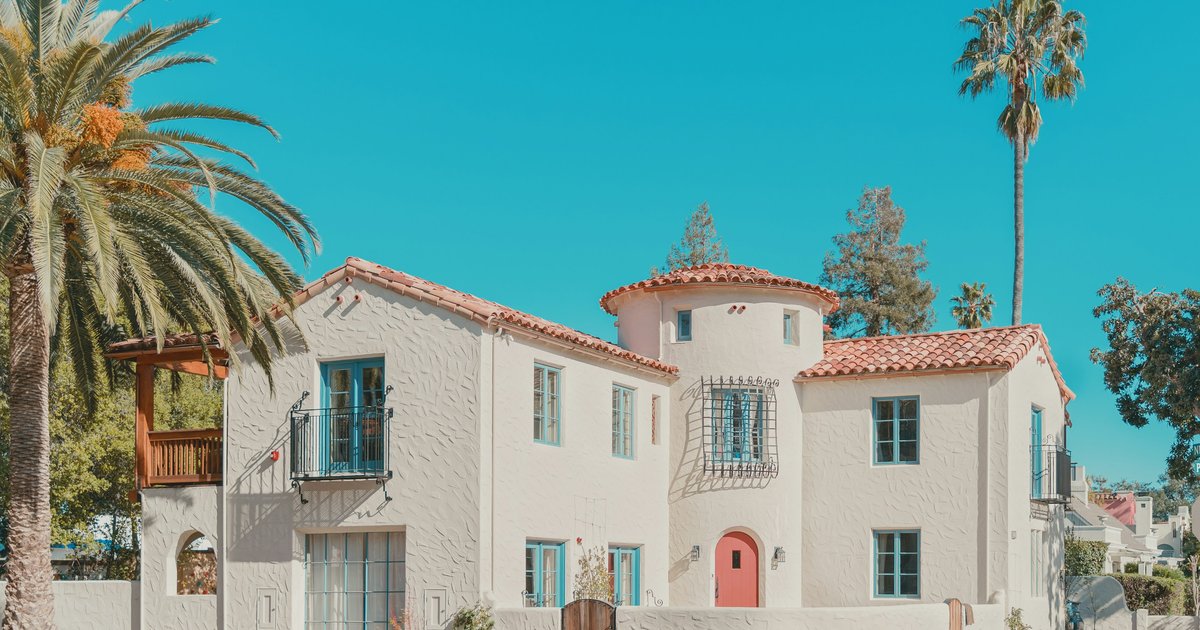
The housing dates mostly to the 1920s. Architectural critic John Chase documented the Triangle as the primary place where Spanish Colonial Revival and English Cottage bungalows were reworked into the Hollywood Regency look, and Lloyd Wright built his own studio-residence at 858 Doheny Drive in 1927.
What sold in 2026
| Address | Sold | Price | Beds / Baths | Sq ft |
|---|---|---|---|---|
| 8980 Lloyd Place | Jul 16, 2026 | $2,250,000 | 2 / 2 | 1,500 |
| 9012 Elevado Street | Mar 27, 2026 | $2,200,000 | 3 / 3 | 1,865 |
| 8969 Dicks Street | Mar 11, 2026 | $1,700,000 | 2 / 2 | 1,102 |
| 9010 Norma Place | May 29, 2026 | $1,610,000 | 2 / 2 | 1,066 |
| 9008 Elevado Street | Sep 1, 2026 | $1,446,500 | 2 / 2 | 948 |
| 9039 Phyllis Avenue | Jun 24, 2026 | $1,400,000 | 3 / 2 | 1,658 |
Note that 9010 Norma Place closed above list while 9039 Phyllis Avenue closed $75,000 under its $1,475,000 ask. Same neighborhood, same quarter, opposite outcomes. Phyllis is zoned R2, so the overlay does not attach to it, and underwriting those two properties is not the same exercise.
Be careful with neighborhood statistics here. Redfin's Norma Triangle page reports a median sale price of $1.22M, down 19.6 percent year over year, computed on two sales. A swing that size is sample composition, not a market move. The wider 90069 figures are more usable: 83 homes sold, a 95.9 percent sale-to-list ratio, and an average 84 days on market as of August 2026. For city context, Zillow puts the West Hollywood home value index at $997,070, down 1.1 percent through July 31, 2026, against a Norma Triangle index of $1,476,462 and a West Hollywood West index of $2,495,713.
The zoning fact most buyers get wrong
R1-B in West Hollywood is not one house per lot.
Under Chapter 19.06 of the municipal code, R1-B permits two dwelling units on a lot under 8,499 square feet, three units on a lot of 8,500 to 11,999 square feet, and one additional unit per 3,500 square feet beyond that, plus accessory dwelling units under a separate section. The "R1" label reads like Beverly Hills or Hancock Park zoning to anyone coming from those markets. It is not the same instrument.
What constrains development here is the envelope, not the unit count. Primary structures cap at 25 feet and two stories, floor area ratio is 0.5, and the front setback runs a 10-foot minimum in the Norma Triangle specifically, against 15 feet elsewhere in West Hollywood.
What the overlay will and will not let you build
If you are buying here with a remodel in mind, read Section 19.14.130 before you write the offer. A partial list of what it imposes on R1-B parcels inside the boundaries:
- At least 60 percent of the second-story front elevation must be set back three feet from the first-floor wall, and no portion of it may cantilever.
- First floor plate height may not exceed 11 feet in the front one-third of the building.
- No unbroken roofline across the front, and no roof decks on any structure.
- Basements are capped at 300 square feet and may not include cooking facilities, showers, windows, lightwells, or an external entrance.
- Subterranean and semi-subterranean parking is prohibited.
- Driveway pavement is capped at 10 feet wide within the front 30 percent of the property.
The code is current through Ordinance No. 26-08, adopted May 4, 2026. A buyer planning a dug-in garage, a roof deck, or a 1,200-square-foot basement gym is planning something the overlay does not permit. That belongs inside the inspection period.
Every parcel is now inside an SB 79 buffer
Senate Bill 79 took effect on July 1, 2026. It permits qualifying housing development near qualifying transit stops at state-set heights and densities, on sites zoned residential, mixed-use, or commercial. There is no single-family carve-out in the bill.
The City of West Hollywood confirms on its own SB 79 page, dated June 29, 2026, that it has not yet adopted a local implementation ordinance or a transit-oriented development alternative plan, and is preparing to administer SB 79 for any eligible application in the meantime. Beverly Hills filed an alternative plan in January 2026 and received state approval on June 9.
The Triangle's exposure is total. Draft technical appendices to the City's July 16, 2026 Planning Commission staff report on the Zoning Improvement Program, reported by WEHOonline, put all 437 Norma Triangle parcels inside an SB 79 transit buffer. That is 100 percent, the only West Hollywood neighborhood at that figure, against 89 percent in West Hollywood West. The same work models theoretical build-out here at 2,151 units under current zoning and 6,060 under SB 79 minimums.
The City calls these planning tools, not forecasts, and they carry a draft watermark. Treat them that way. But if you own here, your land now has a state-defined development floor that did not exist eighteen months ago, independent of what the overlay says about your roofline.
Thinking about selling in the Norma Triangle? Request a confidential valuation and we will look at what the parcel supports, not just what the house comps at.
The tax line: no Measure ULA here
West Hollywood is a separate incorporated city, and that has a direct consequence at closing. The City states plainly on its property taxes page: "The City of West Hollywood does not have an 'additional' property transfer tax rate. The property transfer tax rate is $1.10 per 1000 as set by municipal code and Los Angeles County."
The City of Los Angeles layers its own city transfer tax on top of the county rate, then adds Measure ULA above the thresholds. Per the Los Angeles Office of Finance, for transactions closing after June 30, 2026, ULA applies at 4 percent above $5,400,000 and 5.5 percent at $10,900,000 or more, computed on gross value.
At typical Triangle prices the difference is modest, because ULA would not reach a $2M property in Los Angeles either. It becomes decisive at the top. A $6,000,000 sale a few blocks east inside Los Angeles city limits would carry roughly $240,000 in Measure ULA alone. The same price here carries $6,600 in county documentary transfer tax and no city tax at all, which is a real part of why West Hollywood keeps drawing sellers who would otherwise be planning a Hollywood Hills exit.
Fault precaution zones, and an exemption worth knowing
Part of West Hollywood sits over the Hollywood Fault, and the City maintains its own Fault Precaution Zones under Chapter 19.32 of the municipal code, separate from the state's Alquist-Priolo Earthquake Fault Zoning framework.
Here is the part that surprises people. West Hollywood's own 50-foot active-fault structure setback, at Section 19.32.020.A.1, expressly does not apply "to any property in an R1 or R2 zoning district." Nearly the entire Norma Triangle is R1 or R2. In Fault Precaution Zone 2, new structures for human occupancy still require a fault rupture investigation by a California Certified Engineering Geologist under a city-approved work plan, or soils and geology studies plus a Seismic Source Type A design approved by the Building Official.
The 9010 Norma Place listing carried a "Special Study Area" disclosure. Read the Natural Hazard Disclosure carefully here, and price the geologic report into a ground-up rebuild budget rather than discovering it at plan check.
Who buys here
The Triangle trades at a premium to West Hollywood as a whole and at a discount to West Hollywood West, whose home value index runs roughly 70 percent higher. The buyer profile is straightforward: someone who wants a detached house with a yard and a garage, on a small lot, inside a walkable street grid, without moving to the hills. Walk Score rates West Hollywood 91 city-wide, and detached housing at that level of walkability is scarce on the Westside.
Frequently Asked Questions
Does Measure ULA apply to a Norma Triangle sale?
No. Measure ULA is a City of Los Angeles transfer tax, and the Norma Triangle is in the City of West Hollywood, which levies no city transfer tax of its own. The only documentary transfer tax on a West Hollywood sale is the Los Angeles County rate of $1.10 per $1,000.
Can I build a second unit or an ADU on a Norma Triangle lot?
R1-B permits two units on a lot under 8,499 square feet and three units on a lot of 8,500 to 11,999 square feet, plus accessory dwelling units under a separate code section. Whether a given lot works depends on the 0.5 floor area ratio, the 25-foot height cap, the setbacks, and the overlay's massing rules. Confirm the parcel with West Hollywood Community Development before relying on it.
What is the Norma Triangle Neighborhood Overlay District?
A set of additional development standards in Section 19.14.130 of the West Hollywood Municipal Code, attaching to R1-B parcels between Vista Grande, Doheny, Hilldale, and West Lloyd Place. It governs massing, second-story setbacks, plate heights, rooflines, balconies, driveways, and garages, and prohibits roof decks and subterranean parking.
Why do neighborhood price statistics swing so much here?
Volume. The Triangle produces a handful of recorded sales in a given month, so a median computed on two transactions moves with whatever happened to close. Use the wider 90069 figures or the recorded sales themselves when you are pricing.
How should I pick an agent for a Norma Triangle transaction?
Look for someone who has actually transacted in West Hollywood rather than in Los Angeles generally. The two are different jurisdictions with different transfer tax, different zoning code, and different plan check. Ask what they know about the overlay district and the Fault Precaution Zones, because both change what a buyer can do with the property. I am Paul Blair, founder and broker of Grey Square, with 22 years and more than $140 million in closed transactions, working West Hollywood, the Hollywood Hills, Beverly Hills, and the Westside directly. If that fits what you are trying to do, start a conversation.
Working the Norma Triangle
The difference between an R1-B parcel under the overlay and an R2 parcel three doors down changes the design envelope, the buyer pool, and the price. The SB 79 buffer changes what the land is worth independent of the house on it. Neither shows up in a portal estimate, and the Norma Triangle is the one pocket I work where the answer to "what is this worth" genuinely turns on which side of a zoning boundary the lot falls.
If you are buying or selling in the Norma Triangle, schedule a private consultation and we will start with the parcel. You can also browse current Los Angeles listings or read how we work with buyers and sellers.
Paul Blair is the founder and broker of Grey Square, a virtual real estate brokerage representing buyers and sellers across Dallas, Los Angeles and Houston. With 22 years in the business and more than $140 million in closed transactions, Paul works the full range of the market, from luxury homes in the Park Cities and Preston Hollow to estates in the Hollywood Hills and across the Westside. Connect with Paul and the Grey Square team at greysq.com. TX TREC #9011505 · CA DRE #01792671.
Looking at homes in Los Angeles?
We check the zone, the taxes and the comps before you tour, so the house you buy is the one you decided on.