Construction Loan in Texas: What DFW Home Buyers Need to Know in 2026
Texas construction loans fund custom builds in draws, not lump sums. In DFW, rates run 6.5-9% in 2026 and one-time close saves $3,000-$7,000 in fees.
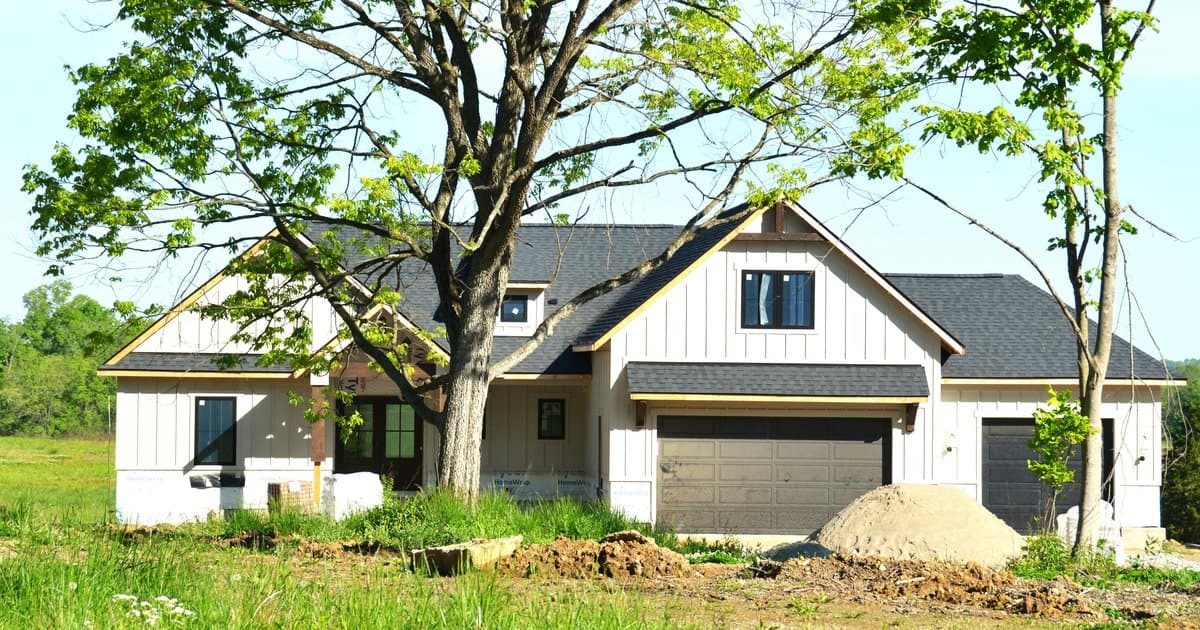
How Does a Construction Loan Work in Texas?
A construction loan in Texas is a short-term loan that funds the building of a new home in stages, with money released in draws as each phase of construction is completed rather than as a lump sum at closing. In DFW, where custom builds are booming in Celina, Anna, Prosper, and Melissa, rates for construction loans run 6.5% to 9.0% in 2026, meaningfully higher than conventional purchase mortgages. Most buyers choose between a one-time close loan, which converts automatically to a permanent mortgage when the build is done, and a two-close option that requires a second round of closing costs. One-time close can save $3,000 to $7,000 in duplicate fees.
By Paul Blair | September 14, 2026
If you're planning to build a custom home in Celina, Anna, Prosper, or anywhere along DFW's northern growth edge, you're probably going to need a construction loan. And a construction loan is a very different product from the mortgage you'd use to buy a resale home or a completed new build.
Here's how construction financing actually works in Texas, and what you need to know before you sign with a builder.
What a Construction Loan Actually Is
When you buy a finished house, the lender hands over a lump sum at closing. That money pays off the seller, and you start making mortgage payments.
When you build, there's no finished product to secure against. So lenders use a different structure: a short-term loan that releases money in increments, called draws, as each phase of the build is completed. A third-party inspector typically verifies progress before each draw is approved.
Once the home is done and passes its final inspection, one of two things happens:
- You close on a permanent mortgage to pay off the construction loan (the two-close approach)
- Your loan automatically converts to a permanent mortgage (the one-time close approach)
Which path you take matters more than most buyers expect.
One-Time Close vs. Two-Close: The $3,000 to $7,000 Difference
| One-Time Close | Two-Close | |
|---|---|---|
| Closings required | 1 | 2 |
| Rate lock | At first closing | At second closing |
| Duplicate closing costs | No | Yes ($3,000-$7,000) |
| Rate uncertainty | Rate locked early | Second rate set at completion |
| Approval process | One approval | Two separate approvals |
| Best for | Most buyers | Buyers expecting credit or income improvement |
Most lenders active in DFW offer both options. The one-time close has become the dominant choice for custom home buyers in Celina, Anna, and Melissa because it eliminates a second round of closing costs and locks your permanent rate before construction starts.
The two-close approach has one legitimate advantage: if your credit score or income is expected to improve significantly by the time the build is done, you may qualify for a better rate at the second closing. For most buyers, though, one-time close is the simpler and cheaper path.
Construction Loan Rates in 2026
Construction loan rates in Texas run higher than conventional purchase mortgages, typically 6.5% to 9.0% in 2026 depending on the loan type, lender, down payment, and your credit profile.
During construction, you pay interest only on the amount drawn to date, not the full loan balance. If you've drawn $150,000 of a $600,000 construction loan, you're paying interest on $150,000. This keeps your monthly carrying cost manageable while the build is underway.
Down Payment Requirements by Loan Type
| Loan Program | Min. Down Payment | Key Notes |
|---|---|---|
| Conventional | 10-25% | No income limits; standard credit requirements |
| FHA One-Time Close | 3.5% | FHA loan limits apply; primary residence only |
| VA One-Time Close | 0% | Veterans and active military only; VA entitlement required |
| USDA One-Time Close | 0% | Rural areas only; income limits apply |
| Owner-Builder | Varies | 720+ credit score typically required |
For DFW buyers building in Celina, Prosper, or McKinney, land equity counts toward your down payment. If you own the lot free and clear, or have significant equity in it, that can satisfy all or part of your down payment requirement.
Buyers using FHA financing should check current loan limits for Collin and Denton counties on the HUD website before assuming their build will qualify. The FHA one-time close is a genuine option for first-time buyers building in northern DFW, but the loan limits matter.
If you haven't started the financing process yet, understanding how mortgage pre-approval works in Dallas is a good first step. Construction loan pre-approval takes longer than a standard purchase loan, and you'll want to start early.
What Lenders Require From the Builder
Your builder has to qualify alongside you. Most construction lenders in Texas require:
- Builder in good standing with any applicable local licensing
- Detailed construction plans and specifications
- Signed construction contract with a fixed price or clear cost-plus terms
- Estimated construction timeline
- Builder's risk insurance and general liability coverage
- Permits pulled before or at closing
This is where production builders and independent contractors diverge. A production builder in an established community often has a pre-approved relationship with specific lenders. A custom build with an independent contractor requires more documentation up front, but the process is well-established with Texas lenders.
Note: Texas does not have statewide general contractor licensing. Licensing requirements are set at the local or municipal level, which is one more reason to vet your builder's standing with your lender before you get attached to a particular contractor.
Once your home is built and you're approaching the final walkthrough, the new construction inspection process in DFW is worth reviewing separately. The lender's draw inspections during construction protect the lender, not you.
If you're building in DFW and trying to figure out which loan structure fits your situation, I work with buyers navigating custom builds across Celina, Prosper, Anna, McKinney, and the rest of the northern suburbs. Reach out at greysq.com/contact and I can help you think through the financing before you commit to a builder.
The Draw Schedule: How Money Gets Released
Understanding how draws work helps you stay ahead of cash flow during the build. A typical construction loan draw schedule in Texas:
- Foundation (approximately 15% of loan): After the foundation is poured and inspected
- Framing and roofing (approximately 25%): After the structural frame and roof are complete
- Mechanical rough-in (approximately 20%): Plumbing, HVAC, and electrical rough-in complete
- Drywall and insulation (approximately 15%): Walls closed and insulated
- Interior finishes (approximately 15%): Cabinets, flooring, trim, and fixtures installed
- Final inspection and certificate of occupancy (approximately 10%): Build complete and all inspections passed
Between each draw, a lender-approved inspector visits the site and certifies that work is complete before the next disbursement is approved. The builder cannot draw ahead of completed work. That protects you.
Timeline: What to Expect
Getting approved for a construction loan takes longer than a standard purchase mortgage. Plan on:
- Pre-approval and loan processing: 4 to 8 weeks, sometimes longer if the builder documentation is incomplete
- Construction period: 6 to 18 months depending on build size and complexity
- Conversion to permanent mortgage (one-time close): Automatic at certificate of occupancy
- Second closing (two-close path): Additional 30 to 45 days after CO
If you're weighing a custom build against buying completed new construction, the timeline difference is significant. A finished new build closes in 30 to 45 days, the same as any purchase. The full breakdown of that decision is at new construction vs. resale in DFW.
Frequently Asked Questions
Can you use a construction loan to build on land you already own in Texas?
Yes. If you own land free and clear, that equity typically counts toward your down payment. If you have a balance on a land loan, lenders will factor that in. Owning the lot can reduce or eliminate the cash you need to bring to closing, and this is a common strategy for buyers in areas like Celina and Anna where raw lots are actively available.
What happens if construction goes over budget or the builder walks?
If costs exceed the original loan amount, the overrun is typically your responsibility unless you negotiated a fixed-price or GMP (guaranteed maximum price) contract. Most lenders in Texas require a fixed-price or GMP contract precisely to avoid this. If the builder defaults, the lender can freeze draws and you would need to bring in a replacement contractor. Builder vetting matters before you close.
Are construction loan rates fixed or variable in Texas?
It depends on the lender and loan type. Many construction-to-permanent loans set the permanent rate at the initial closing (one-time close), giving you rate certainty for both the build phase and the permanent mortgage. Some products use a variable rate during construction and lock the permanent rate at conversion. Ask your lender which structure they offer before comparing rates across lenders.
What Texas-specific forms and disclosures apply to a construction loan?
The TREC contract used for new construction is a specific promulgated form, different from the standard resale purchase contract. You'll also receive the TREC IABS (Information About Brokerage Services) notice and the Consumer Protection Notice. Texas has no state income tax and no real estate transfer tax, which simplifies your all-in cost calculation compared to states like California. The Texas Department of Savings and Mortgage Lending regulates lenders making construction loans in the state.
Do I need a real estate agent to help navigate a construction loan or builder contract in DFW?
You don't legally need one, but having an agent who knows the DFW new construction market well can protect you in real ways. Builder contracts are written to protect the builder, not you. An agent representing you can review the contract before you sign, help negotiate upgrades and incentives, and identify which lenders are actively working in specific builder communities. The builder's on-site sales agent represents the builder's interests, not yours.
If you're planning a custom build in Celina, Anna, Prosper, Melissa, or McKinney, I can help you navigate both the financing and the builder contract before you sign anything. Start the conversation at greysq.com/contact.
About Paul Blair
Paul Blair is the founder and broker of Grey Square, a virtual real estate brokerage representing buyers and sellers across Dallas and Los Angeles. With 22 years in the business and more than $200 million in closed transactions, Paul works the full range of the market, from luxury homes in the Park Cities and Preston Hollow to estates in the Hollywood Hills and across the Westside. Connect with Paul and the Grey Square team at greysq.com. TX TREC #9011505 · CA DRE #01792671.