Huntington Palisades Real Estate in 2026: What Homes and Lots Actually Cost
Huntington Palisades trades at a premium to the wider Pacific Palisades market. Here is what 2026 pricing, tract restrictions, and rebuild rules mean.
What does a home in Huntington Palisades actually cost in 2026? Redfin's neighborhood data puts the median sale price at roughly $5.3 million, up 12.7% year over year, with a median of about $1,220 per square foot and 71 days on market (Redfin, Huntington Palisades). That is a wide gap above the broader Pacific Palisades market, where the median sale price over the three months ending June 2026 was $3,150,693 (Redfin, Pacific Palisades). The Huntington is its own price tier, and it always has been.
It is also one of the most misread sub-markets on the Westside right now, because a single "Pacific Palisades median" blends finished estates with cleared parcels that trade at land value. Those are two different transactions, and if you are buying, selling, or deciding whether to rebuild in the Huntington specifically, the neighborhood-level numbers matter more than the ZIP code.
Where the Huntington actually sits
Huntington Palisades is the roughly 226-acre tract south of Sunset Boulevard, bounded on the north by Potrero Canyon and running out to the bluffs above Santa Monica Canyon and the Pacific. Chautauqua Boulevard forms the eastern edge. It is a compact area, around 600 homes on 1,283 mapped parcels, and it is one of the few places in the Palisades where the ground is genuinely flat.
That flatness is the whole point. Most of the Palisades is canyon, hillside, or graded pad. The Huntington is a mesa. Lots are rectangular, driveways are level, and yards are usable in a way that hillside parcels a mile north are not. Buyers who want a Westside address without a retaining wall and a 40-step entry come here first.
Why the streets curve
Abbot Kinney bought the 226-acre parcel from the Marquez family in 1887, laid out a grid he later abandoned, and left behind the eucalyptus he had imported from Australia. He sold to Collis Huntington, the Southern Pacific railroad magnate, who built a 4,720-foot wharf off Potrero Canyon expecting the Port of Los Angeles to land there. It went to San Pedro instead. In 1926 the Huntington heirs sold the parcel to Robert C. Gillis of the Santa Monica Land and Water Company, who named the new suburb after the family and built it on a plan influenced by the Olmsted Brothers (Palisadian-Post).
Gillis skipped the grid. He laid concentric semi-circular drives around an open park bounded by El Cerco Place, fed by a broad entry street with landscaped central parkways at Pampas Ricas. Lots ran from a quarter acre to more than a full acre, with the largest reserved for corners and the mesa rim, and utilities went underground at roughly four times the going rate.
He also wrote restrictions in perpetuity and set up a property owners' association to enforce them: residential use only, no dwelling above two stories, hedges capped at five feet, and hard setback lines. Nearly a century later, those covenants are still why sight lines across the Huntington stay open and why you do not see a three-story spec box wedged between two ranch houses.
The street names came from project engineer W. W. Williams, who spent his career mining in Mexico. Toyopa was a lost mine in Sonora, Chapala is Mexico's largest lake, and Corona del Mar means crown of the sea.
What the housing stock looks like
The dominant form is still the postwar single-story ranch, low and wide on a flat lot. Layered on top of that are 1920s and 1930s Spanish and Mediterranean revival houses from the first wave of construction, plus a steady stream of two-story replacements built right to the tract's height ceiling.
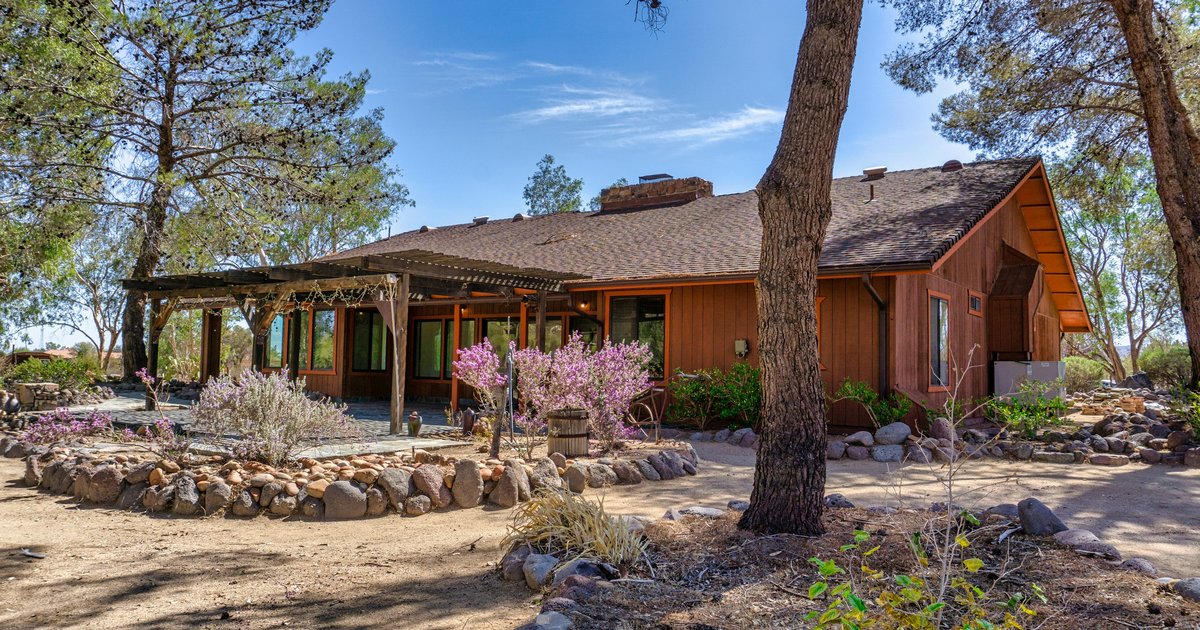
Post-fire, the mix is shifting again. New construction here is going up under current wildfire building standards, which means Class A roofing, ember-resistant vents, and enclosed eaves as a baseline rather than an upgrade. A buyer walking a 2026 rebuild and a 1955 original on the same street is looking at two very different insurance conversations.
What it costs, side by side
| Metric | Huntington Palisades | Pacific Palisades (all) |
|---|---|---|
| Median sale price | ~$5.3M | $3,150,693 |
| Median price per square foot | ~$1,220 | ~$1,540 |
| Median days on market | 71 | 54 |
| Year-over-year price change | +12.7% | +5.2% |
Source: Redfin Huntington Palisades and Redfin Pacific Palisades market data.
Two things in that table are worth slowing down on.
First, the Huntington's price per square foot reads lower than the wider Palisades average even though its median sale price is far higher. That is a composition effect, not a discount. Large single-story ranches on big flat lots put a lot of square footage on the ground, and land, not finish, carries the value. Price per square foot is close to useless as a shortcut here.
Second, the sample is thin. Redfin counted three neighborhood sales in its most recent reported month, and at that volume one eight-figure trade moves the median several hundred thousand dollars.
Across the wider Palisades the market is functioning again: 62 homes sold in June 2026 against 25 a year earlier, sale-to-list at 97.1%, and a Redfin Compete Score of 41. Buyers negotiate, and well-priced property still moves.
Own a lot or a standing home in the Huntington and want to know where it prices today? Request a confidential valuation and we will build it off comparable Huntington parcels rather than a ZIP-code average.
The rebuild rules that actually change your math
The January 2025 Palisades Fire burned roughly 23,400 acres across Pacific Palisades, Topanga, and Malibu, destroying approximately 6,800 structures and damaging about 1,000 more, per CAL FIRE's incident record. Rebuilding is now the dominant activity in the 90272, and the City has restructured how it processes that work.
A few pieces matter to anyone transacting here:
- Permits move faster than they did pre-fire. The City reports Palisades rebuilding permits approved roughly three times faster than typical pre-fire single-family projects, with more than 70% of single-family permit clearances no longer required (Office of Mayor Karen Bass).
- The queue is still real. Crosstown's review of Department of Building and Safety records found 3,090 building and electrical permits approved in Pacific Palisades, more than any other neighborhood in the city, with an average 49-day wait from application to issuance (Crosstown LA).
- There is a pre-approved plan library. The Standard Plan Pilot Program offers single-family designs already cleared by the Department of Building and Safety, cutting plan check time for anyone willing to build from it (LADBS).
- SB 9 lot splits are off the table inside the burn area. Emergency Executive Order 9 prohibits SB 9 applications within a Very High Fire Hazard Severity Zone inside the Palisades Fire boundaries. If your underwriting assumed a two-unit split on a Huntington lot, it does not pencil.
- CEQA and Coastal Act review were suspended for qualifying rebuilds, and permit and plan check fee collection is suspended pending a full Council waiver.
For a buyer, that means entitlement risk in 2026 is materially lower than it was in 2025. For a seller, it means a buyer's rebuild timeline is now a documentable number rather than a guess.
How it compares to what is next door
Head north across Sunset into the Alphabet Streets and you are in a smaller-lot, mid-size-home market with a much larger share of cleared parcels trading. Go east into the Riviera and lots get bigger and topography returns, with pricing well into eight figures. Rustic Canyon, across the canyon, is a wooded, irregular-lot market with its own insurance profile.
Cross Chautauqua into Santa Monica's North of Montana and you get flat lots again, but under a different city and a different transfer tax regime. That matters at this price band. A City of Los Angeles sale above the indexed Measure ULA thresholds carries an additional 4% or 5.5% transfer tax on the gross price, and the Huntington sits squarely inside the city. A Santa Monica sale a half mile away does not.
Our Pacific Palisades neighborhood guide covers the full sub-area breakdown, and you can see current inventory across the Westside on our Los Angeles search.
Who is actually buying here
Three groups, roughly. Long-tenured Palisades owners who lost a house elsewhere in the 90272 and are consolidating onto flat land. Move-up Westside buyers trading a hillside property for level ground and a shorter run to Pacific Coast Highway. And build-to-hold buyers acquiring a parcel to occupy the finished house rather than flip it, a different profile from the investor activity on the lower-priced burn-area streets. What they share is a long time horizon, and at 71 median days on market the Huntington still rewards one.
Frequently Asked Questions
How much does a house in Huntington Palisades cost in 2026?
Redfin reports a median sale price of roughly $5.3 million in Huntington Palisades, up 12.7% year over year, versus $3,150,693 for Pacific Palisades overall. Neighborhood sale volume is thin, often a handful of closings per month, so treat any single median as directional and price against comparable Huntington parcels rather than a ZIP-code figure.
Can you build a three-story house in Huntington Palisades?
No. The original 1926 tract restrictions recorded by the Santa Monica Land and Water Company cap dwellings at two stories, limit hedges to five feet, and set building lines, written to run in perpetuity with a property owners' association to enforce them. Confirm the recorded covenants and current association rules on your specific parcel before you design.
Is Huntington Palisades in a wildfire hazard zone?
Yes. Redfin's risk data shows 98% of properties in Huntington Palisades carrying some wildfire risk over the next 30 years. California requires a Natural Hazard Disclosure identifying Fire Hazard Severity Zone status on residential sales, and AB 38 defensible-space obligations apply. Expect insurance underwriting to be a live part of the transaction.
How long does a rebuild permit take in the Palisades right now?
Department of Building and Safety records reviewed by Crosstown showed an average 49-day wait from application to issued permit across Palisades rebuild permit types. The Standard Plan Pilot Program and the self-certification pathway can shorten plan check further, and the City publishes updated permit counts on its recovery dashboard.
Who should I hire to sell a home in Huntington Palisades?
Look for someone who has closed transactions in this specific sub-market and can speak to the recorded tract restrictions, the rebuild permitting landscape, and Measure ULA exposure at your price band, because all three change your net. Ask what comparable parcels they priced against and why. Paul Blair has 22 years in the business and more than $200 million in closed transactions, and works the Palisades, Santa Monica, Brentwood, and the Hollywood Hills through Grey Square. For a straight read on your property, start a conversation.
Talk it through
Buying or selling in the Huntington in 2026 comes down to three questions: what the parcel is worth as land, what the recorded restrictions let you build on it, and what the transfer tax does to your net. All three are answerable before you list or write an offer.
Schedule a private consultation about Huntington Palisades. If you are on the seller side, we start with the valuation and work backward from your net.
I have spent time on both sides of Chautauqua, and the Huntington is one of the few Westside tracts where a ninety-year-old plan still does real work on present-day value.
Paul Blair is the founder and broker of Grey Square, a virtual real estate brokerage representing buyers and sellers across Dallas and Los Angeles. With 22 years in the business and more than $200 million in closed transactions, Paul works the full range of the market, from luxury homes in the Park Cities and Preston Hollow to estates in the Hollywood Hills and across the Westside. Connect with Paul and the Grey Square team at greysq.com. TX TREC #9011505 · CA DRE #01792671.